
Establishing the Introductory Tabletop Environment
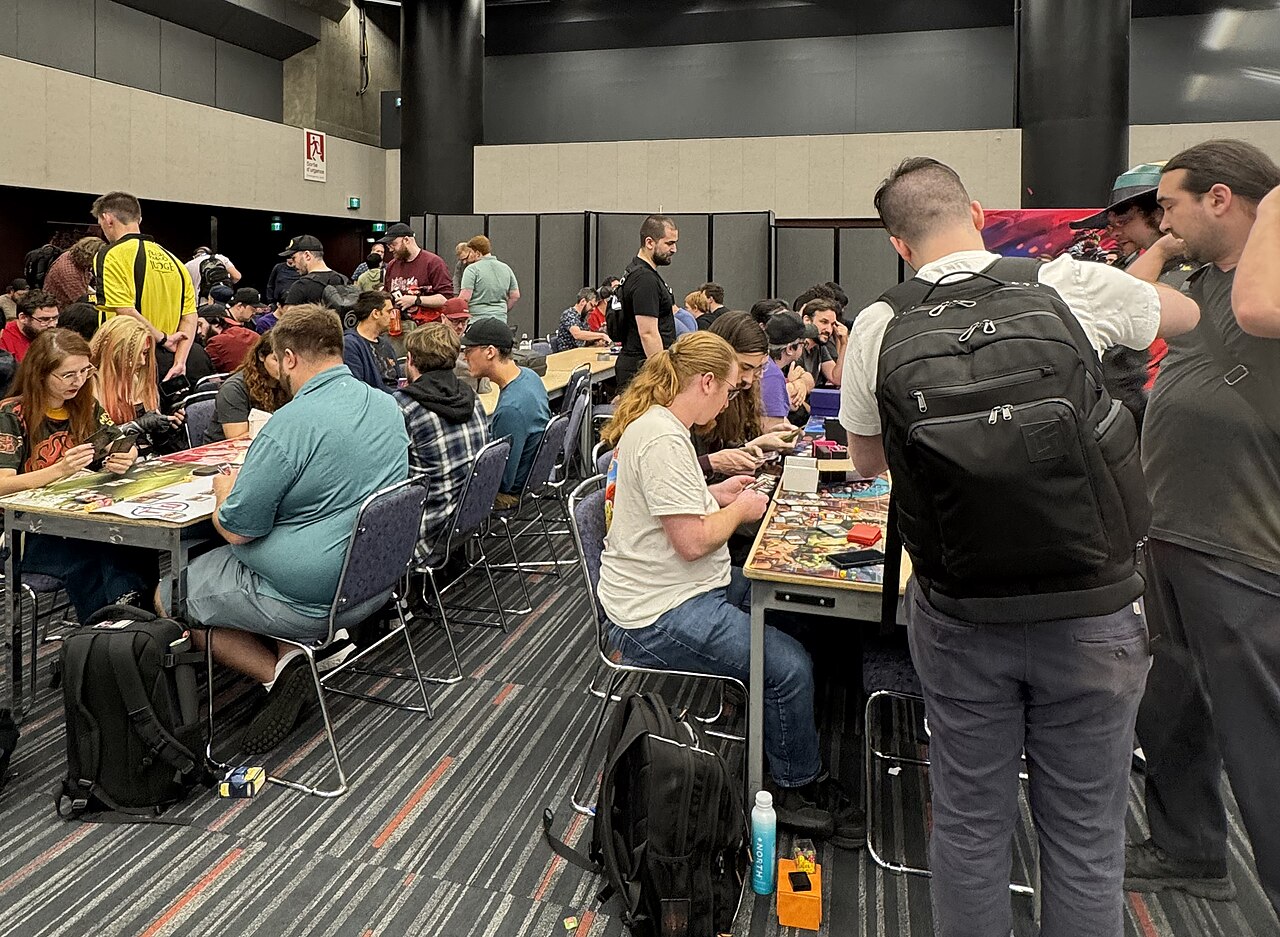
Hosting an effective trading card game demonstration begins with organizing the physical play area before any cards are drawn. According to official player resources, setting up the play area requires each participant to shuffle their deck and place it face down, drawing an initial hand of seven cards from their library while keeping track of life totals. In a public demonstration setting, organizers can streamline this process by using printed reference materials taped flat on the table or laminated flip guides with spiral bindings for durability. Establishing clear boundaries between the library, hand, graveyard, and battlefield prevents visitor confusion and ensures that newcomers can immediately identify where each component belongs during active play sessions.
Navigating the Five Phases of a Turn
Teaching complex game mechanics requires breaking down sequential player turns into manageable segments rather than overwhelming newcomers with all rules at once. Official gameplay frameworks organize each turn into five distinct phases: the beginning phase for untapping and drawing, the first main phase for playing land cards and casting affordable spells, the combat phase for attacking opponents, the second main phase, and the final end step. When demonstrating these phases at an exhibition table, presenters should pause between steps to explain state-based actions. Emphasizing that permanent spells stay on the battlefield while instant and sorceries move to the graveyard helps learners connect card types directly to their functional destination after resolution.
Managing Resource Generation and Casting Costs
Resource management represents one of the most critical hurdles for new participants encountering trading card games at public exhibitions. Official rules state that casting a spell requires paying mana equal to the symbols in the top right corner of the card, with generic mana costs represented numerically. To generate this essential resource, players must tap land cards, which produce specific colors of mana indicated directly on their face. Because land cards are not spells themselves, players may play one during each of their turns for free. Demonstrators should explicitly highlight this distinction so observers understand that land deployment fuels subsequent creature and artifact spells without consuming limited casting currency.
Demystifying Combat Steps and Damage Calculation
The combat phase introduces direct interaction between opponents and requires a structured explanation of attack and defense mechanics. Official instructional materials divide combat into three strict steps: declaring attackers, declaring blockers, and calculating damage. During the first step, attacking creatures are chosen and tapped, after which the defending player may assign untapped creatures to block them. Unblocked creatures deal direct damage to the defending player, while creatures engaging in combat compare power and toughness. Presenters should explain that any creature taking cumulative damage equal to or greater than its toughness is sent to the graveyard, clarifying how numerical thresholds determine survival on the battlefield.
Utilizing Printable Teaching Tools and Guides
Successful exhibition outreach depends on providing visitors with physical takeaways that reinforce live demonstrations long after they leave the table. Store owner networks recommend utilizing specialized downloads such as quick start guides, laminated flip guides, and rules reference cards to standardize the learning experience across multiple volunteer stations. Handing out printed reference cards allows participants to review keyword glossaries, abilities, and turn structures at their own pace. Furthermore, pairing live physical demonstrations with digital tutorials or sample decks ensures that curious visitors have multiple entry points to continue exploring the game system outside the convention hall environment.
Adapting Demonstrations for Diverse Visitor Groups
Public gaming exhibits frequently host visitors with widely varying levels of prior experience, necessitating adaptable presentation strategies. While some attendees benefit from a comprehensive walkthrough of complex keyword abilities and combat math, others require a simplified introduction focused solely on drawing cards and playing basic permanent spells. Event organizers should design modular demonstration tables that accommodate both quick introductory matches and deeper instructional sessions. By tailoring the depth of the explanation to the visitor's expressed familiarity, booth staff can maintain high engagement without causing cognitive overload or slowing down queue flow during peak convention hours.
Transitioning New Players Into Long-Term Communities
The ultimate goal of any convention trading card demonstration is to bridge the gap between temporary event curiosity and sustainable community participation. Official outreach recommendations emphasize sending new players home with tangible items such as sample decks, promotional boosters, or introductory packets paired with direct invitations to upcoming local events. Exhibition staff should clearly communicate where and when regular community meetups take place, transforming a casual five-minute demonstration into an ongoing hobby. Providing clear next steps ensures that visitors leave the exhibit hall equipped with both the physical materials and the procedural knowledge needed to join regular play sessions.
How this article was prepared
This article used automated drafting and checks against the linked sources. Its photograph is identified and credited separately. Please use our correction link to report an error.
Continue exploring
Explore related events
Current facts come from the directory. Follow the exact listing for admission, venue information and the official source.
EXPO CENTER NOVEMBER TWO DAY 2026 · Nov 21 – Nov 22, 2026 · scheduled · Public admission announced — check current organizer information
Rising from the Ashes 2026 · Nov 21 – Nov 22, 2026 · scheduled · Public attendee badge information — check current organizer availability
Roanoke Valley Coin Club Show 2026 · Nov 21 – Nov 22, 2026 · scheduled · Public admission announced — check current organizer information
Greenberg’s Great Train & Toy Show — Wilmington 2026 · Nov 21 – Nov 22, 2026 · scheduled · Public admission announced — check current organizer information
Sources and further reading
Source review: 2026-11-16. Examples identified as hypothetical are original illustrations.
An independently researched feature. Worked examples are illustrative; photographs identify their archive or collection context.
Find your next event →










