Designing the Play Area Setup
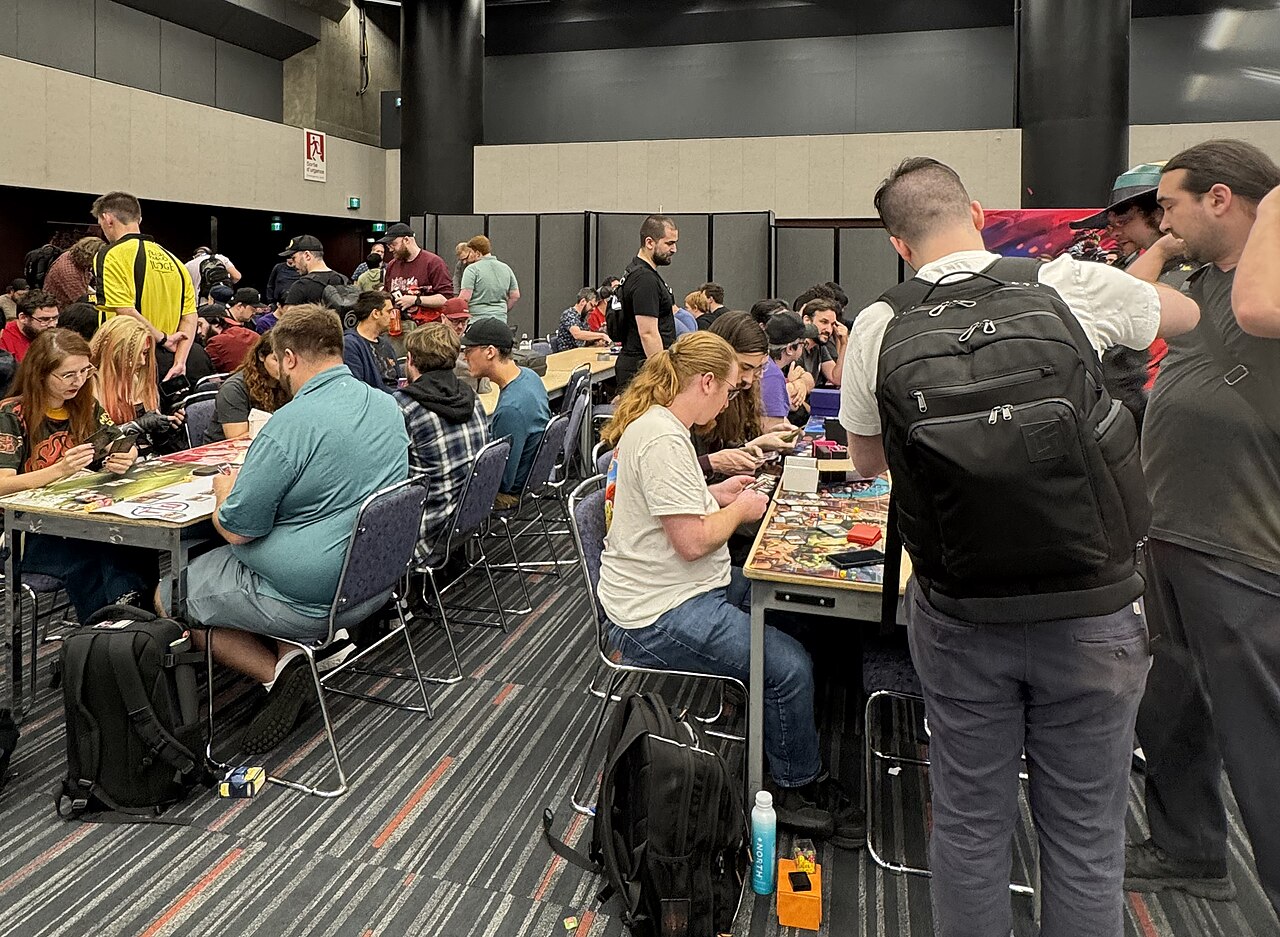
Successful trading card game demonstration tables begin with a clear, uncluttered physical setup that minimizes cognitive load for absolute beginners. According to official play guides, setting up the play area requires each participant to shuffle their deck and place it face down in front of them, followed immediately by drawing a starting hand of seven cards from their library. Organizers and demo leaders can streamline this initial phase by ensuring table surfaces are clean and spacious enough to separate decks, active spell zones, and resource pools without crowding the physical components. Establishing this predictable spatial arrangement helps novices internalize where cards belong before a single turn is initiated.
Managing Mulligan Choices and First-Turn Rules
Once the opening hands are drawn, participants must evaluate their card selection and decide whether to exercise mulligan options if they are unhappy with their initial cards. This moment provides an ideal teaching window for explainers to discuss resource consistency and starting odds without overwhelming the learner with advanced strategy. Furthermore, demo hosts must clearly communicate turn-order rules, specifically noting that whoever goes first will skip drawing their first card to balance the initial advantage. Grounding these procedural rules early prevents common confusion during the opening moments of a match and establishes good habits for future competitive or casual play sessions.
Tracking Life Totals and Win Conditions
Every demonstration game needs an explicit, unambiguous objective so participants understand why specific actions matter during play. Because reducing the opponent's life total to zero is the primary win condition, choosing a reliable way to track life totals must happen right alongside the opening shuffle. Whether utilizing specialized counters, spin-down dice, or printed score pads, instructors should emphasize that maintaining accurate life records is just as critical as casting spells. By keeping life counters clearly visible to both players at the demonstration table, novices learn to connect their tactical combat decisions directly to the overarching state of the match.
Demystifying Mana Generation and Spell Casting
To transition from setup to active gameplay, participants must grasp how resources fund card effects on the battlefield. Official rules outline that casting spells requires paying mana equal to the numerical or colored symbols located in the top right corner of the card. Instructors can demonstrate this concept practically by showing how tapping land cards generates specific colors of mana, while clarifying that lands themselves are not spells and can be played once per turn for free. Once cast, permanent cards like creatures and artifacts remain on the battlefield, whereas instantaneous or sorcery spells resolve and travel directly to the graveyard.
Navigating the Five Phases of a Turn
Structuring the flow of a turn into distinct, manageable phases prevents novices from feeling rushed or lost during a live demonstration. Official documentation divides each turn into five sequential steps: the beginning phase for untapping and drawing, the first main phase for playing lands and casting affordable spells, the combat phase for attacking opponents, the second main phase for additional plays, and finally the end step for removing damage and resolving closing effects. Walking through these phases methodically allows demo participants to understand temporal priority and learn how actions in one phase directly influence opportunities in the next.
Executing Clear Combat and Damage Steps
Combat represents the most dynamic and engaging phase of a trading card game demonstration, making a structured breakdown essential for clear comprehension. The combat sequence always proceeds in the exact same order: declaring attackers by tapping chosen creatures, declaring blockers from the defending player's untapped roster, and finally calculating damage. Instructors should clearly explain that unblocked creatures deal direct damage to the player, while creatures sustaining damage equal to or exceeding their toughness are sent to the graveyard. Breaking down combat into these discrete components removes guesswork and empowers beginners to evaluate risk accurately.
Utilizing Physical Reference Tools and Takeaways
To ensure that the educational impact of a demonstration table extends beyond the convention hall, organizers should leverage physical reference materials and take-home resources. Retail and convention tools such as laminated Learn-to-Play demo flip guides, printed quick-start sheets, and rules reference cards taped flat to the table provide constant, tactile support for new players. Furthermore, sending participants home with sample decks, introductory products, or digital tutorial links bridges the gap between a single exhibition visit and sustained community engagement, transforming curious visitors into confident, regular players.
How this article was prepared
This article used automated drafting and checks against the linked sources. Its photograph is identified and credited separately. Please use our correction link to report an error.
Continue exploring
Explore related events
Current facts come from the directory. Follow the exact listing for admission, venue information and the official source.
N.E.W. Card Show — 2026-11-27 · Nov 27, 2026 · scheduled · Public admission announced — check current organizer information
Five towns card show 2026 · Nov 27, 2026; Nov 29, 2026 · scheduled · Public admission announced — check current organizer information
Broadview Heights Card Show 2026 · Nov 27, 2026 · scheduled · Public admission — check organizer for ticket availability
Madison Card Show at Alliant Energy Center 2026 · Nov 28, 2026 · scheduled · Public admission announced — check current organizer information
Sources and further reading
Source review: 2026-11-22. Examples identified as hypothetical are original illustrations.
An independently researched feature. Worked examples are illustrative; photographs identify their archive or collection context.
Find your next event →