
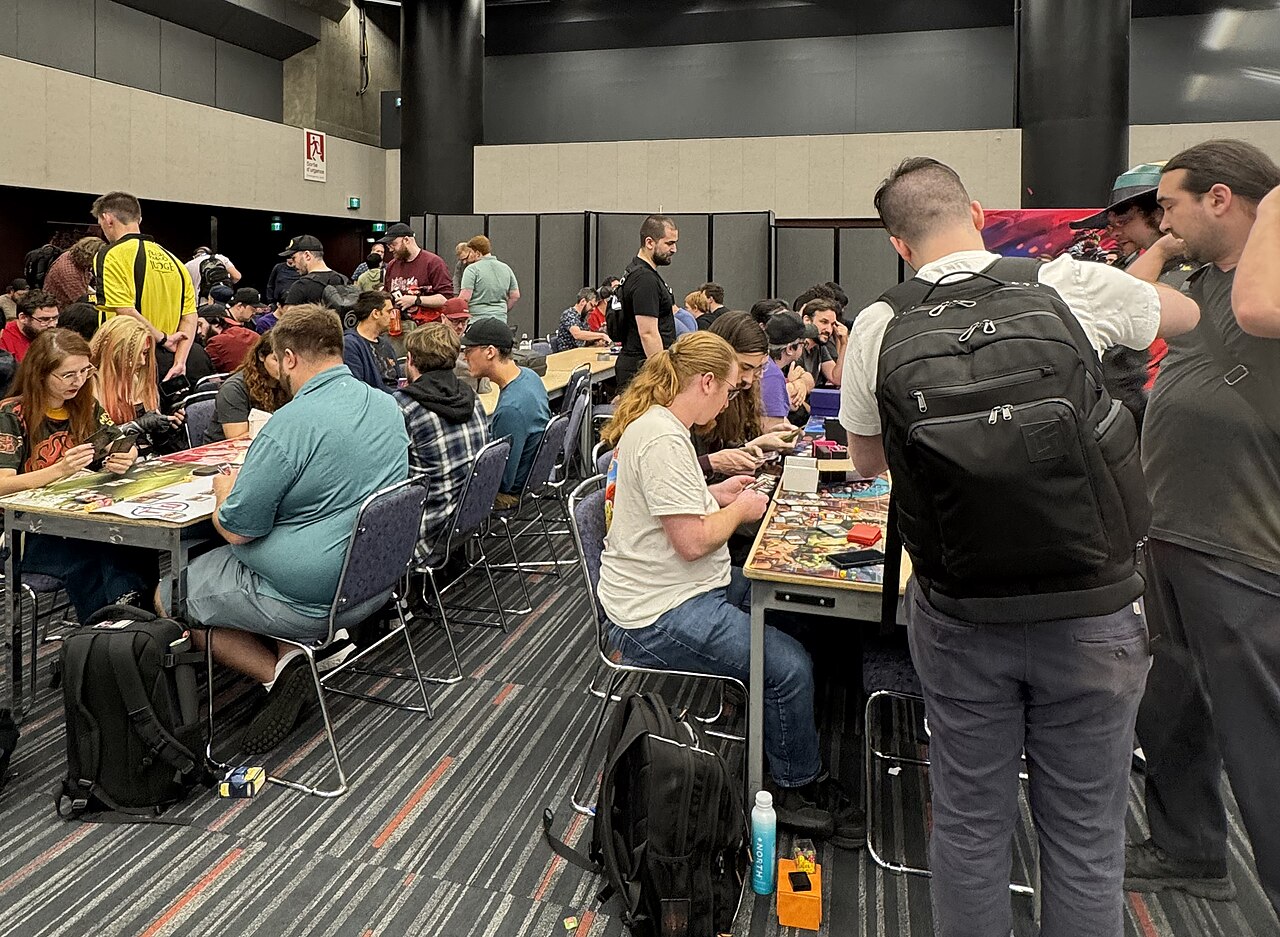
Establishing Physical Setup Standards at Convention Demonstration Tables
Organizing a successful convention demonstration for trading card games begins with clear physical separation of game zones. Exhibitors and teachers should ensure that each participant can comfortably manage a shuffled deck placed face down, alongside a dedicated library zone and space for drawn hand cards. Establishing a clear visual boundary for permanent cards versus temporary effects prevents confusion during fast-paced instructional rounds. When convention organizers provide standardized play mats or taped reference cards flat on the surface, new players immediately grasp where lands, creatures, and graveyards belong without constantly asking instructors for spatial guidance during introductory matches.
Navigating the Initial Hand Draw and Strategic Mulligan Choices
Introducing participants to opening hands requires a structured explanation of starting resources rather than rushing straight into aggressive plays. Players typically draw a hand of seven cards from their library after shuffling, providing the raw material for early turns. Instructors should clearly explain the Mulligan rule as a standard corrective mechanism for unplayable starting hands rather than an exceptional penalty. By framing the opening draw as a managed tactical choice, newcomers learn to evaluate resource curves and land ratios before placing their first permanent onto the demonstration table, setting a thoughtful baseline for subsequent decision-making.
Tracking Vital Resources and Managing Life Totals Accurately
Maintaining clear tracking mechanisms for core resource pools is essential for transparent tabletop competition and exhibition matches. Because victory conditions frequently hinge on reducing an opponent's life total to zero, both players must agree on a reliable method for recording numerical changes continuously. Instructors should emphasize that losing track of life totals invalidates the tactical state of the board. Introducing dedicated counters, dice, or paper trackers during initial demonstrations ensures that participants build good habits regarding resource visibility, preventing disputes and allowing observers to follow the flow of the game easily from across the demonstration area.
Demystifying Resource Generation Through Mana and Land Cards
Understanding how players generate operational energy is critical for demystifying complex card games during public exhibitions. Land cards serve as the primary engine for resource generation, allowing players to produce specific colors of mana by tapping those cards during their turns. Demonstrators should clarify that lands are distinct from active spells, even though players may play one land per turn for free. Breaking down generic mana costs versus colored symbols using clear numerical indices helps novices connect the cost printed in a card corner with the physical act of tapping lands in their play area.
Deploying Permanent Spells Versus Immediate Resolution Cards
Card categories dictate distinct physical placement and longevity rules once cast onto the battlefield environment. Permanent spells such as creatures, artifacts, and enchantments remain on the battlefield indefinitely after resolution, altering the ongoing game state until removed. Conversely, instantaneous effects and sorceries resolve their text and immediately move to the graveyard zone. Teaching this operational difference helps visitors understand why certain cards stay in play while others disappear instantly, reducing confusion over card retention and hand management during fast-moving exhibition matches.
Navigating the Five Structured Phases of Every Player Turn
Structuring turn sequences into distinct procedural phases prevents rule omissions and keeps exhibition games moving at a steady, understandable pace. Every turn divides naturally into a beginning phase for untapping and drawing, a first main phase for playing lands and casting spells, a dedicated combat phase, a second main phase, and a final end step. By walking new players through this exact five-part progression, instructors demystify complex timing windows. Observers and participants alike learn to anticipate when triggers resolve, damage is cleared, and active control passes cleanly to the opposing player.
Resolving Combat Steps Through Attackers, Blockers, and Damage Calculation
Combat sequences represent the primary friction point in trading card games and require methodical, step-by-step resolution during public demonstrations. The combat phase itself subdivides predictably into declaring attackers, declaring blockers, and calculating damage totals. Instructors should demonstrate how tapping attacking creatures initiates conflict, while defending players select untapped creatures to absorb incoming pressure. Unblocked attacks reduce player life directly, whereas creatures sustaining damage equal to or exceeding their toughness are sent to the graveyard. Exhibiting this rigorous math clearly reassures convention attendees about fair rules adjudication.
How this article was prepared
This article used automated drafting and checks against the linked sources. Its photograph is identified and credited separately. Please use our correction link to report an error.
Continue exploring
Explore related events
Current facts come from the directory. Follow the exact listing for admission, venue information and the official source.
Winona Con 2026 · Nov 20 – Nov 22, 2026 · scheduled · Public attendee badge information — check current organizer availability
Brotherly Love Card Show 2026 · Nov 21, 2026 · scheduled · Public admission announced — check current organizer information
Chicago Sports Spectacular 2026 · Nov 20 – Nov 22, 2026 · scheduled · Public tickets available online and at the show
The Berry Best Card Show | Yoomiez x 703 Events 2026 · Nov 21, 2026 · scheduled · Public admission announced — check current organizer information
Sources and further reading
Source review: 2026-11-10. Examples identified as hypothetical are original illustrations.
An independently researched feature. Worked examples are illustrative; photographs identify their archive or collection context.
Find your next event →










