
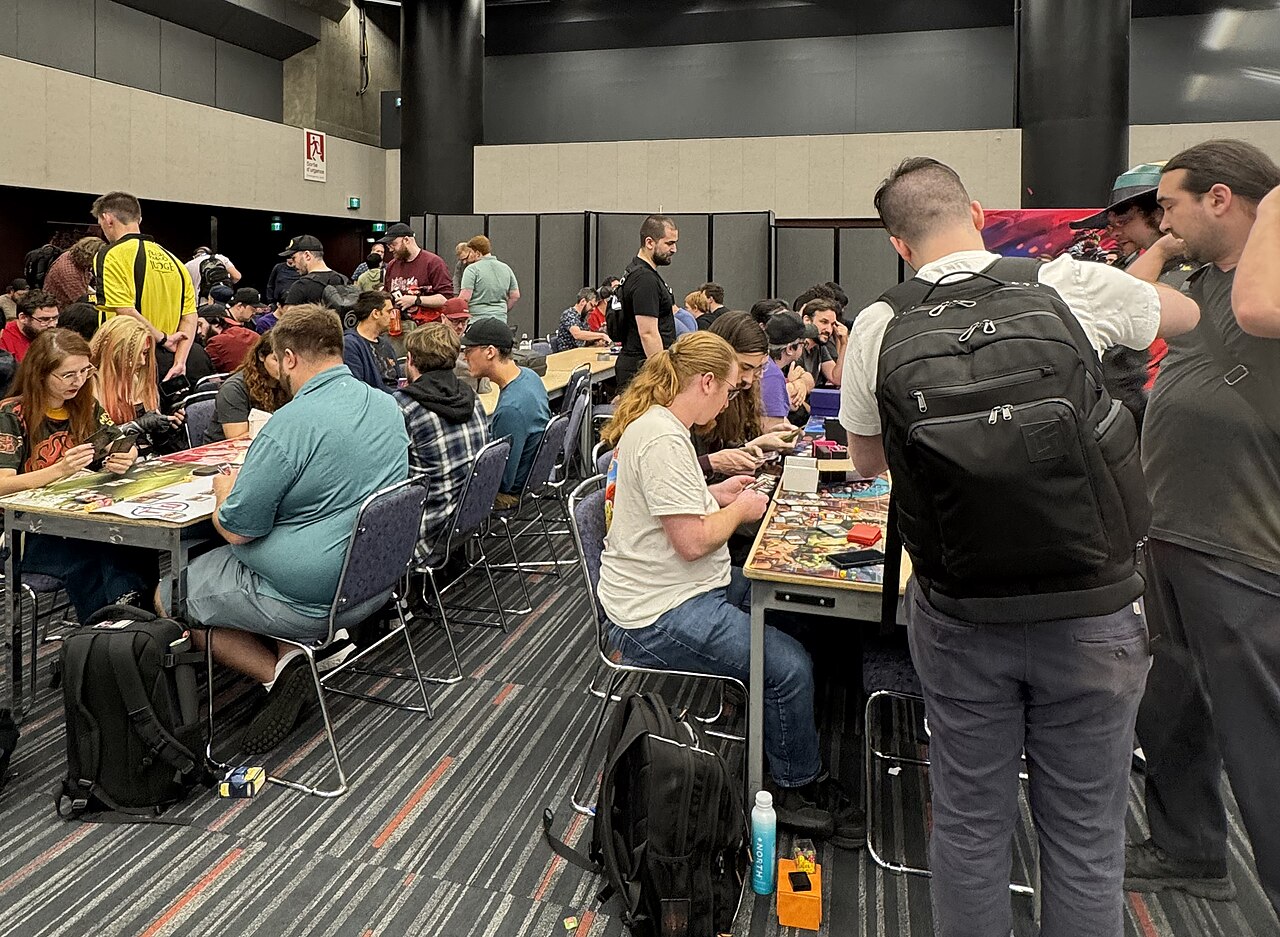
Establishing Clear Table Layouts for Beginner Introductions
Organizing a successful trading card game demonstration begins long before the first draw, starting with the physical arrangement of the play area. When welcoming new participants to a table, demonstrators should establish distinct spatial boundaries for each component of the game. Players place their shuffled decks face down in front of them, drawing an initial hand of seven cards from their library. Establishing this structured layout immediately reduces cognitive overload for newcomers who might otherwise feel intimidated by unorganized card placements. Using flat-taped rules reference cards directly on the table surface provides instant visual reminders without cluttering the playing space with loose papers or bulky manuals. Clear separation between libraries, graveyards, and active zones ensures that participants can focus entirely on learning core interactions rather than searching for displaced components.
Managing Hand Decisions and Initial Mulligan Choices
The opening moments of any demonstration round present an ideal opportunity to teach foundational resource management through opening hand evaluation. If a participant feels unsatisfied with their initial draw of seven cards, they may execute a mulligan to secure a more functional starting hand. Demonstrators should frame this mechanic not merely as a rule, but as a strategic choice that teaches players how to assess early viability. Explaining how to track life totals effectively is equally critical, as the primary objective of reducing an opponent's life total to zero governs every subsequent tactical decision. By walking beginners through these preliminary steps without rushing, instructors build confidence and establish habits that will support future matches. This deliberate pacing helps new enthusiasts understand that initial setbacks or suboptimal draws are simply a normal part of the broader learning process.
Demystifying Resource Generation and Spell Casting Mechanics
Transitioning from setup to active play requires a clear explanation of how mana fuels every action within the game. To cast a spell, participants must pay mana costs matching the specific symbols located in the upper right corner of the card, while generic costs are indicated numerically. Generating this vital resource requires tapping land cards, which produce specific colors of mana as indicated on their faces. Instructors should emphasize that land cards are distinct from spells, allowing players to play one land per turn for free during designated phases. Permanent spells such as creatures, artifacts, and enchantments remain on the battlefield after resolution, whereas instants and sorceries travel directly to the graveyard. Breaking down these operational rules step-by-step prevents confusion between permanent board presence and one-time tactical effects during fast-paced demonstrations.
Navigating the Five Structured Phases of a Turn
A structured approach to turn progression helps learners comprehend the rhythm of competitive play without becoming overwhelmed by simultaneous actions. Every turn is divided into five distinct phases that execute in a strict, predictable sequence every single round. The beginning phase requires players to untap their cards, resolve any active upkeep effects, and draw a card from their library. During the first main phase, participants may play a land card and cast affordable spells from their hand before entering combat. The combat phase itself follows a rigorous internal sub-structure, leading directly into a second main phase that functions identically to the first. Concluding with the end step, which clears damage and resolves lingering effects, teaches players the importance of chronological discipline and procedural awareness in tabletop gaming environments.
Breaking Down Combat Steps and Damage Calculation
Combat represents the most dynamic phase of a match, making it essential to isolate its individual steps during any introductory session. The combat sequence always proceeds in the same order, starting with the declaration of attackers where active creatures are tapped. Next, the defending player may designate any number of untapped creatures they control to block incoming threats before damage is calculated. Attackers and blockers deal damage to one another simultaneously, while unblocked creatures inflict direct damage upon the defending player. Creatures that accumulate damage equal to or exceeding their toughness are destroyed and sent to the graveyard. Explaining these mathematical thresholds clearly allows beginners to evaluate risk versus reward before committing their forces to an aggressive offensive push across the table.
Utilizing Physical Demo Guides and Flip Materials
Effective teaching during public events relies heavily on standardized physical aids that maintain consistency across different instructors and tables. Utilizing specialized flip guides with laminated pages and spiral bindings allows demonstrators to walk newcomers through rules intuitively and repeatedly without material degradation. Providing printed quick-start guides gives participants a physical takeaway that includes detailed glossaries of keywords and abilities for future reference. These supplemental tools act as silent assistants, reinforcing verbal explanations and allowing visitors to review complex terminology at their own pace. When stores and event organizers invest in durable reference materials, they create a welcoming environment that transforms curious observers into confident, regular players equipped with the knowledge needed for independent matches.
Extending the Learning Experience Beyond the Demo Table
A successful introductory session must culminate in a clear pathway for continued engagement after the participant leaves the convention floor or retail store. Instructors should always send new players home with tangible resources such as sample decks, promotional boosters, or structured starter products to maintain their momentum. Introducing digital alternatives like guided tutorials on connected devices offers an approachable bridge for practicing mechanics outside of face-to-face gatherings. Inviting attendees back for upcoming community events establishes a supportive social network that reinforces the educational foundation laid during the initial demo. By connecting physical play guides with ongoing community opportunities, organizers ensure that a single afternoon demonstration sparks a lasting hobby rather than a temporary distraction.
How this article was prepared
This article used automated drafting and checks against the linked sources. Its photograph is identified and credited separately. Please use our correction link to report an error.
Continue exploring
Explore related events
Current facts come from the directory. Follow the exact listing for admission, venue information and the official source.
Greenberg’s Great Train & Toy Show — Wilmington 2026 · Nov 21 – Nov 22, 2026 · scheduled · Public admission announced — check current organizer information
Front Row Card Show — Pasadena 2026 · Nov 21 – Nov 22, 2026 · scheduled · Public general-admission tickets offered — check current availability
Northeast Sports Card Expo 2026 · Nov 21 – Nov 22, 2026 · scheduled · Public admission announced — check current organizer information
Inside Pitch Hickory Sports Card and Toy Show 2026 · Nov 21, 2026 · scheduled · Public admission announced — check current organizer information
Sources and further reading
Source review: 2026-11-06. Examples identified as hypothetical are original illustrations.
An independently researched feature. Worked examples are illustrative; photographs identify their archive or collection context.
Find your next event →










