
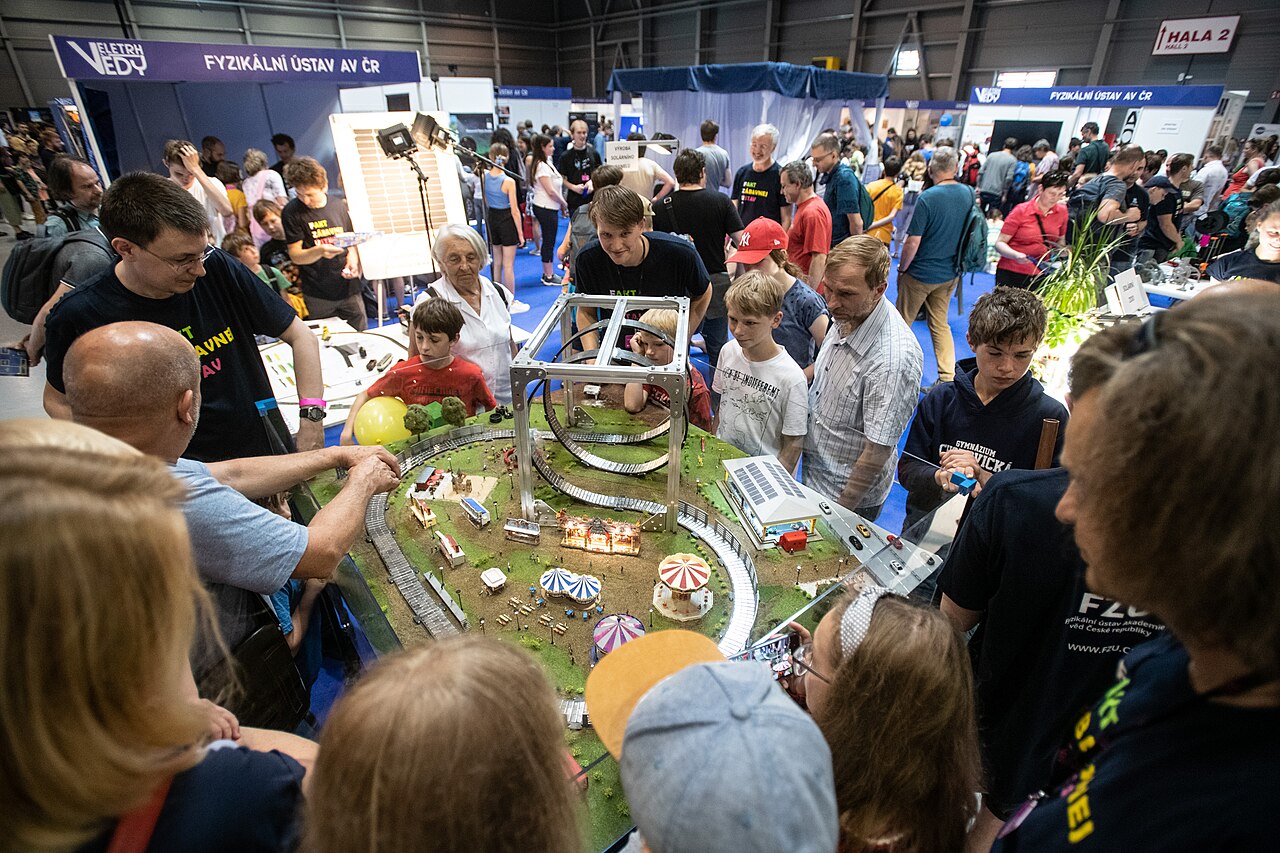
Find the public part of the program
A science event can contain several activities with different participation rules. STEMCON identifies its STEM Expo as a public celebration, while other named activities include competition or invitation-based elements. Use the organizer’s description of the public component when planning a visit. Do not infer access to judging, team areas or other sessions from the event’s overall name. Our listing points to the eligible public activity; check the current page for its schedule and any attendance instructions before arriving.
Begin with the problem the project addresses
Ask the presenter what question or design challenge they started with. This gives them room to explain the project in their own terms. You do not need to know the subject already to have a useful conversation. A simple, attentive question can be more encouraging than a technical challenge chosen to show your expertise. Let the presenter finish the explanation before asking about details, and respect a moderator’s format if the activity is running as a scheduled demonstration.
Ask about a choice, not just a result
Once you understand the aim, ask why the presenter selected a particular material, method or design. A project’s process can be as interesting as the finished demonstration. Questions about what changed along the way help reveal how the person approached the work. Avoid assuming every display is ready for broad practical use. A student project may be exploratory, a prototype or a demonstration of a principle, and the presenter can explain which description fits the work in front of you.
Keep demonstrations under supervision
Wait for permission before touching a model, screen or experiment. Some displays welcome interaction, while others need the presenter to operate them. Give the demonstration space and keep shared paths open. If you are attending with children, help them ask a question and follow the instructions. Do not reposition equipment to improve a photograph or repeat an activity without permission. The exhibit is part of someone’s work, and a careful visitor helps keep that work available for the people who come next.
Make room for uncertainty
Ask what the presenter would investigate or improve next. This can open a valuable conversation about limitations and future questions. Treat an honest account of uncertainty as part of the learning experience. Avoid pushing a student to make claims beyond the project’s scope. If a topic interests you, ask whether there is a resource or public demonstration you can explore further. You can leave with a better question rather than an answer that pretends the experiment has resolved everything.
Connect the visit to future learning
After the expo, write down a few subjects you want to understand more deeply. Keep the project description distinct from broader scientific conclusions and follow up with appropriate educational sources. Use our Photography & Technology category to discover other public learning events, and check the organizer’s rules for each one. This feature is a visitor-planning guide, not an evaluation of students or their projects. A successful day encourages curiosity and respectful conversation while keeping public access and supervised participation clear.
Continue exploring
Put the guide into practice
Current facts come from the directory. Follow the exact listing for admission, venue information and the official source.
STEMCON Public STEM Expo 2027 · Apr 24, 2027 · scheduled · Public visitor information — check organizer updates
Sources and visitor resources
- Photorama official camera-show information ↗
- ShutterFest official registration information ↗
- STEMCON public STEM Expo information ↗
Source review: 2026-10-12. General planning guidance; confirm current details with the organizer.
General planning guidance, not firsthand event reporting. Always check the organizer’s current details.
Find your next event →