Preparation Before Arriving at the Exhibition Hall
Attending a public exhibition requires advance attention to administrative rules and venue hours. Public hours typically span Saturday from nine in the morning until five in the afternoon, and Sunday from nine until three, though multi-day venue schedules can vary. Reviewing official ticketing portals ahead of time allows visitors to check admission pricing without needing to complete an immediate purchase. Admission scales generally reflect the overall size of the exhibit hall and the number of display tables hosted on-site. Visitors should note that children twelve and under frequently enter at no charge when accompanied by a supervising adult, encouraging family participation in the exhibition space. Furthermore, standard weekend admission policies often include return privileges for Sunday through a simple hand stamp issued during Saturday's session, which helps attendees manage multi-day visits efficiently without paying duplicate entry fees.
Understanding Venue Security and Firearm Entry Rules
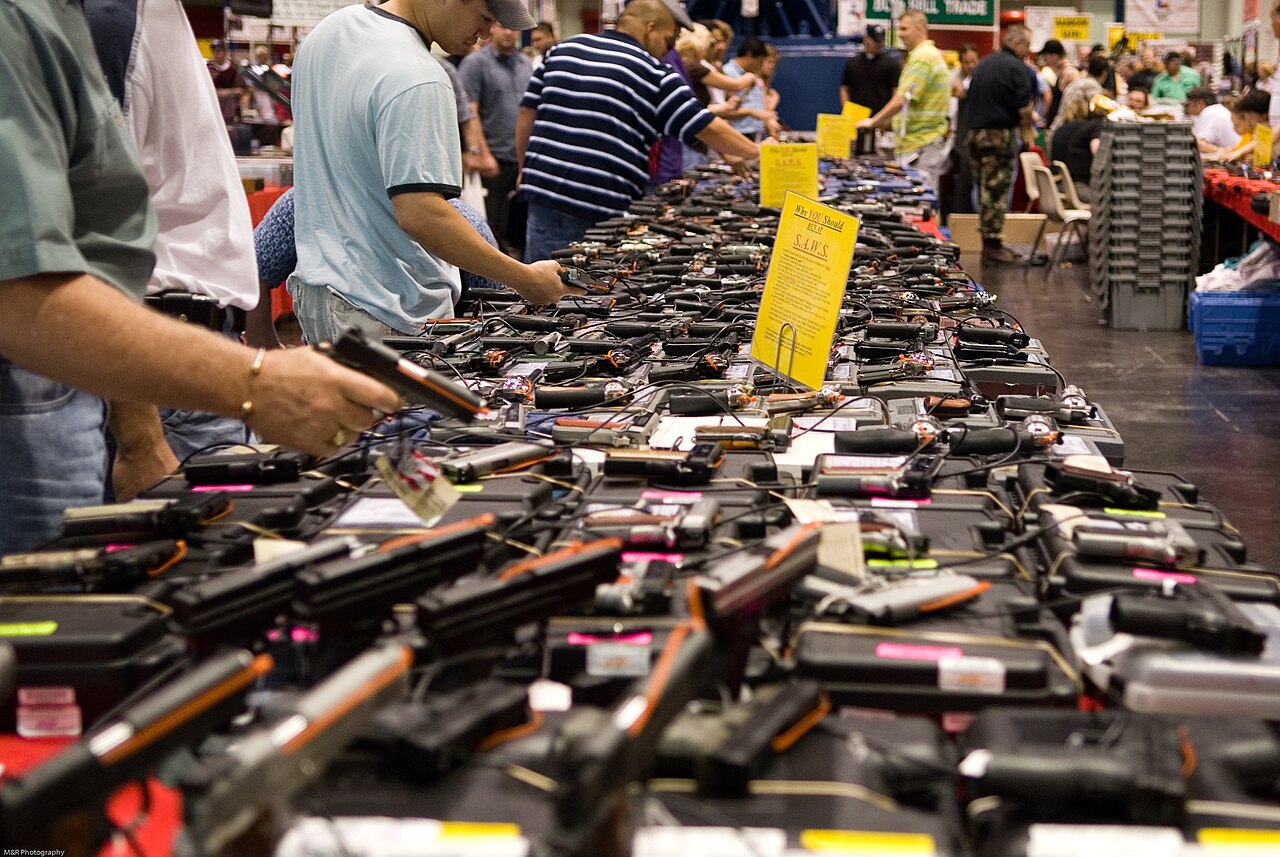
Exhibition venues enforce strict safety protocols regarding personal firearms brought onto the premises by attendees. Anyone planning to bring a firearm to the show for potential sale or trade must ensure the piece is completely unloaded before crossing the threshold. Upon arrival, visitors must immediately present the unloaded firearm to designated staff at the gun check table located near the main entrance. Security personnel verify that the action is clear and secure the firearm using a nylon tie designed to disable the mechanism for the duration of the visit. Official safety guidelines strictly prohibit any loaded firearms or loaded magazines within the exhibition hall to protect the general public and fellow attendees. Because visitors frequently handle pieces, fit holsters, or examine accessories, maintaining an unchambered and secured status for all personal items is treated as a paramount operational priority by venue management teams.
Navigating Concealed Carry Regulations and Public Policies
Carrying a concealed weapon under a permit involves distinct venue requests that differ from standard state allowances. While exhibition organizers generally express strong support for legal carry rights, they respectfully request that attendees refrain from carrying loaded firearms inside the crowded exhibition hall. This policy addresses the unique environment of a gun show, where visitors regularly pass items back and forth to inspect parts, evaluate holsters, or compare collections with peers. Management clarifies that this request stems solely from safety considerations tailored to a high-density public space rather than any political stance on carry laws. For individuals seeking formal credentials, specific regional events occasionally host testing and qualification paperwork sessions for specialized permits, such as Utah Concealed Carry documentation. Attendees should confirm whether qualifying classes are active at their specific venue destination, keeping in mind that cross-state permit recognition varies significantly by local jurisdiction.
Federal Guidelines and Interstate Purchasing Restrictions
Acquiring a firearm at a public exhibition involves navigating a combination of federal statutes and state-specific residency laws. In general, purchasers must provide official proof of residency within the state where the exhibition takes place to complete a modern firearm transaction. Federal law permits private party transfers between individuals who reside in the same state, provided neither party is legally prohibited from possessing a firearm. When an out-of-state visitor wishes to purchase an item, licensed dealers on-site can facilitate an authorized transfer by shipping the firearm to a federally licensed dealer in the buyer's home state. The firearm is then delivered only after the completion of required federal background checks and adherence to any additional state-level mandates. Understanding these geographic and licensing boundaries prevents administrative delays and ensures full compliance with statutory transfer obligations before any financial exchange occurs.
Private Collector Transactions and Federal Licensing Boundaries
Distinguishing between private collectors and commercial dealers is essential for anyone intending to display items for sale at an exhibition. Private collectors who maintain a personal accumulation built over years are generally permitted to buy, sell, or trade on an occasional basis without holding a commercial license. However, individuals who engage in regular commercial transactions as a primary business activity must possess a Federal Firearms License to operate legally. Sellers uncertain about whether their sales volume crosses the threshold into commercial dealing should consult directly with federal regulatory agencies for clarification. In certain jurisdictions, such as California, specialized legal frameworks apply to all private transfers, requiring transactions to be processed through licensed dealers who manage mandatory waiting periods and background verification checks directly on behalf of the participating parties.
Managing Accessories, Appraisals, and Specialized Equipment
Beyond complete firearms, exhibition floors feature extensive displays of components, historical literature, and accessory items like ammunition magazines. Federal regulations permit the sale and possession of high-capacity magazines under general federal statutes, though specific regional jurisdictions enforce strict limitations on magazine capacity, such as bans on items holding more than ten rounds. Attendees interested in determining the market value of personal items can consult multiple independent collectors and dealer tables stationed throughout the hall. Because organizers do not designate an official staff appraiser, gathering perspectives from various experienced vendors helps visitors form a realistic assessment. Additionally, reference literature such as specialized pricing guides can be acquired through standard retail channels to assist collectors in evaluating historical pieces, surplus equipment, and rare components prior to negotiating any direct trade.
Planning Your Practical Walkthrough for Maximum Efficiency
A successful visit to a large exhibition hall requires structuring your time around security checkpoints, table layouts, and vendor interactions. Because venues can house hundreds of display tables, reviewing floor maps and directions available on official event websites helps visitors map out their arrival route efficiently. When approaching the entrance with a personal piece for trade, budget extra time for the mandatory firearm check procedure at the designated security station to ensure a smooth transition into the main hall. Visitors should also verify local rules regarding background checks and documentation requirements before committing to a purchase. By combining careful preparation with an understanding of venue safety rules, attendees can navigate the crowded aisles comfortably, respect security protocols, and engage productively with the diverse community of collectors and dealers present at the exhibition.
How this article was prepared
This article used automated drafting and checks against the linked sources. Its photograph is identified and credited separately. Please use our correction link to report an error.
Continue exploring
Explore related events
Current facts come from the directory. Follow the exact listing for admission, venue information and the official source.
Columbus Gun Show — 2026 (2026-11-28) · Nov 28 – Nov 29, 2026 · scheduled · Public visitor admission announced; check organizer for current availability
Winston-Salem Gun Show — 2026 (2026-11-28) · Nov 28 – Nov 29, 2026 · scheduled · Public visitor admission announced; check organizer for current availability
Mesquite Gun Show — 2026 (2026-11-28) · Nov 28 – Nov 29, 2026 · scheduled · Public visitor admission announced; check organizer for current availability
Lebanon Missouri Gun Show — 2026 (2026-11-28) · Nov 28 – Nov 29, 2026 · scheduled · Public visitor admission announced; check organizer for current availability
Sources and further reading
Source review: 2026-11-27. Examples identified as hypothetical are original illustrations.
An independently researched feature. Worked examples are illustrative; photographs identify their archive or collection context.
Find your next event →