
Read the ornament as a composition
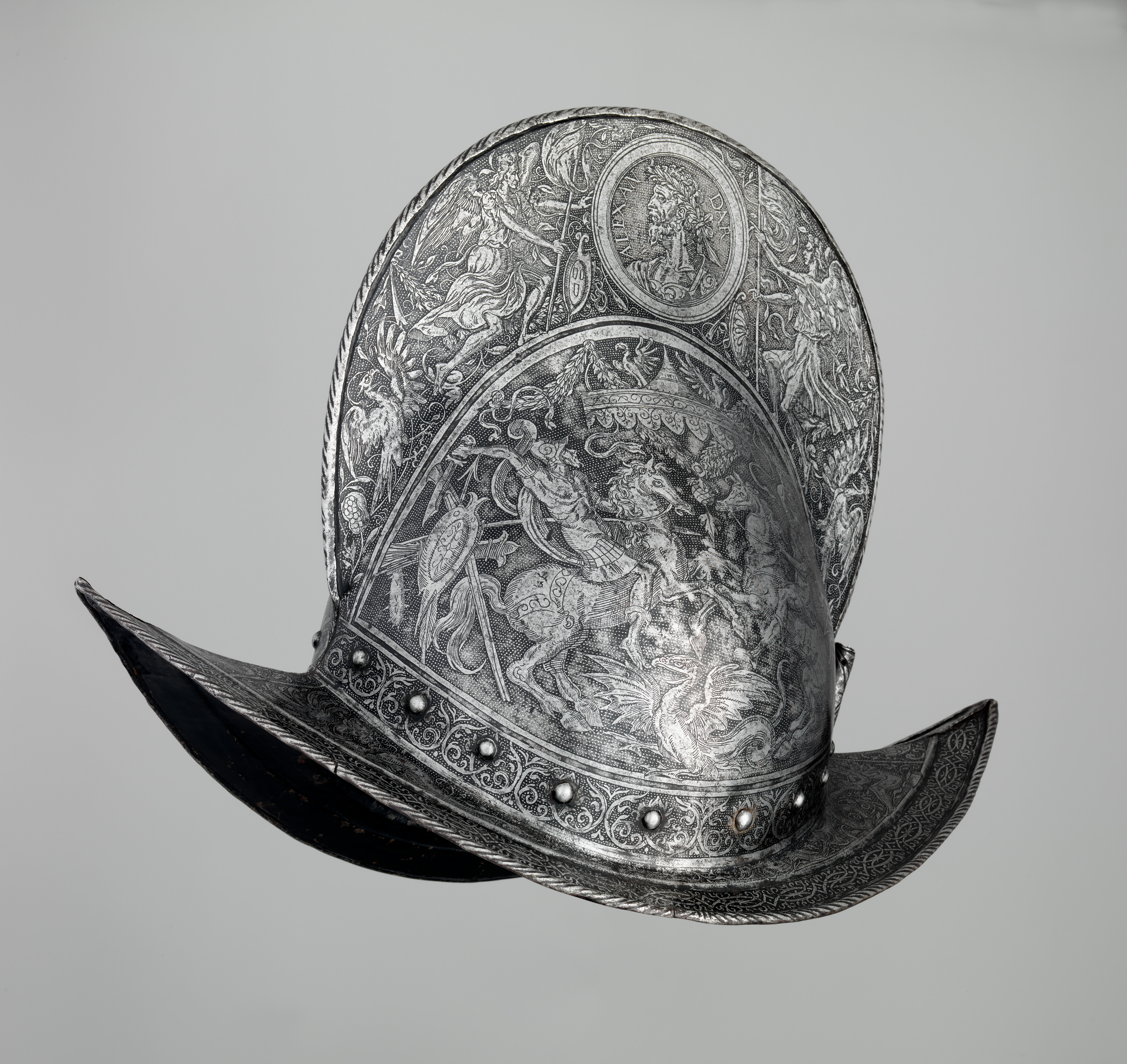
An arms-and-armor exhibition can present decoration as a subject in its own right. The Met's essay on decorative techniques places engraving among the historical forms of ornament used on these objects. For a spectator, the useful focus is visual: where motifs appear, how they repeat and how they relate to the object's surface. A decorated historical piece can be studied as an arrangement of lines, borders and figures without discussing its operation. Begin with the exhibit's description of the technique and the image's visible structure. The label identifies the material or method; the eye follows the composition it creates.
Borders organize the surface
A border can define a panel, separate areas or frame a central motif. Notice whether it follows the object's outline or establishes another shape within the surface. In an exhibit photograph, a repeated narrow border might surround a larger blank area, making the blank area part of the composition rather than an absence of design. Describe the relationship before assigning a symbolic meaning. The location of a border is a visible fact; its intended significance needs the exhibition's explanation. This distinction lets a visitor appreciate the visual organization while retaining the difference between observation and historical interpretation.
Repetition creates rhythm
A repeated motif establishes a pattern across the surface. The intervals can be regular, varied or interrupted by another element. At an exhibition, trace the repetition through the visible image rather than assuming it continues behind an obscured portion. A sequence of leaves might alternate direction around a panel. That observation explains how the pattern moves visually. It does not identify a maker or date without further evidence. Repetition is useful descriptive vocabulary because it communicates something another viewer can locate in the image. It also distinguishes a carefully organized pattern from a general impression that the object is “highly decorated.”
Motifs need their documented context
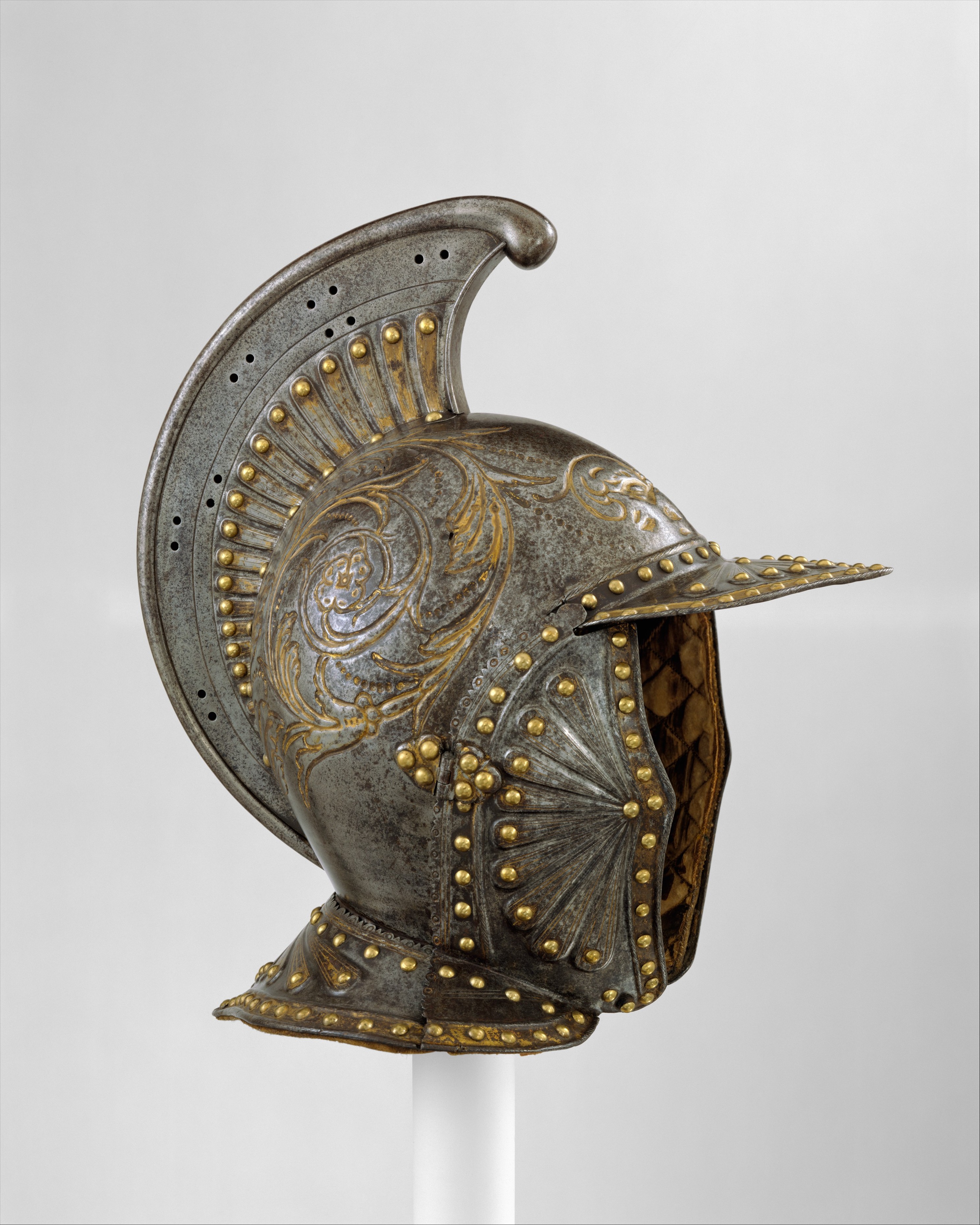
A plant, animal, figure or geometric form can carry meanings that depend on the historical setting. The museum label or essay may identify that context. A spectator should preserve the difference between seeing a motif and knowing its intended reference. An animal-like figure can be described through its visible shape while its historical interpretation remains unresolved. This is especially useful when a familiar symbol appears in a different cultural setting. The exhibition's documentation provides the frame for understanding it. Visual resemblance alone is not a complete translation, and an ornament need not be assigned a story that the label does not support.
Compare two invented decorative panels
Imagine Panel A with a central figure surrounded by a narrow repeated border. Panel B uses an all-over pattern without one dominant center. A useful comparison names focal emphasis, repetition and space: A concentrates attention at its center, while B distributes attention across the field. The exercise does not claim that one is more elaborate or valuable. It demonstrates two organizational choices. Now imagine a close-up that includes only Panel A's border. The crop changes what can be observed, showing why a detail photograph should remain connected to the full object image and its exhibit label.
Technique is not just appearance
Several decorative techniques can create lines or contrasting surfaces. The Met's decorative-technique essay distinguishes methods within its historical account. At an exhibition, use the named technique when the label supplies it rather than identifying a method solely from a low-resolution photograph. A visible line can be described as a line before its making process is established. This keeps the account precise without turning visual analysis into a technique tutorial. The audience can discuss placement, repetition and contrast while the museum documentation supplies the historical method. Both layers contribute to understanding the decoration, but each has its own evidence.
Light and crop affect the reading
A photograph's lighting can make surface details more or less visible. A detail image may emphasize an area that is subtle in a full view. Read the caption and compare available images when the exhibition provides them. In a notebook, record “motif visible in the detail view” rather than assuming the full object presents every ornament equally from every angle. The viewing condition belongs to the observation. This is a useful habit for collector displays as well as online museum collections, because an image is a particular presentation of the object, not an exhaustive visual record of all its surfaces.
Describe the visual argument
A clear account might say, “The decoration frames a central motif with repeated border elements, while the label identifies the historical technique.” That sentence connects composition with documentation. It leaves symbolism, attribution and date with their actual sources instead of inventing them from appearance. At a historical display within a gun show, this approach gives ornament its own cultural interest. The object can be read through line, rhythm and surface organization as an example of decorative art. Understanding the visual language makes the exhibit informative without requiring operational discussion or a claim about the object's present capability.
Continue exploring
Explore related events
Current facts come from the directory. Follow the exact listing for admission, venue information and the official source.
Tidewater Gun Show — 2026 (2026-12-05) · Dec 5 – Dec 6, 2026 · scheduled · Public visitor admission announced; check organizer for current availability
Sources and further reading
Source review: 2026-10-12. Examples identified as hypothetical are original illustrations.
An independently researched feature. Worked examples are illustrative; photographs identify their archive or collection context.
Find your next event →