
Understanding Admission Policies and Ticket Logistics
When planning a visit to a regional exhibition, checking advance ticket availability and public operating hours helps structure a smooth arrival. Admission prices generally correlate with the overall scale of the floor and the number of active display tables. Families often find that children within specific age thresholds receive complimentary entry, which encourages multi-generational attendance. Furthermore, multi-day ticketing structures frequently offer return privileges for the following day when visitors secure a visual marker such as a hand stamp upon exiting. Checking official venue calendars beforehand ensures that attendees arrive during standard public hours rather than restricted trade setup windows, avoiding confusion at the main entrance.
Preparing Personal Firearms for Safety Verification
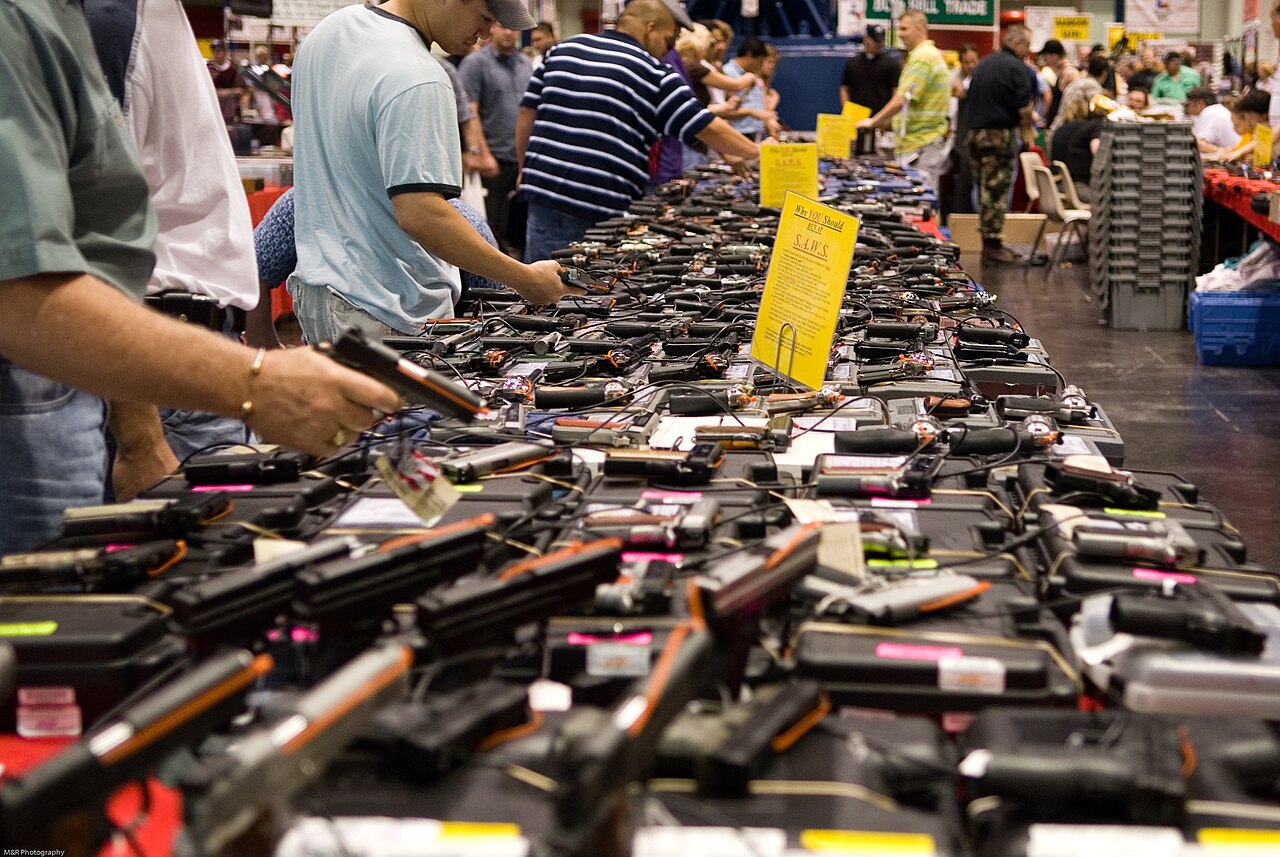
Visitors who plan to bring a personal firearm into the exhibition hall for sale, trade, or appraisal must adhere to strict initial security protocols. Public safety guidelines require that every brought-in firearm remain completely unloaded before reaching the building entrance. Upon arrival, attendees must direct their steps to the designated gun check station rather than wandering the main aisles. Staff members at this checkpoint conduct physical inspections to verify that the chamber is clear and secure the mechanism using a specialized nylon tie designed to disable the action. This preventive step ensures that all active display exchanges on the floor remain orderly, addressing the unique environment where personal items are frequently handled, inspected, or compared side by side.
Navigating Concealed Carry Rules Inside the Venue
While many attendees hold valid permits to carry defensive firearms, major exhibition organizers maintain specific policies regarding loaded carry within the building. Event organizers respectfully request that participants refrain from carrying loaded firearms on the exhibition floor, even with a valid Concealed Carry Permit. This operational rule stems from the interactive nature of the venue, where visitors routinely pass pieces back and forth to inspect finishes, fit holsters, or compare mechanical features with colleagues. Establishing a uniform standard where personal firearms remain secured ensures a predictable environment. Clear communication regarding these safety requirements helps prevent accidental handling incidents while still supporting responsible ownership and educational discussions among patrons.
Evaluating Firearm Valuations and Appraisal Options
Attendees interested in determining the market value of inherited pieces or long-held personal collections can utilize the expertise present among independent collectors and specialized dealers on the floor. Because organizers do not typically designate a single official appraiser for the event, visitors benefit from consulting multiple experienced tableholders to gather varied perspectives on condition, rarity, and current market demand. Bringing reference materials or consulting printed valuation guides, such as standard industry pricing books available through major booksellers, provides an objective baseline before entering discussions. Comparing multiple independent opinions helps collectors make informed decisions regarding whether to retain, display, or offer items through appropriate channels.
Complying with Interstate Transfer and Residency Laws
Purchasing a modern firearm at a public exhibition requires strict adherence to federal statutes and state-specific residency requirements. In general, buyers must provide verifiable proof of residency in the state where the event is taking place to acquire modern inventory directly from licensed dealers on-site. When transactions involve residents from different jurisdictions, specialized transfer arrangements must be utilized, such as shipping the item to a federally licensed dealer in the buyer's home state for formal background checks and delivery. Understanding these legal frameworks prevents inadvertent non-compliance and ensures that all acquisitions follow mandatory waiting periods and administrative procedures dictated by local authorities.
Distinguishing Private Collectors from Commercial Dealers
Exhibition floors host a diverse mix of commercial enterprises and private individuals displaying personal collections accumulated over many years. Private collectors who sell items on an occasional basis operate under different regulatory expectations compared to individuals who are engaged in the business of regular commercial dealing. Sellers who participate frequently or maintain regular commercial inventories must secure proper federal licensing and follow structured dealer guidelines. For events located in specific jurisdictions like California, all private transfers must be routed through licensed dealers to execute mandatory background checks and statutory holding periods, underscoring the importance of verifying local legal obligations.
Reviewing Accessory Standards and Amagazine Rules
Beyond complete firearms, exhibition tables frequently feature a wide variety of replacement parts, vintage accessories, and feeding devices that require careful attention to regional statutes. Federal regulations and local ordinances often differ significantly regarding specific capacities and component classifications. For example, while certain configurations remain permissible under broader federal guidelines, individual states may enforce strict limitations on importing or transferring magazines capable of holding more than a designated round count. Reviewing these precise rules before making purchasing decisions ensures that visitors remain fully compliant with regional restrictions while exploring the extensive array of historical and modern hardware displayed across the hall.
How this article was prepared
This article used automated drafting and checks against the linked sources. Its photograph is identified and credited separately. Please use our correction link to report an error.
Continue exploring
Explore related events
Current facts come from the directory. Follow the exact listing for admission, venue information and the official source.
Pasadena Gun Show — 2026 (2026-11-21) · Nov 21 – Nov 22, 2026 · scheduled · Public visitor admission announced; check organizer for current availability
Crossroads of the West Gun Show — Las Vegas — 2026 (2026-11-21) · Nov 21 – Nov 22, 2026 · scheduled · Admission announced; organizer says tickets will be available soon
Crossroads of the West Gun Show — Tucson — 2026 (2026-11-21) · Nov 21 – Nov 22, 2026 · scheduled · Admission announced; organizer says tickets will be available soon
Mesquite Gun Show — 2026 (2026-11-28) · Nov 28 – Nov 29, 2026 · scheduled · Public visitor admission announced; check organizer for current availability
Sources and further reading
Source review: 2026-11-18. Examples identified as hypothetical are original illustrations.
An independently researched feature. Worked examples are illustrative; photographs identify their archive or collection context.
Find your next event →










