
A game box can hold several different sets
After a game and its expansions share a box, a component count can become difficult to interpret. Some pieces belong to the original edition, some to a particular expansion, and some may be replacements or accessories. At a convention exhibit, a fully arranged table may also use only the pieces needed for one mode. The official Wingspan rules reference separates component categories and identifies multiple modes and expansion material, supplying a primary example of why scope matters. This feature uses an invented inventory to explain component records. The separate component groups reveal how a collection and a particular session setup relate.
Begin with the edition’s own list
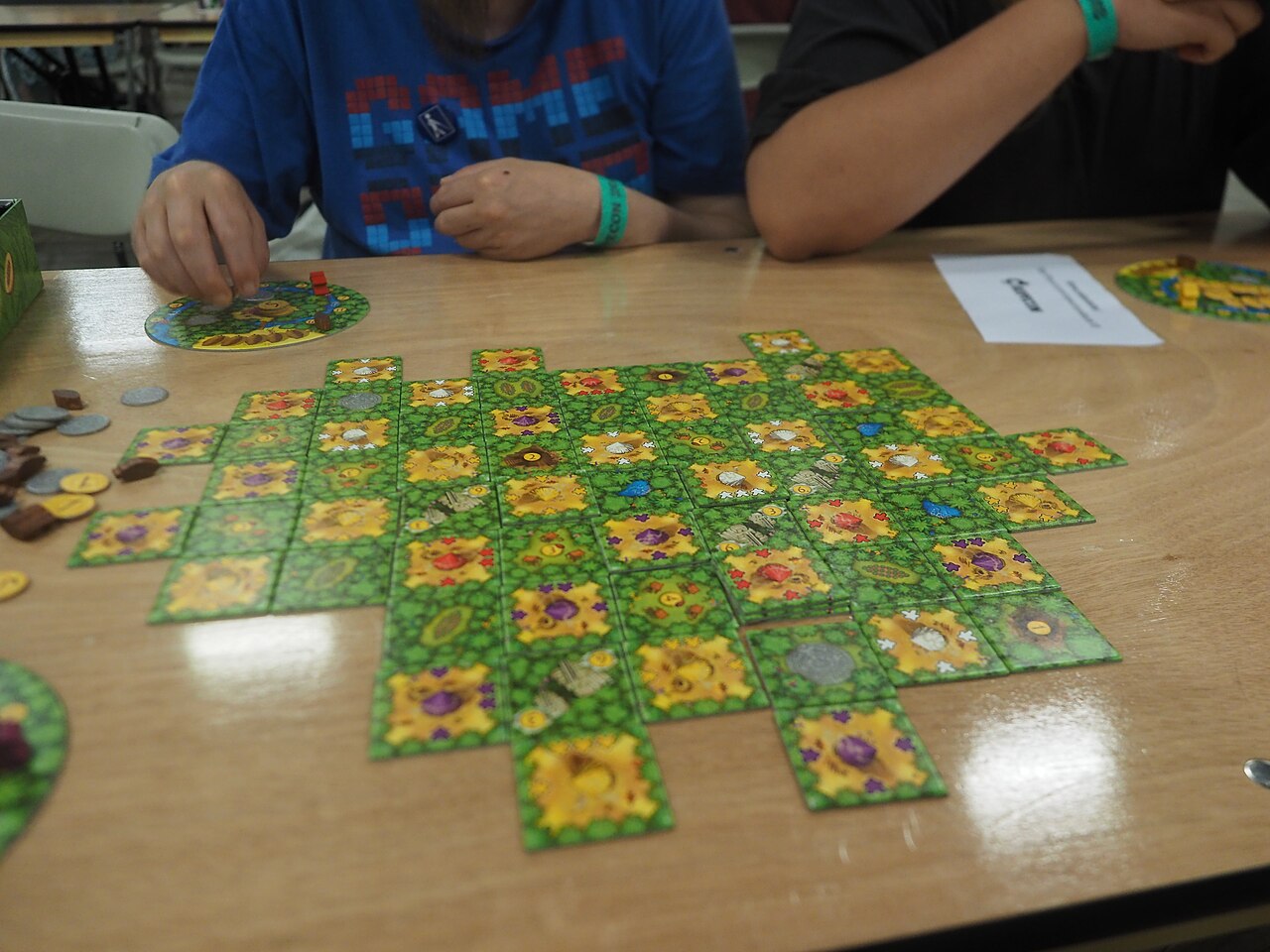
Imagine a game called Harbor Routes whose core edition lists forty route cards, twelve destination tiles and four player boards. Treat those numbers as the edition’s expected inventory, not as a rule for other products. A different printing or language edition might have its own documentation. The first task is to identify the specific list that applies to the object being counted. A photo of an elaborate demonstration table is not a substitute for that list. Pieces can be concealed, stacked, omitted for the session or supplied from another source, so the visible arrangement does not establish the complete contents of a box.
Record an expansion separately
Suppose an expansion, Northern Lights, adds ten route cards and six destination tiles. Keep those additions in a separate record before combining totals. The combined inventory would contain fifty route cards and eighteen destination tiles, plus the original four player boards if nothing replaces them. This arithmetic is simple, but the separate record preserves provenance: a missing tile can be traced to the core set or the expansion. It also allows a player to identify which pieces are needed for a particular mode. A single total loses that distinction and can make a complete core game appear incomplete merely because someone is comparing it with a combined collection.
Distinguish additions from replacements
An expansion or revision can replace a component rather than add another active copy. In the Harbor Routes, a revised player board might supersede the earlier board for a stated mode. Both objects could still be physically present in the box, but the rules would not necessarily call for both at once. Record the relationship as the documentation describes it. Counting five boards where the inventory expects four does not automatically mean there is an accidental extra; one may be a replacement. Conversely, a similar appearance does not prove replacement. The printed explanation matters more than a guess based on matching artwork or size.
An accessory can be outside the required inventory
A separate tray, alternate marker or organizer can accompany a game without being part of its original component list. In the example, a decorative starting-player marker might replace a plain token in the owner’s preferred arrangement. Its presence should be noted separately from the official set contents. That avoids turning a personalized display into an inaccurate description of what every edition includes. The distinction also helps when reading an exhibit label: a table showcasing an accessory system is presenting more than the underlying game. Identify which objects the label actually attributes to the publisher or edition before assigning them all to one product record.
Cards need identity as well as a count
A deck can have the expected number of cards while containing an unintended duplicate and missing another card. Where the official documentation supplies identifiers, compare those alongside the total. In Harbor Routes, imagine route cards numbered one through forty. A count of forty with two copies of card seventeen and no card eighteen would not match the stated sequence. This is an inventory example, not a claim about a product defect. Some games intentionally repeat cards, so numbering or artwork alone cannot establish an error without the applicable list. The count answers how many; the identifier record answers which ones.
A session uses a subset of the collection
A demonstration may omit an expansion or select a shortened scenario. In the game, a tutorial could use six tiles from the twelve-tile core set. Seeing only six tiles on the table would not establish that the box is missing the other six. Separate session setup from collection inventory. Official rules references can make that relationship visible through component lists and setup sections; Wingspan’s reference provides an example of those distinct sections. Read each for its own purpose. Setup tells you what is arranged for a specified game, while an inventory list describes what the identified product supplies.
Write a record that preserves the relationships
A clear component note might list the core set, each expansion, replacements and accessories as separate groups, then identify the mode displayed. For Harbor Routes, that structure explains why the combined total differs from the core list and why a tutorial table uses fewer pieces. It is more informative than photographing a crowded box and calling its contents complete. At an exhibit, a precise question can ask whether the displayed setup includes an expansion or alternate component. The resulting answer helps describe the actual table without inventing package contents, and it preserves distinctions that remain useful long after a short demonstration ends.
Continue exploring
Explore related events
Current facts come from the directory. Follow the exact listing for admission, venue information and the official source.
Gen Con Indy 2027 · Aug 5 – Aug 8, 2027 · scheduled · 2027 dates announced; badge-sale schedule requires current organizer confirmation
Sources and further reading
Source review: 2026-10-12. Examples identified as hypothetical are original illustrations.
An independently researched feature. Worked examples are illustrative; photographs identify their archive or collection context.
Find your next event →