
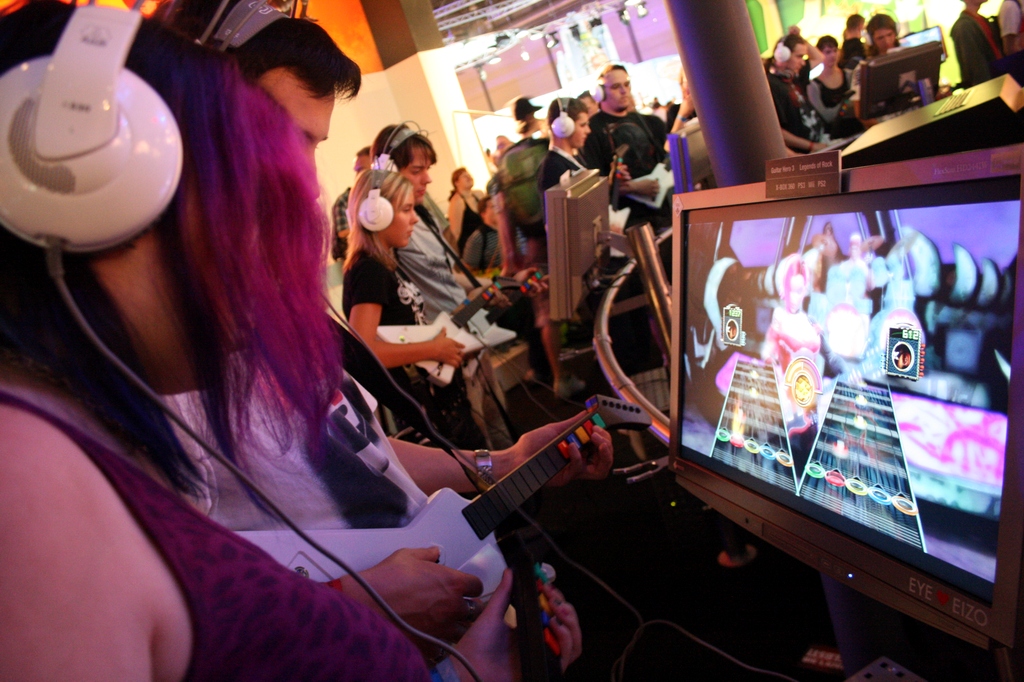
A responsive demo is an observation, not a benchmark
At a gaming expo, pressing a button and seeing a response can create a strong impression of speed. That impression is useful as a description of the experience, but it does not automatically measure input latency or identify which device caused a delay. A demonstration combines controls, software and a display, sometimes with other systems involved. Nintendo’s official support material explains that television processing can affect the apparent timing of controls and sound in TV mode. That primary example establishes one relevant part of the chain. The worked situations here are hypothetical and do not report measurements of any exhibitor’s equipment.
Define the response you are observing
An input can lead to several visible or audible events. A button press might open a menu, begin an animation or cause a character to complete an action later. Those are different endpoints. In a demo called Harbor Jump, pressing a button begins a short anticipation pose before the character leaves the ground. The elapsed time to visible movement differs from the time to takeoff. Without defining the endpoint, two observers could report different impressions while watching the same behavior. Start by naming what you expected to happen and which visible event you actually used as the response.
The chain has several stages
A control communicates an input, the game handles it and the display presents the result. The exact implementation varies by system. A delay perceived across the chain does not reveal the contribution of every stage individually. In the demo, a menu animation could be intentionally gradual even when the input is recognized promptly. Another situation might involve processing outside the game itself. Nintendo’s television example is a useful reminder that the screen is part of the presented experience. It does not prove that a particular expo display has the same cause or that changing one setting would resolve every perceived delay.
Keep frame rate and response time distinct
Frame rate describes how frequently images are produced or presented under the relevant definition; response latency concerns elapsed time between specified events. The two can be related without being identical. A smooth-looking animation does not, by itself, establish a measured input-to-display delay. Conversely, an abrupt menu response does not describe the frame rate of an entire game. In Harbor Jump, a looping background could look fluid while the character deliberately waits in an anticipation pose after the button press. Describe the visible smoothness and the action timing separately. That prevents two different aspects of the demonstration from being collapsed into a single claim that it is fast.
Compare like actions before comparing systems
Imagine trying Harbor Jump on two demo stations. One shows a menu and the other shows the jumping sequence. A menu opening on one station and a takeoff on the other are not matched response events. Even if both seem quick, the comparison does not isolate a hardware difference. A more controlled observation would use the same documented action in the same game context, with the setup differences recorded. At a public exhibit, that level of control may not be available. The appropriate description is then limited: this action felt prompt in this presented configuration, rather than one system has lower latency in general.
A rough visual estimate has limits
Human observation can identify an obvious mismatch or a notable delay, but assigning a precise millisecond number requires a measurement method that defines and captures the events. A phone recording may introduce its own frame timing and viewing constraints, and a short clip is not automatically a validated benchmark. The exercise here is descriptive: identify the input, the expected response and the configuration shown. If a presenter supplies measured results, ask how the endpoints and conditions were defined before treating a number as directly comparable with another claim.
Sound can have a separate timing relationship
A game’s sound and visible action can appear aligned or offset, adding another observation to the experience. Nintendo’s official support page discusses control delay and audio timing in the stated TV-mode context. At an expo, a sound heard from a nearby station may also be difficult to attribute without clear context. In Harbor Jump, a landing sound could be tied to the landing event rather than the original button press. The right comparison would concern that event. Preserve the difference between input-to-image timing and sound-to-image alignment instead of treating every perceived mismatch as the same technical problem.
Ask for the configuration behind a claim
A useful question names the conditions: is this a local demonstration, what action does the response claim measure, and what display configuration accompanies it? The presenter may have documentation or may simply be offering a playable sample. Both can be described accurately. Record measured claims as attributed claims and personal impressions as observations, keeping their evidential roles separate. A short convention demo can reveal how an action feels in one setup, which is already useful information. It becomes misleading only when the description grows beyond the evidence into an unsupported ranking of equipment, software or every possible version of the experience.
Continue exploring
Explore related events
Current facts come from the directory. Follow the exact listing for admission, venue information and the official source.
Gen Con Indy 2027 · Aug 5 – Aug 8, 2027 · scheduled · 2027 dates announced; badge-sale schedule requires current organizer confirmation
Sources and further reading
Source review: 2026-10-12. Examples identified as hypothetical are original illustrations.
An independently researched feature. Worked examples are illustrative; photographs identify their archive or collection context.
Find your next event →