
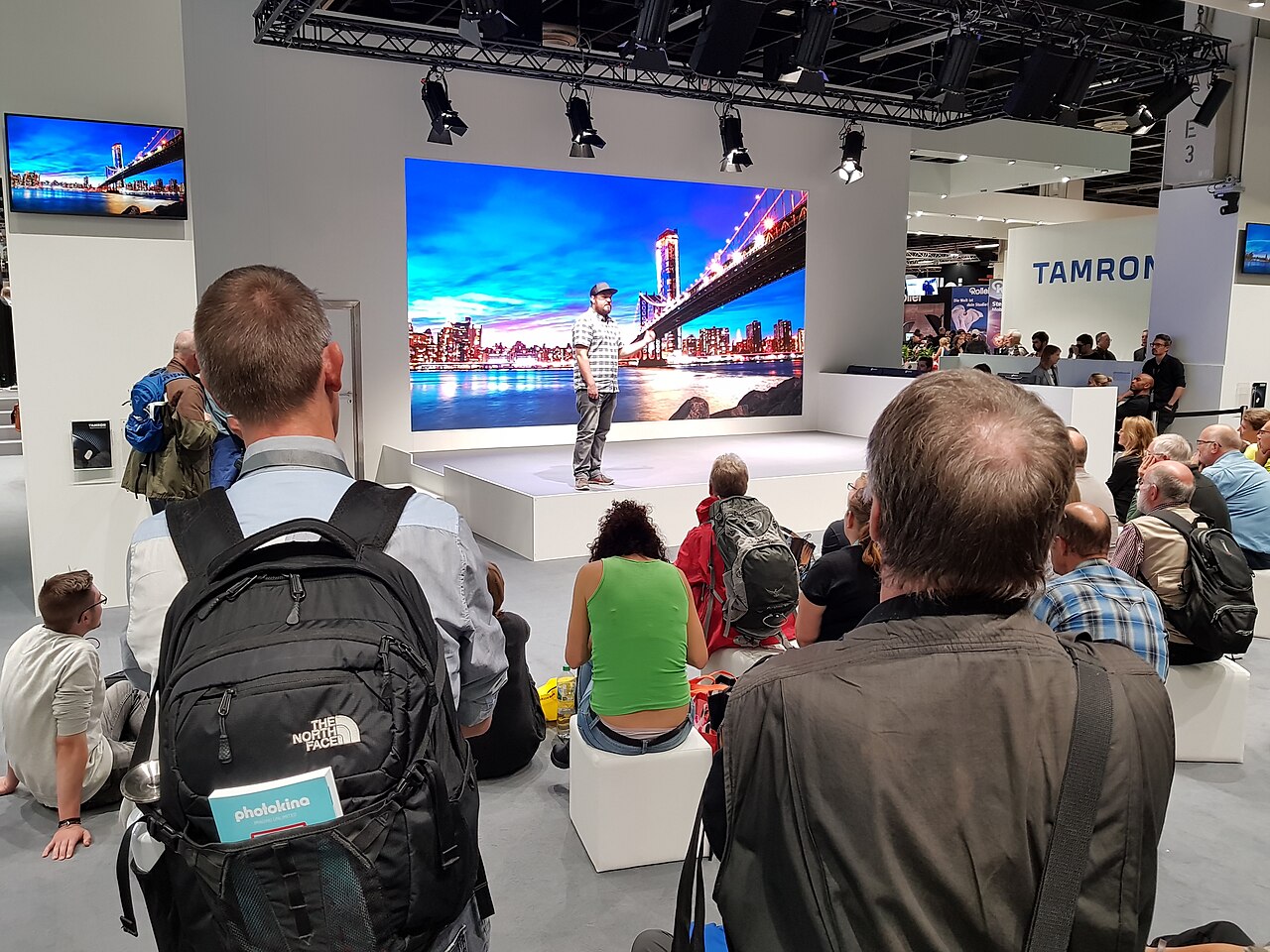
Navigating the Exhibition Floor with Maturity Frameworks
When exploring a modern technology or photography exhibition, visitors encounter a wide spectrum of innovations ranging from conceptual blueprints to market-ready gear. Without a structured way to evaluate these displays, it is easy to mistake a speculative prototype for an item available for immediate purchase. Establishing a reliable method for assessing product maturity allows attendees to calibrate their expectations correctly. Rather than taking every flashy demonstration at face value, informed visitors look for specific indicators that reveal whether a technology is still undergoing basic laboratory testing or has already been fully qualified for consumer deployment. Applying formal readiness concepts to convention exhibits transforms a casual walkthrough into a strategic evaluation of emerging industry standards and upcoming commercial releases.
Understanding Early-Stage Research and Speculative Concepts
At the foundational end of the development spectrum, many exhibits showcase exploratory ideas that correspond to early readiness phases. In formal assessment systems like NASA's Technology Readiness Levels, initial stages represent basic scientific research where fundamental principles are first studied and translated into future concepts. At this speculative tier, experimental proof of concept is often absent, meaning the displayed idea exists primarily as a theoretical model or a preliminary paper study. When active research and design eventually commence, projects advance to analytical and laboratory evaluations where proof-of-concept models are constructed. For convention attendees, recognizing these early markers is essential because a brilliant demonstration on a display stand does not guarantee that a stable, manufacturable product will appear on store shelves anytime soon.
From Component Testing to Fully Functional Prototypes
As development progresses through intermediate phases, exhibits become much more tangible and interactive. Mid-level milestones typically involve testing multiple component pieces together to verify their compatibility and operational viability. In engineering environments, this stage often utilizes breadboard technology, which undergoes rigorous simulation and stress testing in conditions that mimic realistic usage scenarios. Once these integrated simulations are successfully completed, developers can build fully functional prototypes or representational models. On an exhibition floor, seeing a working prototype indicates that the core mechanics are sound, but it still does not signify that manufacturing lines are rolling. Visitors should observe whether the demonstration relies on controlled laboratory settings or if the hardware has already advanced to rigorous field qualification.
Qualified Hardware and the Final Push to Market
The final tiers of technical maturity mark the transition from successful engineering models to verified commercial products ready for real-world deployment. In formal qualification processes, hardware must be thoroughly tested and validated in demanding operational environments before it can be implemented into existing systems. Once a technology achieves full field-proven status during actual missions or extended commercial use, it reaches the highest tier of maturity. For convention visitors evaluating new camera bodies, lenses, or specialized digital tools, understanding this distinction helps prevent disappointment. A device that has completed all qualification phases is ready for immediate adoption, whereas items still lingering in prototype phases require careful monitoring of manufacturer roadmaps and official release timelines before budget allocations are made.
Applying Software Release Train Models to Digital Tools
Hardware is only part of the modern imaging ecosystem; software stability and update cadences are equally critical for photographers and digital creators attending technology expos. To manage complex codebases, many technology organizations utilize structured release train models along primary code branches. These systems separate experimental features from stable production environments by routing ongoing development through distinct channels. Preview channels give developers and early adopters access to features still under active refinement, while stable releases provide predictable updates for everyday users. Understanding how software flows through these scheduled branches helps exhibition attendees interpret software demonstrations correctly. When a vendor showcases a cutting-edge editing tool or firmware update, visitors should inquire whether the feature is actively riding development trains or undergoing final stabilization before public deployment.
Managing Feature Flags and Controlled Rollouts
Exhibitors frequently preview upcoming software capabilities that are not yet active in standard user installations. Modern software engineering relies heavily on preferences and feature flags to control experimental elements without exposing partially completed workflows to the broader public. By utilizing targeted telemetry experiments and gradual rollouts, developers can measure how new functions impact performance before releasing them universally. When exploring software demonstrations at a convention, visitors should ask whether a showcased capability requires special configuration flags or if it forms part of an upcoming release cycle. Recognizing the difference between a permanently enabled production feature and an experimental preference prevents confusion when attempting to replicate demonstrated workflows back in a home studio.
Formulating Smart Questions for Your Next Expo Visit
Armed with a clear understanding of readiness scales and release mechanics, convention attendees can direct more meaningful inquiries to booth representatives and product engineers. Instead of simply asking when a product will be released, visitors can inquire about its specific verification status, testing milestones, and compatibility requirements. Asking whether a demonstration represents a preliminary proof of concept or a fully qualified shipping unit cuts through marketing hype and uncovers practical realities. Furthermore, separating hardware maturity indicators from software update cadences ensures that purchasing and investment decisions are built on verifiable facts rather than temporary convention excitement. By systematically evaluating both physical craftsmanship and software stability, visitors leave the exhibition floor with actionable insights and a realistic roadmap for future technology adoption.
How this article was prepared
This article used automated drafting and checks against the linked sources. Its photograph is identified and credited separately. Please use our correction link to report an error.
Continue exploring
Explore related events
Current facts come from the directory. Follow the exact listing for admission, venue information and the official source.
Maker Faire Rochester 2026 · Nov 21, 2026 · scheduled · Check ticket availability
I/ITSEC Orlando 2026 · Nov 30 – Dec 3, 2026 · scheduled · Check the organizer for current registration and availability
Live Design International 2026 · Dec 2 – Dec 8, 2026 · scheduled · Edition verified; admission eligibility unconfirmed
CES 2027 — LVCC Exhibit Campus · Jan 6 – Jan 9, 2027 · scheduled · Verified trade edition — professional eligibility applies
Sources and further reading
- Technology Readiness Levels - NASA ↗
- Pocket Guide: Shipping Firefox — Firefox Source Docs documentation ↗
Source review: 2026-10-29. Examples identified as hypothetical are original illustrations.
An independently researched feature. Worked examples are illustrative; photographs identify their archive or collection context.
Find your next event →










