
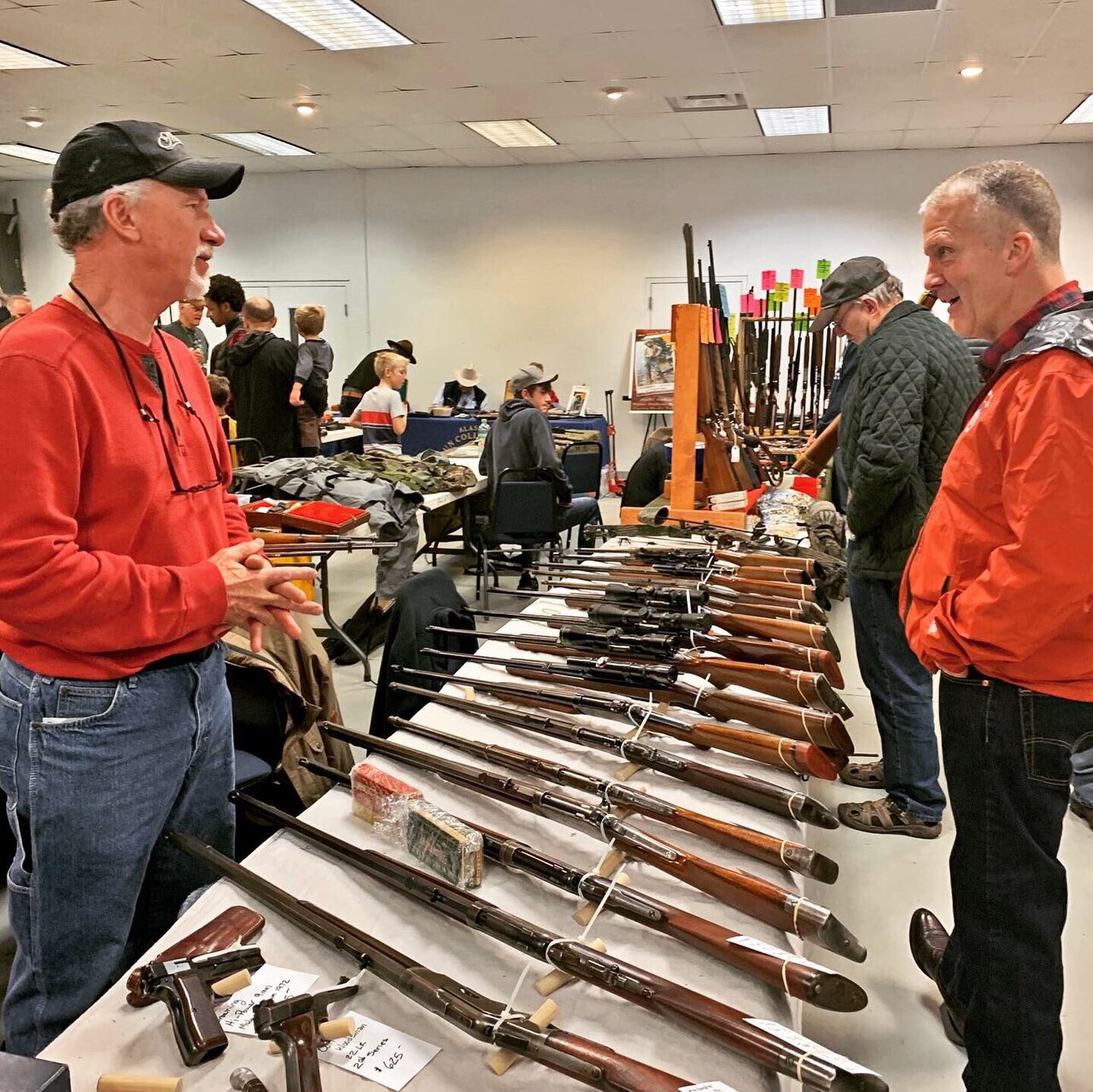
Ask what the display is intended to show
Start with the exhibitor’s explanation of the display’s purpose. It may illustrate a period, a collection theme or the organizer’s own interests. Ask how the objects relate to one another rather than beginning with a request to handle an item. You can learn a great deal from the arrangement and the account behind it. This feature is about observing a public exhibition; it does not provide instructions for weapon operation or advise visitors about transactions involving the displayed items.
Let the exhibitor define the interaction
A table display is not an invitation to touch. Wait for permission and accept a hands-off approach without trying to negotiate around it. Do not move a label, lift an item or reach across another visitor to improve the view. If the exhibitor is speaking with someone, give them time to finish. A calm conversation from the public side of the display often provides a clearer explanation than a hurried interaction in which everyone is trying to examine the same thing at once.
Ask about context and documentation
Useful questions include how the display’s theme was selected, where a historical detail is documented and what the exhibitor recommends reading next. Keep a distinction between a collector’s explanation and a claim you can independently verify. If a story sounds interesting, record its source rather than repeating it later as established fact. Ask for a publication, museum resource or other appropriate reference. A public show can introduce a subject, while deeper historical research needs more than a brief conversation in a busy hall.
Use photographs only with permission
Ask whether the exhibitor allows photography and follow any stated limits. Some may be comfortable with a wider display view but prefer that individual objects or labels are not photographed. Do not include personal details, badges or paperwork in the frame. If you share an image, describe what it actually depicts and credit the context where appropriate. Avoid implying that a display is an official historical assessment or that your photograph establishes authenticity, significance or the experience of the entire event.
Read the show’s rules separately
The courtesy of an exhibitor does not replace the organizer’s attendance policies. Confirm current public admission, entry instructions and photography conditions before visiting. Crossroads and Showmasters publish attendee resources, while venue pages supply practical location information; check the selected edition’s own materials. Different shows can have different rules and formats. A useful visitor plan leaves enough time to observe without crowding a table or assuming that a particular display described elsewhere will be present at every recurring edition.
Follow the subject after the event
Write down the display theme and the references suggested during the conversation. At home, look for fuller context and distinguish what was observed from what was explained to you. Our Gun Shows listings and venue pages help you find other verified public editions, but inclusion does not certify any exhibit’s historical claims. A spectator can enjoy a collector display while keeping those boundaries clear. The best takeaway is a traceable subject for further learning and an encounter conducted with respect for the people and work involved.
Continue exploring
Put the guide into practice
Current facts come from the directory. Follow the exact listing for admission, venue information and the official source.
Tidewater Gun Show — 2026 (2026-12-05) · Dec 5 – Dec 6, 2026 · scheduled · Public visitor admission announced; check organizer for current availability
Sources and visitor resources
- Crossroads attendee FAQ and admission information ↗
- Showmasters official show information ↗
- Virginia Beach Convention Center visitor resources ↗
Source review: 2026-10-12. General planning guidance; confirm current details with the organizer.
General planning guidance, not firsthand event reporting. Always check the organizer’s current details.
Find your next event →