
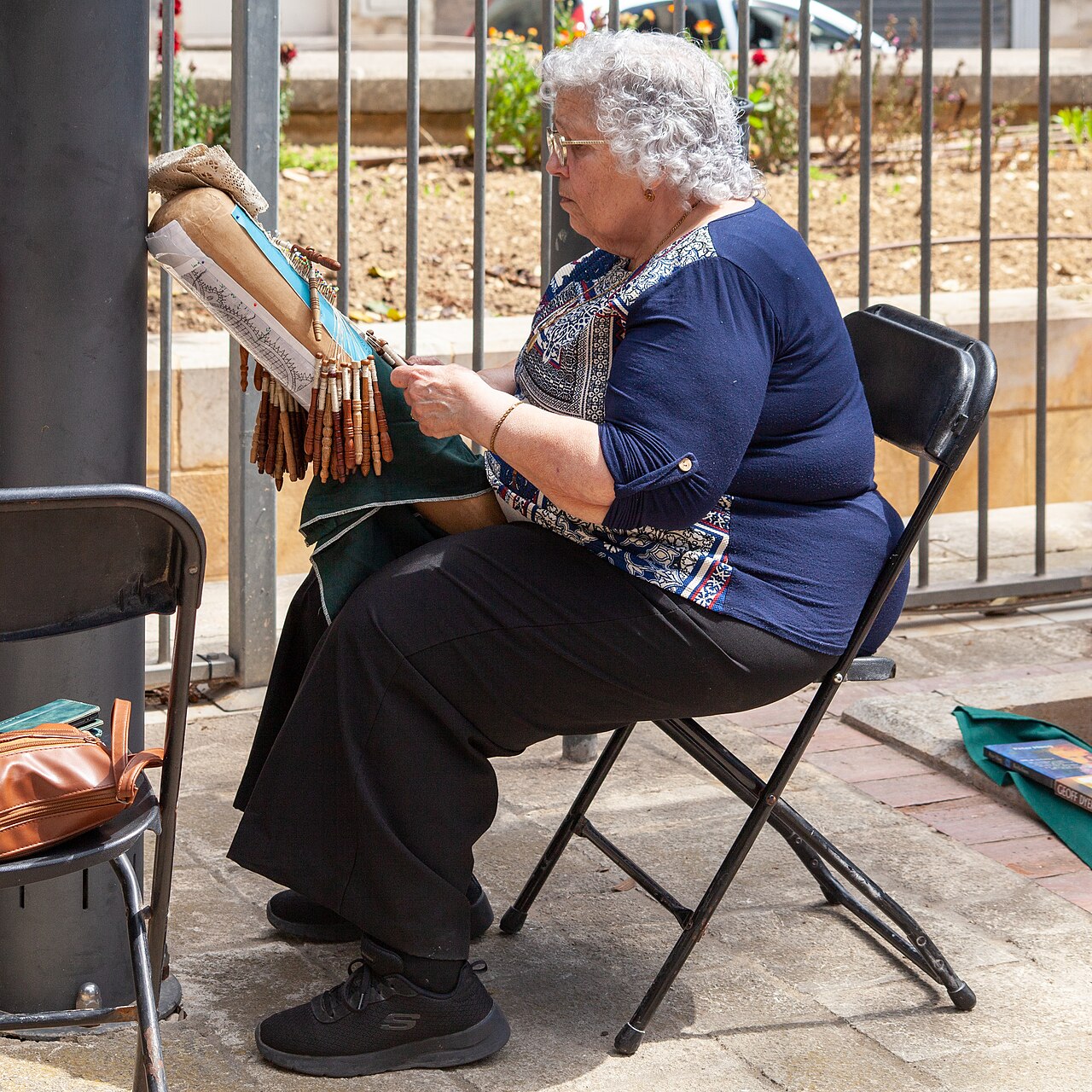
A textile pattern can be formed at different stages
A cloth displayed at a maker fair may contain a repeated image, a stripe or a grid. Those patterns can arise through different relationships among yarn, structure, color and surface decoration. The V&A’s textile resources distinguish weaving, dyeing, printing and stitching, while its tapestry explanation identifies warp and weft relationships within weaving. Understanding when and where the pattern forms adds depth to looking at the object. It also supplies a useful distinction from the magazine’s textile-care guide: this feature examines how a pattern is represented and documented, rather than how to choose, clean or store a finished textile.
Warp and weft establish a woven relationship
The warp provides one set of threads, and the weft passes across it in the documented weaving structure. The V&A’s tapestry resource describes that relationship through its particular technique. A diagram can make the crossing directions visible even when the finished cloth hides some threads. At an exhibit, identify what the drawing calls warp and weft before interpreting its colors. A colored line might represent a thread, a decorative motif or another notation. The legend supplies the function. Once the relationship is clear, the viewer can distinguish the material’s construction from a design shown elsewhere on its surface.
Thread colors can contribute to the pattern
A woven pattern can involve the colors of the threads participating in its structure. Imagine an entirely fictional teaching sample with alternating red and pale threads in one direction, crossed by another labeled set. Its resulting grid connects color with the crossing relationship. This original exercise is intentionally simple; it is not a record of a named textile. Look at which visible areas belong to which represented thread set. The pattern is then readable as an interaction between color and construction rather than a flat image sitting independently of the cloth beneath it.
Printing places a pattern through another process
The V&A’s Indian-textile material describes block printing and gives examples of repeated motifs on cloth. That process category answers a different question from the woven thread relationship. An exhibit can show the cloth, the printed motif and a labeled process object that explains how the motif is transferred. Begin with the maker’s technique description before attributing a pattern solely from its appearance. A printed grid could resemble the fictional woven grid from a distance, while their documented pattern-forming relationships differ. The labels help explain that difference even when the two surfaces initially look similar.
Dyeing belongs to a documented color process
A label identifying a dyed or resist-dyed textile describes another relationship between the material and its color process. The V&A presents textiles documented with several such techniques, including objects combining dyeing and printing. The combined label is meaningful: one process word need not explain every visible part of the design. At an exhibit, ask which feature the stated technique describes. A color field and a repeated outline might have different documented contributions. Reading those contributions together preserves the complexity of the object without reducing all its color relationships to the same general statement that the cloth has been dyed.
Compare the same fictional grid three ways
Imagine the original red-and-pale grid represented in three teaching cards. Card A describes colored threads in a woven structure. Card B describes a grid printed on a cloth surface. Card C describes a color pattern identified through another documented treatment. The visual motif remains the controlled comparison, while the labels describe different processes. This exercise shows why recognizing a shape is different from identifying how it was formed. A real maker display can provide its own version of that comparison through process samples or diagrams, allowing the visitor to follow the documented relationship behind a familiar-looking pattern.
Scale and repetition affect the composition
A small repeated unit can become a large continuous field. A larger unit can read as a series of distinct motifs. In the grid exercise, imagine doubling the spacing between the repeated elements while keeping their color relationship the same. The pattern’s visual rhythm changes even though the process category remains unchanged. Compare the whole cloth and a close view as two scales of looking. A detail photograph can reveal structure, while a full-object view reveals how the pattern occupies the textile. Both matter to the design, and neither substitutes completely for the other.
Let a technique label deepen the visual description
Start with one visible motif, identify the process the maker documents and connect that process with the feature it explains. The red-and-pale exercise offers a controlled comparison; the real object supplies its own materials, technique and composition. This sequence keeps a maker conversation specific without turning it into a test of a visitor’s ability to identify cloth by eye. A textile’s pattern can be appreciated as both an image and a making relationship. Reading those dimensions together reveals how color, structure and surface work contribute to the design that appears across the finished object.
Continue exploring
Explore related events
Current facts come from the directory. Follow the exact listing for admission, venue information and the official source.
Minneapolis Gift & Art Expo 2026 · Nov 6 – Nov 8, 2026 · scheduled · Public admission announced — check organizer for current entry details
Sources and further reading
- V&A: Warp and weft in tapestry ↗
- V&A: Weaving, printing and dyeing relationships in textile records ↗
- V&A: Textile pattern and construction education ↗
Source review: 2026-10-12. Examples identified as hypothetical are original illustrations.
An independently researched feature. Worked examples are illustrative; photographs identify their archive or collection context.
Find your next event →