
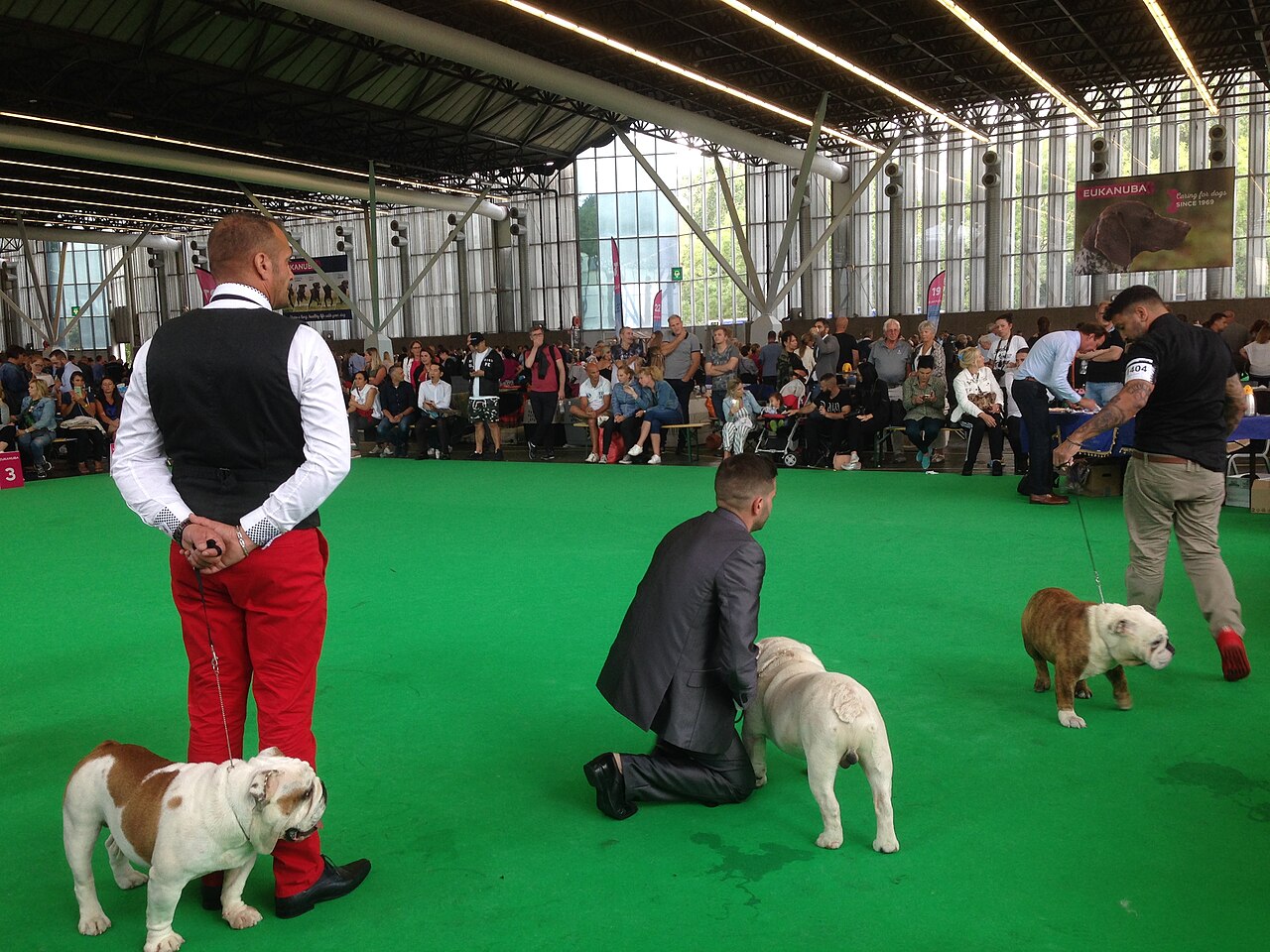
The task is the starting point
A working-dog demonstration becomes clearer when the audience identifies the role the presenter actually names. Uniforms, equipment and a polished presentation may provide context, but they are not substitutes for that description. USDA APHIS, for example, describes detector-dog teams working to protect agricultural and natural resources. That is a particular organizational mission, not a generic label for every trained dog. At an expo, connect the demonstration with the named agency or program, the stated task and the form of presentation. Those elements tell you what the audience is being shown before broader associations or assumptions take over.
An organization defines its own program
APHIS explains that its detector-dog teams work across settings that include ports of entry and environmental activities, with partner agencies involved in the program. This provides an example of how one role can belong to a specific institutional framework. A spectator can understand that framework at a high level without needing operational procedures. The important distinction is between a public account of a mission and the detailed work performed in the field. A demonstration may illustrate an aspect of the mission. It does not necessarily reveal the entire program, its full range of assignments or every condition under which a team operates.
A demonstration is a selected scene
An educational presenter chooses a scene that can be understood in a limited space and time. Narration, repeated movements or a prepared display may explain the relationship between the dog, handler and stated task. Treat that selection as part of the presentation. An expo demonstration is not automatically an unedited record of a real assignment. The difference does not diminish its educational value; it identifies what kind of evidence the audience has. A useful account might say that the presenter illustrated a named role, rather than claiming that the public display proves every aspect of how the program works elsewhere.
Keep labels at their stated scope
Words such as detection, assistance, search or herding can describe different activities and programs. The label should remain attached to the presenter's explanation instead of being broadened into an all-purpose credential. A dog shown performing one task has not thereby been shown performing another. Nor does a public presentation establish the animal's suitability for a role outside the named program. For spectators, the most accurate vocabulary is often the program's own role title plus the particular element demonstrated. That phrasing recognizes the training and work being discussed while avoiding conclusions the display has not actually supplied.
Read a fictional demonstration card
Imagine a hypothetical card headed “Agency G: agricultural detector-dog program,” followed by “public explanation of the team's mission.” The card identifies an organization, a task area and a presentation type. It does not state that the audience is watching an active inspection or that the dog belongs to every other kind of working-dog program. A visitor's notes could separate “role named” from “scene presented.” Under the first, record the program title. Under the second, record the educational format described by the presenter. This exercise turns an impressive performance into a precise account of what was actually claimed and shown.
Distinguish the team from the dog alone
Many public descriptions refer to a dog-and-handler team. That wording makes the human role part of the explanation rather than treating the animal's action as a complete account of the work. Notice how the presenter describes coordination, communication and responsibility at a general level. A photograph may isolate the dog, while the program explains a team. Preserve both perspectives in your account: the photograph shows one visible subject; the narration supplies the organizational relationship. This distinction is useful when comparing an educational exhibit, a live demonstration and a program brochure, each of which presents a different slice of the same named role.
Time and context belong to the record
An archived program, a current agency page and a live presentation may refer to different moments in a program's history. A historical display should be described as historical, even when its mission has a contemporary counterpart. Avoid transferring old staffing counts, locations or program descriptions into a current account without checking the dated source. At an expo, record whether the presenter is explaining a present role, a historical development or both. The timeline is part of the evidence. It allows a visitor to appreciate the program's development without making an old photograph or brochure carry a claim about today's operation.
Explain what the audience learned
A strong description joins role, organization and presentation form: “The presenter explained the agricultural protection mission of a detector-dog team through a public demonstration.” It says what was learned and how it was presented. It does not require a spectator to infer training methods, legal status or suitability from the performance. The same reading method works for other named working-dog roles: begin with the program, retain its task definition and describe the selected scene accurately. At a public animal expo, those distinctions make the demonstration understandable as an educational account of work rather than a collection of impressive but unspecified actions.
Continue exploring
Explore related events
Current facts come from the directory. Follow the exact listing for admission, venue information and the official source.
World of Pets Expo 2027 · Jan 29 – Jan 31, 2027 · scheduled · Check organizer for current admission availability
Sources and further reading
Source review: 2026-10-12. Examples identified as hypothetical are original illustrations.
An independently researched feature. Worked examples are illustrative; photographs identify their archive or collection context.
Find your next event →