
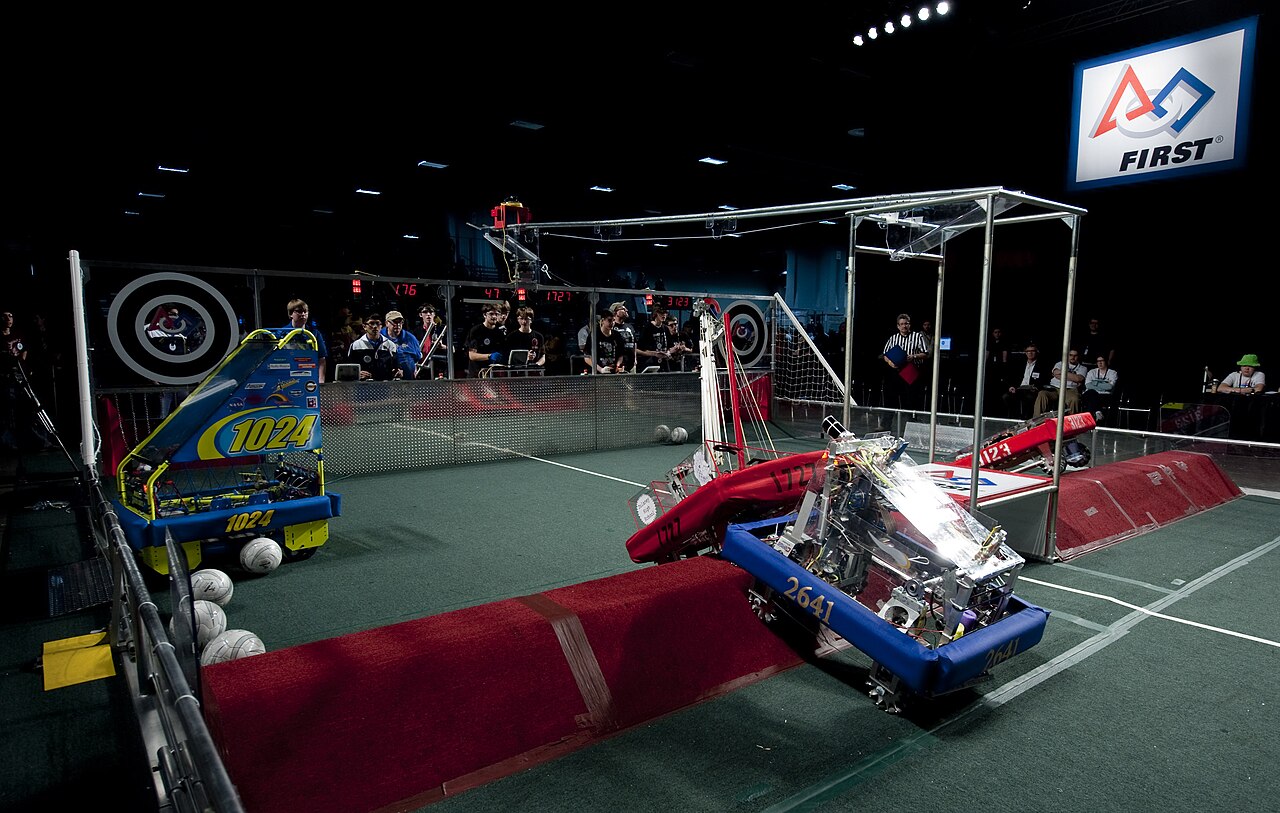
The score belongs to a named game
A robotics competition's score is meaningful within its specific game and season. FIRST publishes season materials and a game manual that define the playing field, scoring elements and competition framework. Its 2026 REBUILT manual provides one documented example. A public expo display may show that season, another program or a general demonstration, so read the named game before interpreting the numbers. A robot's movement can be impressive without revealing which action is credited by the rules. The game definition connects the visible action with the score, while the season identifier prevents an old display from being mistaken for a current or future game's structure.
The field is an organized system
A game manual identifies the field and its elements through named locations and objects. Those names make the scoring explanation readable. At a public display, a diagram can connect the physical scene with the manual's vocabulary. Begin by matching one visible element with its stated name rather than treating the field as an undifferentiated obstacle course. The robot may interact with several elements that serve different purposes. A label identifies the relationship the game assigns to each. This is a spectator-reading exercise, not a design or programming guide. It makes the exhibition's action intelligible through the documented game structure.
A match can contain different phases
A game can organize the match into phases with different conditions or forms of action, as the applicable manual specifies. Read the phase label on the display or explanation. A score attached to one phase may be part of a wider result rather than a complete match total. The public animation or demonstration can help show the sequence, but the manual supplies the definitions. Keep the season and phase together in the note. This allows a spectator to understand why similar-looking actions might be described differently at different moments without importing rules from another game or program.
Scoring and ranking are different records
A match score reports an outcome within a particular match. A ranking record can combine results or other criteria under the competition's published system. The two should occupy separate fields. A team with one large match score does not automatically hold the highest overall rank. Read the official board's heading and key before comparing the numbers. A display may show a score, a rank or a statistic, each with a different purpose. Keeping those identities visible makes the competition easier to follow and prevents a single number from being treated as a complete measure of a team's event performance.
Build a fictional game example
Imagine a hypothetical game with two scoring zones. The example's rules award three points for one defined action in Zone One and five for another in Zone Two. A displayed sequence credits two of the first actions and one of the second, giving eleven points under those rules. The arithmetic is simple, but the definitions are essential: two times three plus five makes sense only after the actions and values are stated. This example is not a description of FIRST's game. It demonstrates how a score connects counted actions with a particular rule set, rather than emerging from the robot's movement alone.
Official updates belong to the context
Competition programs can publish updates or clarifications associated with a season's manual. The source's version and current official materials help identify the applicable definitions. A printed expo card may be a summary rather than the full rule document. Read what the card claims to summarize, and keep its date or version when supplied. A historical display can remain accurate within its stated season. The audience gains clarity by treating the season material as a dated framework rather than a timeless description of all robotics competitions. The game name, program and version make the exhibition's explanation traceable.
Demonstrations and matches have different roles
A booth demonstration can isolate one action, while an official match contains the competition's full structure. The program label establishes which presentation the visitor is watching. A narrated replay can illustrate scoring without being a live result. A general robot exhibit can demonstrate movement without belonging to a competition game at all. Read the presentation type beside the technical subject. This keeps the evidence useful: the audience can learn a mechanism or game relationship from an example while keeping it distinct from an official match result. The same physical robot can appear in several presentation contexts whose labels explain what each scene is intended to show.
Explain the score through its definition
A clear account names the game and season, the relevant phase or action and the official score field shown. It can describe how a stated action relates to a score without ranking unrelated programs or reproducing technical construction instructions. At a public robotics event, this reading turns a flashing result board into an understandable record. The audience follows the game through its defined field, actions and scoring framework, while demonstrations retain their educational scope. The numbers become meaningful because the exhibit's rules explain what they count, and the competition's result identifies the particular match or ranking to which they belong.
Continue exploring
Explore related events
Current facts come from the directory. Follow the exact listing for admission, venue information and the official source.
Copa Toque Futsal Festival — 2026 · Dec 18 – Dec 20, 2026 · scheduled · Spectator ticket sales coming soon; tickets not yet confirmed on sale
Sources and further reading
Source review: 2026-10-12. Examples identified as hypothetical are original illustrations.
An independently researched feature. Worked examples are illustrative; photographs identify their archive or collection context.
Find your next event →