
The label organizes the comparison
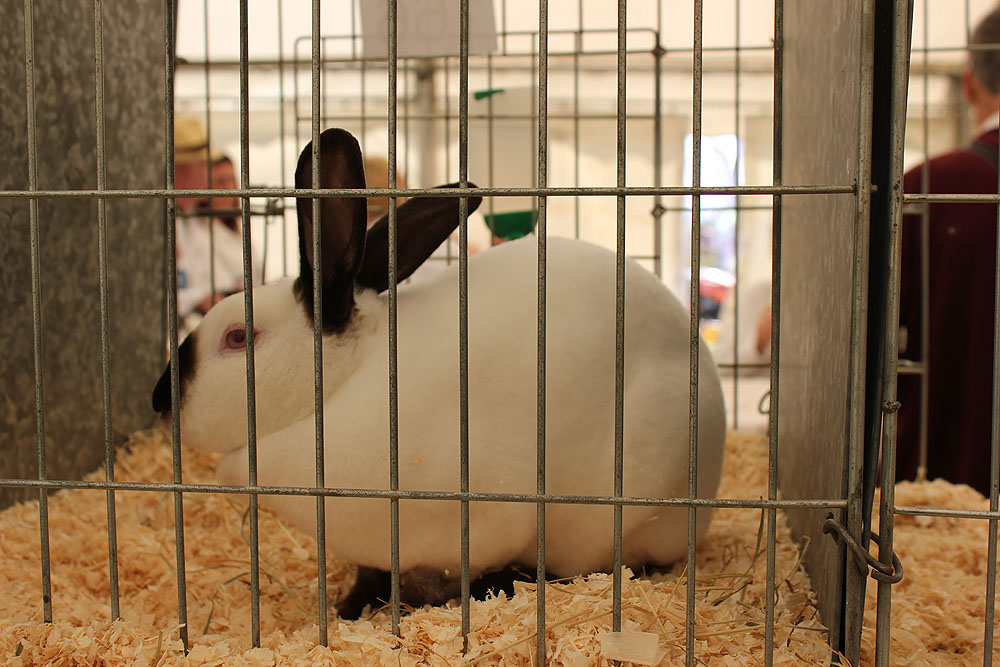
Rabbit and cavy exhibitions use classification terms to identify which entries are compared. A visitor may encounter breed, variety, sex, age or class designations on a catalog line or cage card. These fields are not interchangeable. The American Rabbit Breeders Association's show rules refer to judging by class, variety, group and breed, with the applicable standards providing the detailed structure. Begin by recognizing that hierarchy rather than trying to decode every abbreviation from appearance. The label is a map of the competition. Its purpose is to place an entry in a defined field, not to offer a complete biography of the animal.
Breed and variety answer different questions
A breed heading supplies one level of classification; a variety can describe a division within that breed's show structure. The same visible color word may not function identically in every breed's standard. For that reason, preserve the printed term and its breed context together. Imagine two catalog pages that both contain a variety name. They may organize different fields because their breed headings differ. A spectator's note can say “variety as printed under Breed C” instead of treating the word as a universal category. This keeps the explanation faithful to the exhibit without inventing a cross-breed equivalence.
Age and sex form another layer
Class descriptions can include age and sex divisions, with the relevant breed standards governing their definitions. An everyday impression such as “small” or “young-looking” cannot substitute for the show's category. The animal's visible size does not establish the catalog class. Read the class field as a stated competition designation, and consult the show's explanatory material when an abbreviation is unclear. It is better to leave a code untranslated than to confidently expand it incorrectly. In a public display, the educational value lies partly in understanding how several independent descriptors combine to define the comparison.
Awards belong to a level
An award at the variety level and an award at the breed level describe different stages. The ARBA rules address awards within the applicable hierarchy, including Best of Breed and other designated comparisons. A ribbon therefore needs its award name, not merely its color, to be intelligible. If the announcement moves from one level to another, note that change. In a result sequence, an entry could receive a variety award and later a breed award. The second does not erase the first, and the first does not necessarily imply the second. Both records retain their own scope.
Showmanship is a different subject
ARBA describes showmanship through the participant's demonstrated ability to exhibit an animal. That is distinct from judging the animal within a breed classification. A public program might include both, making the distinction particularly useful for spectators. One result concerns an exhibitor's presentation under that activity's criteria; another concerns the entered animal under the show standard. Avoid reducing both to “the best rabbit.” The program heading tells you which subject is being evaluated. Recognizing the difference helps explain why a participant can receive recognition in one activity even when a separate breed judging result follows another pattern.
Unpack a fictional display card
Consider a hypothetical card with five fields: “Rabbit; Breed C; Variety D; junior class; entry 18.” Read it from the broadest description toward the specific reference. The animal type separates this entry from cavies; the breed and variety locate it within a classification; the class identifies a further division; and the number connects it to the catalog. None of those fields supplies an award. Now add a result, “Best of Variety.” The result can be appended without changing the original classification. This is a compact example of why identification and outcome should be recorded separately.
A catalog abbreviation needs a key
Abbreviations save space but depend on the event's terminology. Look for the catalog legend, official rules or an explanatory display before expanding an unfamiliar code. A code's position is useful evidence: an abbreviation in the sex column serves a different function from one in the award column. In a notebook, copy the code exactly and add its verified expansion later, marking the source of the explanation. This method preserves the original information while preventing memory from silently rewriting it. It also makes an archived catalog easier to revisit, because the transcription and interpretation remain visibly distinct.
Explain the comparison accurately
The most useful sentence after reading a display is often modest: “This entry is classified under this breed, variety and class, and the reported award belongs to this level.” That sentence connects identification with result while retaining the hierarchy. It is more informative than a general claim that an animal “won the show.” It also accommodates cavies without assuming that rabbit-specific class details apply to them. At an expo, this kind of classification literacy turns a dense cage card into understandable information. The spectator can follow the exhibition's structure without making unsupported judgments about individual animals.
Continue exploring
Explore related events
Current facts come from the directory. Follow the exact listing for admission, venue information and the official source.
World of Pets Expo 2027 · Jan 29 – Jan 31, 2027 · scheduled · Check organizer for current admission availability
Sources and further reading
Source review: 2026-10-12. Examples identified as hypothetical are original illustrations.
An independently researched feature. Worked examples are illustrative; photographs identify their archive or collection context.
Find your next event →