
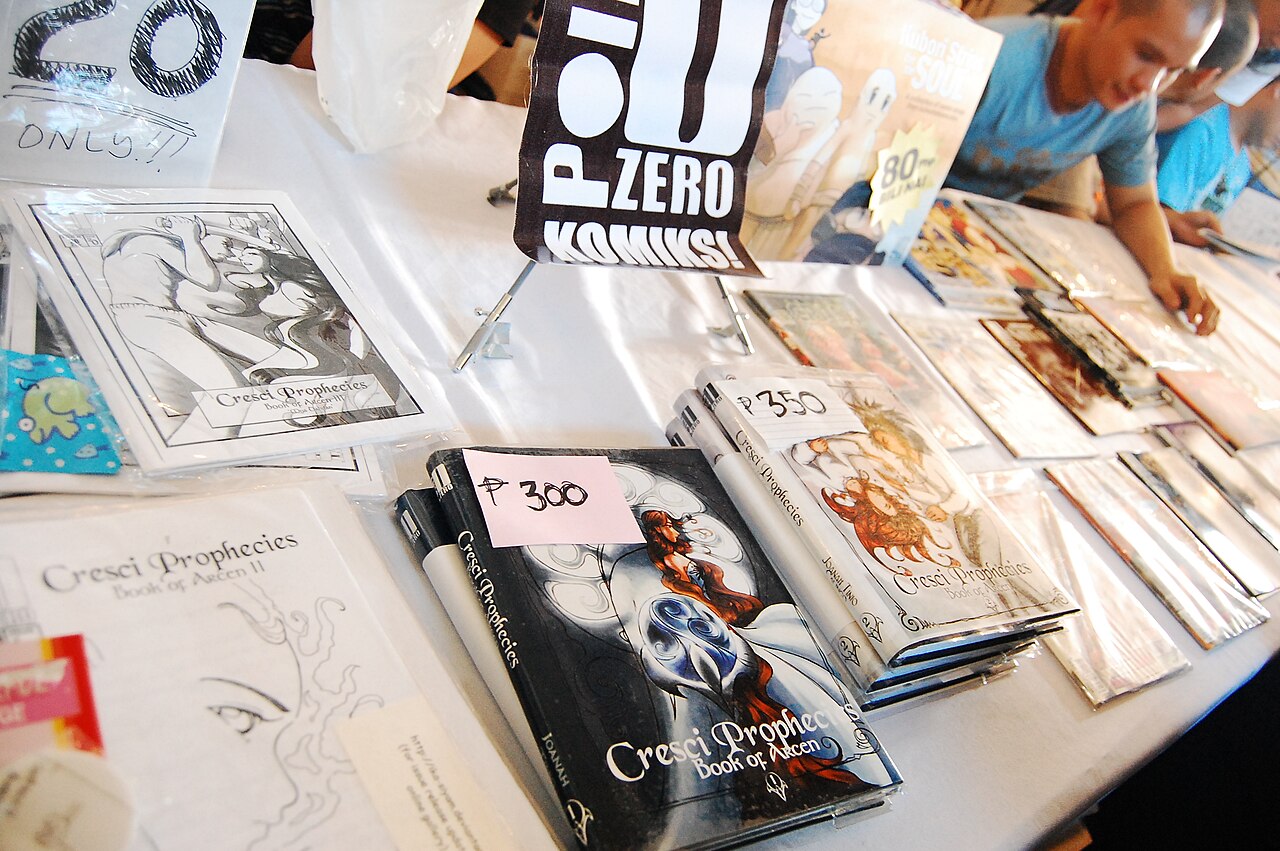
The small object sets the pace
A mini-comic at a convention can ask for a different kind of attention from a long graphic novel. Its size, folds, openings and limited page space help determine how the story arrives. A zine can contain comics, essays, drawings or combinations of them; the name does not promise one fixed structure. The Library of Congress emphasizes that zines resist a tidy definition. Instead of trying to classify every small publication immediately, examine how the particular object works. An imaginary eight-page comic shows how the physical format participates in its opening, development and ending.
Count surfaces that actually carry the story
Page count and story length are related but different. Covers, credits and blank spaces can occupy part of a small publication. In a sample mini-comic called The Last Bus, an eight-page structure uses page one as a cover, pages two through seven for the story and page eight for a closing image and credits. That leaves six principal story pages, not eight. If an exhibit label describes the object as an eight-page comic, it may be counting the physical publication accurately. The reader’s additional task is to notice how those surfaces divide the narrative and its supporting information.
Follow an opening, a turn and an ending
Suppose the story begins with a person waiting at an empty stop. The next two pages show the light changing, the fourth introduces an approaching vehicle, and the final story pages reveal that the vehicle is a library van rather than a bus. The format makes the location of that reveal consequential. Place it on a page visible beside the approach and the surprise can arrive early. Place it after a turn and the reader briefly waits for it. Neither arrangement is automatically better. The relationship between facing pages and the reveal explains how this specific publication shapes expectation.
A fold can reveal another scale
A folded object can present a small view before opening into a larger one. Imagine that The Last Bus first shows a close view of a timetable, then unfolds to reveal the surrounding street. The reader’s physical action changes the visible scale of the story. Opening the street view shifts attention from the timetable’s single detail to the waiting person’s wider surroundings. The Library of Congress Labs has published research-adventure zines designed from a single sheet, demonstrating that folding can be integral to a publication. Its example is a real format reference; the timetable narrative here is an original illustration of how a format could serve storytelling.
An accordion encourages continuity
An accordion-style publication offers connected panels that can be encountered one at a time or viewed across an extended surface, depending on its construction and display. If the street scene continues across that surface, neighboring images can create a panorama. If every segment contains a separate moment, the object can instead produce a sequence. Notice which relationship the work establishes: continuous space, successive time, repeated motif or something else. A display case may show only one possible opening. Describe that visible arrangement without assuming it represents every way the publication can be read or that unfolding is permitted at the exhibit.
Small space can support deliberate omission
A short comic need not summarize a longer story. It can organize attention around a single exchange, a visual pattern or one change in a place. In The Last Bus, leaving the waiting person’s biography unexplained might preserve the focus on mistaken expectation. An unexplained element is therefore not automatically a missing page. Examine whether the omitted information is necessary for the sequence that is actually presented. A six-page story can still give a clear beginning, development and outcome, while another intentionally leaves its outcome open. Length alone cannot tell you whether the work is complete on its own terms.
The cover participates in the reading
A title and cover image create expectations before the first panel. In the example, a cover showing a conventional bus suggests one outcome, while a cover showing a closed book suggests another. If the ending depends on a surprise, the cover may either protect or complicate it. Credits and end matter can also change how the reader understands the object: a note might identify it as one part of a series or describe a collaboration. University of Iowa’s zine and fanzine archive offers a broader context for these publications as records of creative communities. The object’s modest size does not make its supporting information irrelevant.
Describe the format’s contribution
After reading a small comic, try a sentence that connects form to effect: the page turn delays the arrival, or the unfolded view connects spaces previously shown separately. That observation is more useful than calling the publication quirky solely because it is small. Preserve uncertainty when you cannot see the complete object, and use the creator’s own description when available. Comic and maker exhibits can make those format relationships especially clear by showing the complete publication. At a small-press display, choose one physical transition and connect it to a story moment. A fold, a facing-page relationship or a cover image can give you a specific way to discuss what this small publication accomplishes.
Continue exploring
Explore related events
Current facts come from the directory. Follow the exact listing for admission, venue information and the official source.
FAN EXPO New Orleans 2027 · Jan 8 – Jan 10, 2027 · scheduled · Tickets on sale — check current availability
Sources and further reading
- Library of Congress: Introduction to zines ↗
- Library of Congress Labs: Anywhere Adventures ↗
- University of Iowa: Zines and Fanzines Collection ↗
Source review: 2026-10-12. Examples identified as hypothetical are original illustrations.
An independently researched feature. Worked examples are illustrative; photographs identify their archive or collection context.
Find your next event →