
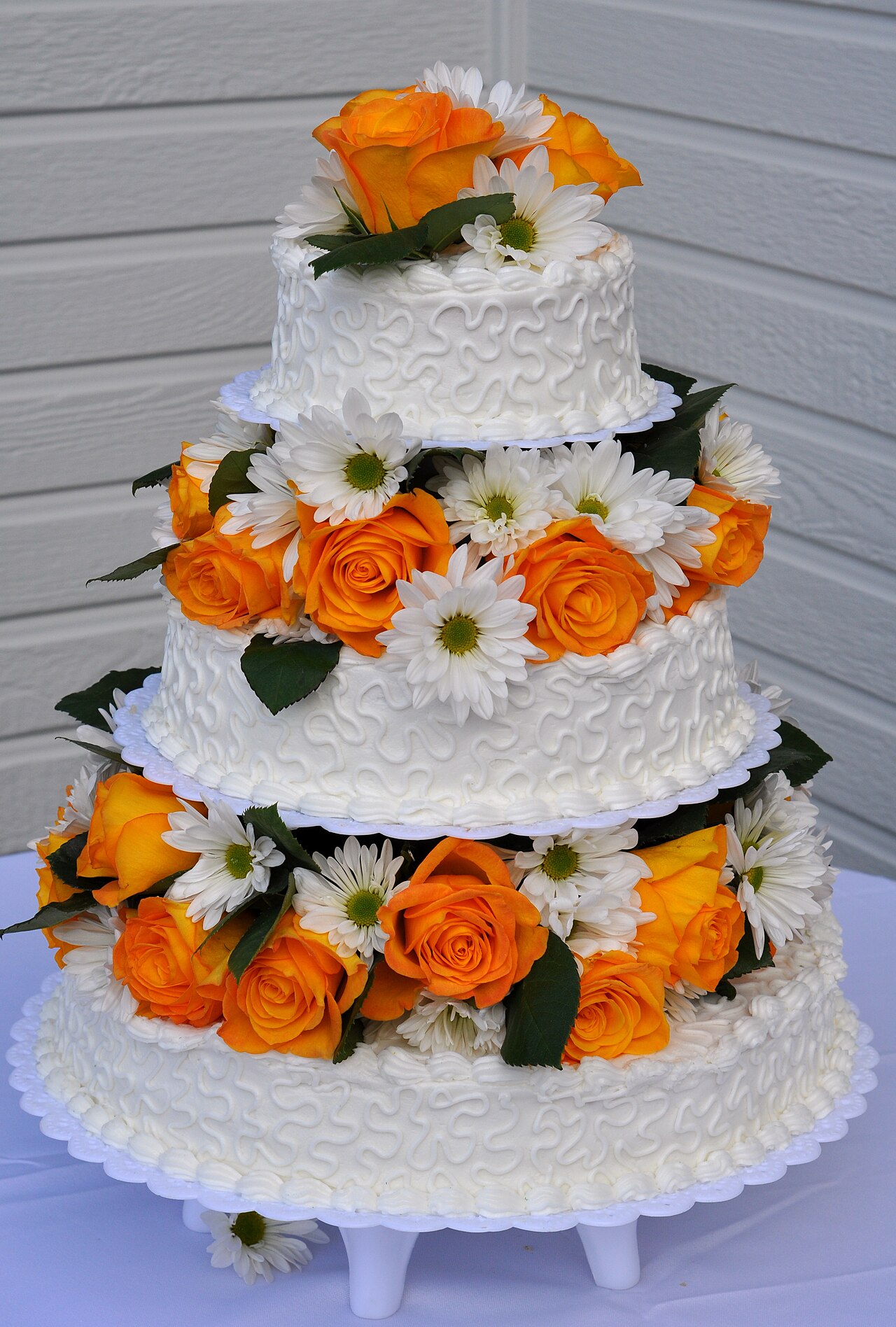
Foundational Stability Through Proper Baking and Leveling Practices
Creating a structurally sound wedding cake begins long before any decorative elements are applied, requiring careful selection of stable cake recipes such as standard vanilla, yellow, chocolate, or sturdy pound cakes. Light and airy cakes like angel food or chiffon lack the structural integrity necessary to support heavy exterior finishes or multiple tiers. Furthermore, cakes with heavy mix-ins can generate uneven surfaces that compromise the outer finish. Before assembly, bakers must properly level and torte each baked layer to ensure an even distribution of weight. When assembling the tiers, placing the baked bottom of the cake facing upward at the top of each layer provides an inherently level surface with minimal crumbs, establishing a reliable foundation for all subsequent fillings and frostings.
Engineering Internal Support with Precision Piping Dampers
Adding filling between cake layers introduces moisture and flavor, but it also creates potential sliding hazards if the internal structure lacks adequate containment. To prevent filling materials from squeezing outward under the weight of upper tiers, decorators employ a specialized piping technique just inside the perimeter of the cake layer. Using a decorating bag fitted with a specific tip, such as a number twelve, the decorator pipes a continuous line of icing near the outer edge to form a protective dam. This barrier is especially critical when incorporating wet fillings like preserves, puddings, custards, or fresh fruit compotes, which would otherwise compromise the structural integrity of the tier. By ensuring the filling matches the exact height of this icing dam, bakers maintain a uniform horizontal plane across the entire assembly.
Managing Support Structures and Board Selection During Transfer
The physical movement of a multi-tiered or filled cake demands careful logistical planning regarding support boards and transfer mechanisms. When utilizing a decorating turntable to assemble and ice the layers, integrating a properly sized cake circle is essential for structural support when moving the creation to a final display stand or serving plate. Securing the bottom cake layer to this support board using generous dots of icing prevents unwanted shifting during transport. Conversely, if a cake circle is omitted, the dessert must be assembled and frosted directly on its final display plate, as attempting to relocate an unmounted iced cake risks severe structural failure. Anticipating these transfer requirements before stacking layers prevents surface cracking and preserves the meticulous alignment achieved during the filling process.
Mathematical Precision in Fondant Measurement and Sizing
Achieving a smooth, flawless fondant exterior requires accurate mathematical planning rather than mere estimation to determine the correct quantity of rolled dough needed for a given tier. Decorators calculate the required diameter by adding the cake diameter to twice the height of the cake, a formula that accounts for the vertical drop down the sides. While beginners might feel tempted to roll the fondant significantly larger as an insurance policy against errors, excessive rolling adds unnecessary weight to the edges, increasing the likelihood of stretching, tearing, or sagging. Furthermore, utilizing specialized non-stick measuring mats and plastic fondant rollers rather than traditional wooden rolling pins helps maintain an even thickness of approximately one-eighth of an inch while preventing unwanted surface textures from transferring into the pliable sugar dough.
Surface Preparation and Tacky Adhesion for Seamless Draping
Transitioning from a crumb-coated cake to a covered masterpiece relies heavily on controlling surface tackiness to ensure the fondant adheres properly without slipping or forming air pockets. A proper crumb coat traps loose cake crumbs and acts as an essential adhesive layer beneath the fondant. If this underlying buttercream has formed a dry crust before the application phase, lightly misting the surface with water restores the necessary tacky texture. Working swiftly is paramount, as exposed fondant dries rapidly when left unattended. By employing a roller to lift and drape the pliable sugar dough from the back of the cake toward the front, decorators allow gravity and tool mechanics to do the heavy lifting, minimizing direct hand contact that could distort the material or introduce oils from the skin.
Systematic Smoothing and Crease Management Techniques
Eliminating air bubbles and smoothing vertical creases requires a systematic approach that guides excess material downward toward the base of the cake rather than trapping pockets against the sides. Beginning with a specialized fondant smoother on the top surface stabilizes the material and prevents shifting while the sides are addressed. By gently pulling and lifting sections of the drape away from the cake, the decorator uses the edge of their hand to smooth outward and downward, systematically shifting creases toward the bottom edge. Any stubborn air bubbles trapped beneath the surface are safely pierced from the side using a clean pin rather than puncturing straight down from the top, allowing the trapped air to escape quietly before final trimming seals the clean aesthetic lines.
Precision Trimming and Professional Edge Definition
The final stage of fondant application focuses on establishing crisp, sharp bottom edges and concealing any inevitable vertical seams that formed during the smoothing process. Using a precision trimmer, pizza cutter, or paring knife, decorators cut away the excess fondant material while maintaining a slight overhang beyond the base of the cake. Elevating the cake on a smaller interior pan can provide the clearance necessary to get the trimmer underneath the overhang cleanly. Afterward, pressing the flat edge of the fondant smoother against the base creates a sharp outline for a second, final trim. Any minor seams resulting from the stretching and pulling process can be gently buffed with a fingertip to minimize their visibility, resulting in a polished, professional presentation suitable for display.
How this article was prepared
This article used automated drafting and checks against the linked sources. Its photograph is identified and credited separately. Please use our correction link to report an error.
Continue exploring
Explore related events
Current facts come from the directory. Follow the exact listing for admission, venue information and the official source.
Oklahoma Bridal & Wedding Expo 2026 · Nov 22, 2026 · scheduled · Public visitor admission advertised; check current tickets and entry rules.
Tennessee Bridal & Wedding Expo — Memphis 2026 · Nov 22, 2026 · scheduled · Public attendee passes offered — check current registration
Today’s Bride Akron Fall Wedding Show 2026 · Nov 22, 2026 · scheduled · Public admission — check organizer for ticket availability
Wisconsin Bridal & Wedding Expo 2026 · Nov 22, 2026 · scheduled · Public visitor admission advertised; check current tickets and entry rules.
Sources and further reading
Source review: 2026-10-23. Examples identified as hypothetical are original illustrations.
An independently researched feature. Worked examples are illustrative; photographs identify their archive or collection context.
Find your next event →










