
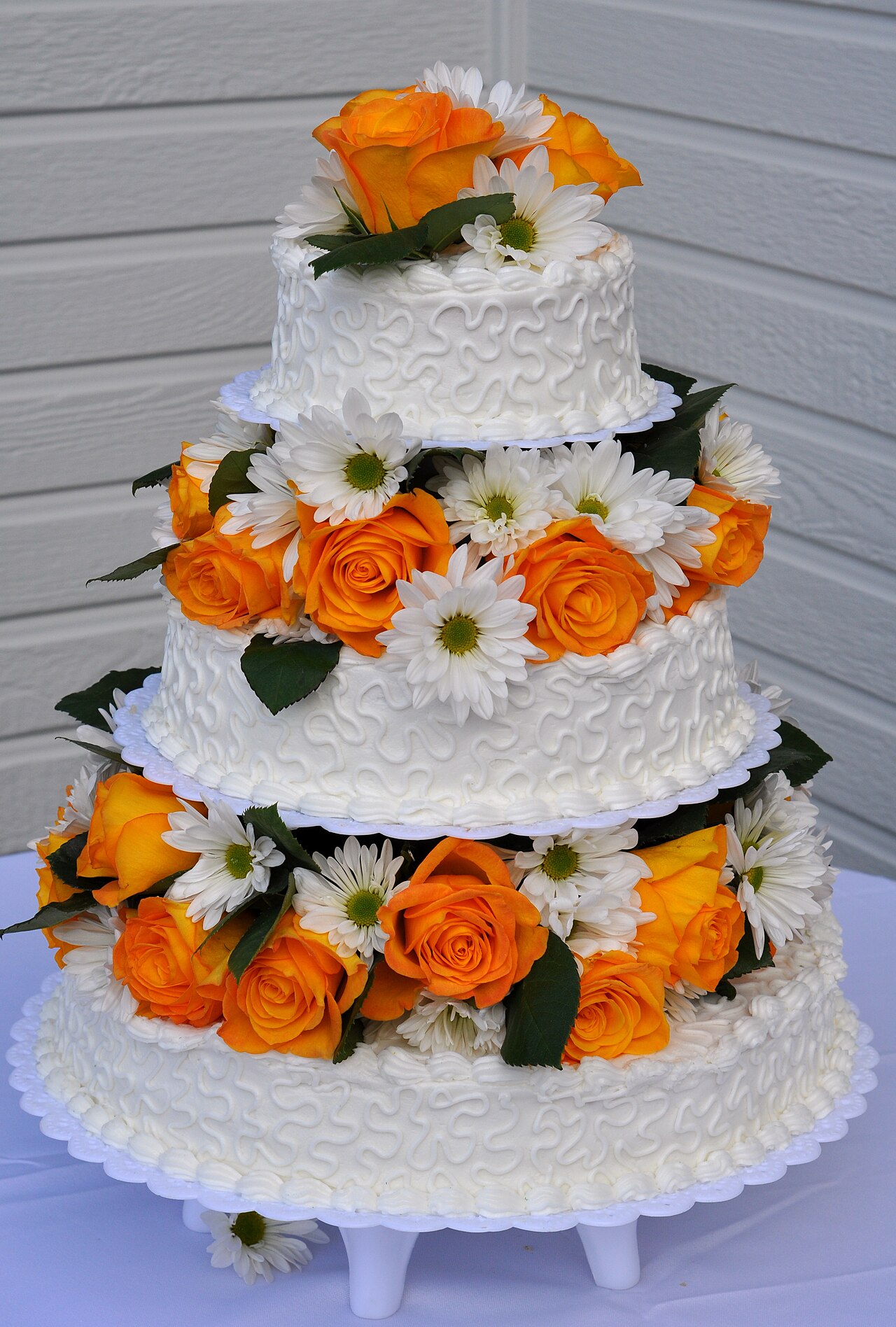
Foundation and Layer Stability
Successful wedding cake design begins long before any decorative elements are applied to the exterior. When assembling individual tiers, bakers must prioritize structural integrity by selecting stable cake varieties capable of supporting heavier finishes. Light texture options like angel food or chiffon lack the necessary density to hold complex exteriors, whereas standard white, yellow, chocolate, or pound cake recipes provide reliable stability. Furthermore, bakers should inspect the base of each baked tier. Placing the naturally flat, baked bottom of the cake facing upward ensures an even, level surface with minimal loose crumbs, setting a secure foundation for subsequent tiers and preventing structural leaning during transit or display.
Managing Fillings with Piping Dams
Adding filling between cake layers introduces vital moisture, flavor, and height, but it also creates potential sliding risks if moisture management is ignored. To counteract this, decorators use a pastry bag fitted with a round tip to pipe a precise line of icing just inside the outer edge of the cake layer. This structural barrier functions as a protective dam that stops softer fillings from escaping under the weight of upper layers. While standard buttercream can sometimes serve as its own filling without a separate dam, wetter components such as fruit preserves, puddings, and pastry creams demand a secure barrier. Ensuring the internal filling matches the exact height of this piped dam guarantees an even, balanced profile across the entire tier.
The Purpose of the Crumb Coat
Before introducing any decorative outer covering, applying an interim layer of frosting known as a crumb coat is essential for surface preparation. This thin application of buttercream locks in loose cake crumbs and functions as a secure adhesive layer, stopping outer finishes from slipping or shifting. Decorators must apply just enough frosting to smooth the top and sides without leaving heavy spatula marks or excess bulk. Allowing this layer to set creates a uniform canvas that prevents textural irregularities from showing through outer coverings, ensuring that the finished silhouette maintains clean lines and professional polish throughout the entire reception display.
Calculating Fondant Quantities
Determining the correct amount of fondant required to cover a tier accurately demands precise mathematical calculation rather than guesswork. Decorators measure the total diameter across the center of the cake and add it to twice the height of the cake to establish the necessary fondant diameter. For example, an eight-inch round tier standing four inches tall requires a sixteen-inch expanse of rolled fondant. Beginners often make the mistake of rolling extra-large sheets for safety, but excessive weight along the edges can stretch the material unevenly and cause premature tearing. Relying on precise measurements helps maintain a balanced thickness of approximately one-eighth of an inch across the entire draped surface.
Rolling and Surface Preparation
Achieving an immaculate fondant finish depends heavily on workspace preparation and rolling technique. Decorators must work on a pristine, non-stick surface dusted lightly with cornstarch for high-humidity environments or confectioners' sugar for drier climates. Using a plastic fondant roller rather than a traditional wooden pin prevents unwanted textures from transferring to the edible dough. Bakers should always roll from the center outward while periodically lifting and turning the material to maintain a consistent shape and thickness. Maintaining a clean wardrobe is equally important during this phase, as loose fibers or stray hairs can easily transfer into the pliable surface and ruin the smooth visual presentation.
Draping and Smoothing Techniques
Transferring rolled fondant onto a prepared tier requires swift, confident movement to prevent the material from drying out or losing its elasticity. By folding the fondant over the rolling pin, decorators can lift and drape the material smoothly from the back of the cake toward the front, centering it as evenly as possible. Using a specialized flat smoother on the top surface first prevents the material from shifting while the sides are addressed. Working systematically around the tier, decorators gently pull the lower edges away from the cake, using the side of their hand to eliminate creases and press the material securely against the tacky crumb coat without leaving fingerprints.
Precision Trimming and Troubleshooting
The final stage of covered cake assembly involves trimming excess material and addressing minor surface imperfections for a polished presentation. Using a sharp paring knife or pizza wheel, decorators cut away the surplus fondant slightly outside the base edge of the cake before running a smoother along the bottom to establish a crisp, clean outline. If minor tearing or air bubbles occur during the process, they can be resolved using targeted techniques such as pin releases or homemade adhesive pastes made by dissolving scrap fondant in water. These careful finishing steps ensure the structure remains resilient, visually striking, and ready for final decorative detailing.
How this article was prepared
This article used automated drafting and checks against the linked sources. Its photograph is identified and credited separately. Please use our correction link to report an error.
Continue exploring
Explore related events
Current facts come from the directory. Follow the exact listing for admission, venue information and the official source.
Oklahoma Bridal & Wedding Expo 2026 · Nov 22, 2026 · scheduled · Public visitor admission advertised; check current tickets and entry rules.
Tennessee Bridal & Wedding Expo — Memphis 2026 · Nov 22, 2026 · scheduled · Public attendee passes offered — check current registration
Today’s Bride Akron Fall Wedding Show 2026 · Nov 22, 2026 · scheduled · Public admission — check organizer for ticket availability
Wisconsin Bridal & Wedding Expo 2026 · Nov 22, 2026 · scheduled · Public visitor admission advertised; check current tickets and entry rules.
Sources and further reading
Source review: 2026-11-08. Examples identified as hypothetical are original illustrations.
An independently researched feature. Worked examples are illustrative; photographs identify their archive or collection context.
Find your next event →










