
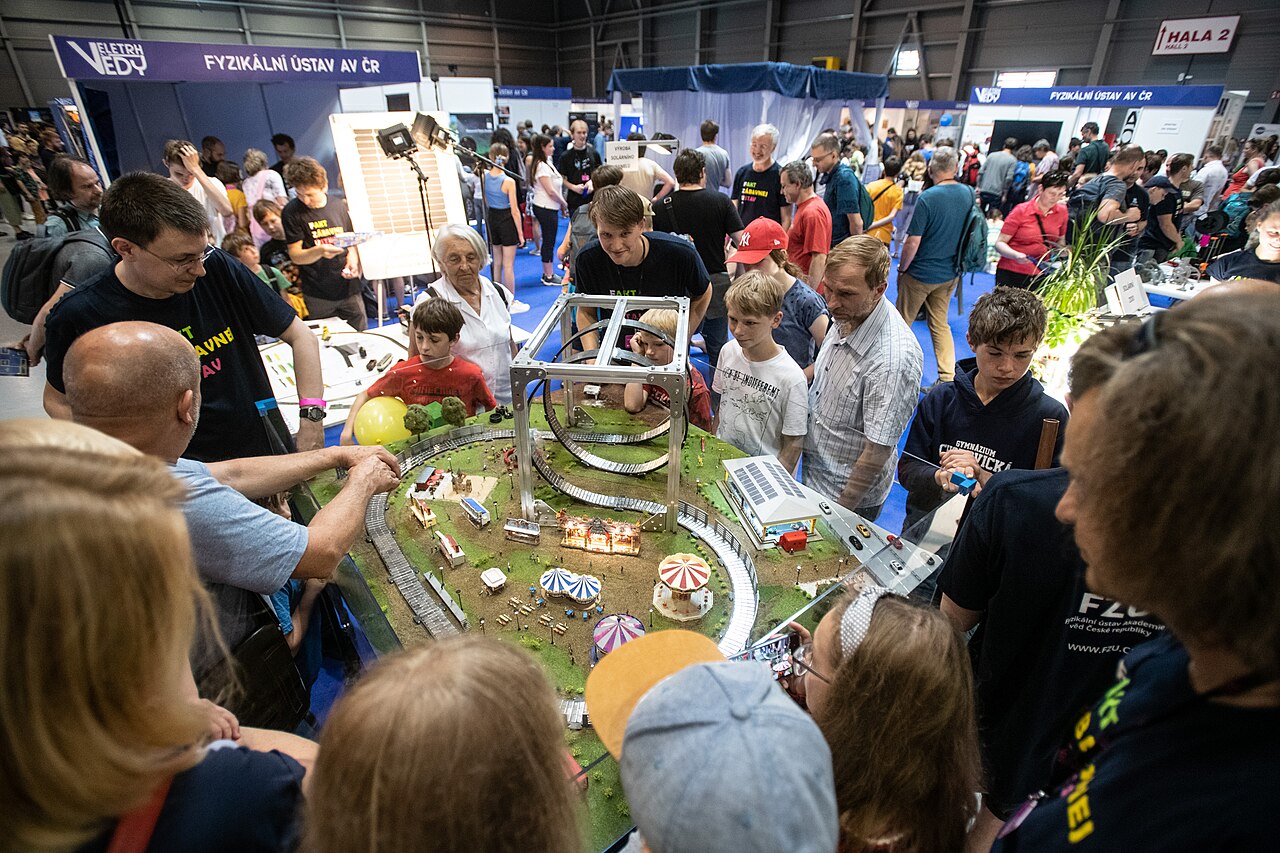
The scene is a constructed view
A diorama organizes objects, models and visual background into a scene. The American Museum of Natural History explains how its habitat dioramas combine three-dimensional foregrounds with painted backgrounds. That example reveals the central exhibition idea: a carefully constructed view can create the impression of a larger setting. Historical dioramas use their own subjects and evidence, but the same reading questions are useful. Where is the viewer placed? Which moment is selected? What is included, enlarged or left outside the frame? Begin with the scene's label and boundaries. The diorama communicates an interpretation through its arrangement, rather than presenting the entire past at once.
Scale defines the relationship to reality
A model's stated scale explains how its dimensions relate to the represented scene. An exhibit might instead use life-size objects, a mixed-scale educational arrangement or a schematic presentation. Read the label before estimating. A small model and a large backdrop can create a spatial effect without using one uniform scale throughout. The visitor's task is to understand the stated design. In a miniature with a consistent scale, a small distance represents a larger one; in a schematic scene, placement may prioritize explanation. The difference changes what can reasonably be inferred from the arrangement's physical dimensions.
Foreground and background do different work
The foreground can contain three-dimensional material, while a painted or printed background extends the scene visually. AMNH's explanation makes that relationship explicit in its habitat displays. At a historical exhibition, notice where one medium ends and another begins. A transition may be designed to appear seamless from the intended viewpoint. The image's apparent depth can therefore combine actual objects and represented space. Describing the two layers helps explain the scene's visual effect. It also reminds the reader that an object appearing deep in the view may be part of the background image rather than a separately modeled element in the case.
Viewpoint shapes what is visible
A diorama can be designed around a particular viewing position. From that position, objects overlap and background features align in a chosen way. A photograph taken from another angle may reveal the construction differently. Read the exhibit's intended view before treating a side photograph as equivalent evidence. In a miniature historical scene, one figure can obscure another from the front while both are clear in an overhead image. These are different views of the same arrangement. The viewpoint is part of the presentation's meaning because it determines which relationships the audience encounters first and which remain less visible.
Compare two invented scenes
Imagine two hypothetical dioramas of the same civic gathering. Scene A centers a speaker and places the audience in the foreground. Scene B centers the crowd's varied activities and places the speaker farther away. Both use the same setting, but they tell different visual stories. A comparison can identify focal subject, viewer position and included actions. The example does not claim either scene reproduces a real event. Its lesson is curatorial: selection directs attention. Changing the center of the composition can change the interpretation even when the named historical setting and many of the represented objects remain the same.
The selected moment needs a label
A diorama may represent a particular moment, a generalized activity or a composite educational scene. Those are different claims. The label should identify which form the exhibit uses. A scene combining several documented elements can explain a broader subject without claiming that they occurred simultaneously in exactly that arrangement. Read the wording carefully and preserve it in your account. A “illustration of period activities” has a different scope from “reconstruction of this dated event.” The scene can be informative in either form, provided the reader understands the relationship between the displayed composition and the historical statement attached to it.
Omission is part of the frame
Every diorama has boundaries. Events beyond those boundaries, earlier moments and alternative viewpoints remain outside the visible scene. Notice what the label or supporting panel supplies about that larger context. A compact display may focus on one subject while an accompanying map locates it within a broader setting. AMNH's site maps offer an example of how additional information can connect a represented scene with geography. Historical exhibits can use comparable documentary supports. The scene and context panel have different jobs: one concentrates attention, while the other can explain the larger relationships that the physical frame cannot contain.
Read the composition and claim together
A clear account identifies scale, viewpoint, focal subject, media layers and the type of historical representation stated by the label. It can explain that a scene selects one moment or illustrates a broader activity, then describe how the arrangement directs attention. At a historical collector display, this makes the diorama more than a convincing miniature. It becomes an understandable curatorial argument built from visible choices and documented context. The reader can appreciate its craft while recognizing the relationship among selection, reconstruction and evidence. That relationship is what turns a small constructed scene into a meaningful exhibition explanation of a larger historical subject.
Continue exploring
Explore related events
Current facts come from the directory. Follow the exact listing for admission, venue information and the official source.
Tidewater Gun Show — 2026 (2026-12-05) · Dec 5 – Dec 6, 2026 · scheduled · Public visitor admission announced; check organizer for current availability
Sources and further reading
Source review: 2026-10-12. Examples identified as hypothetical are original illustrations.
An independently researched feature. Worked examples are illustrative; photographs identify their archive or collection context.
Find your next event →