
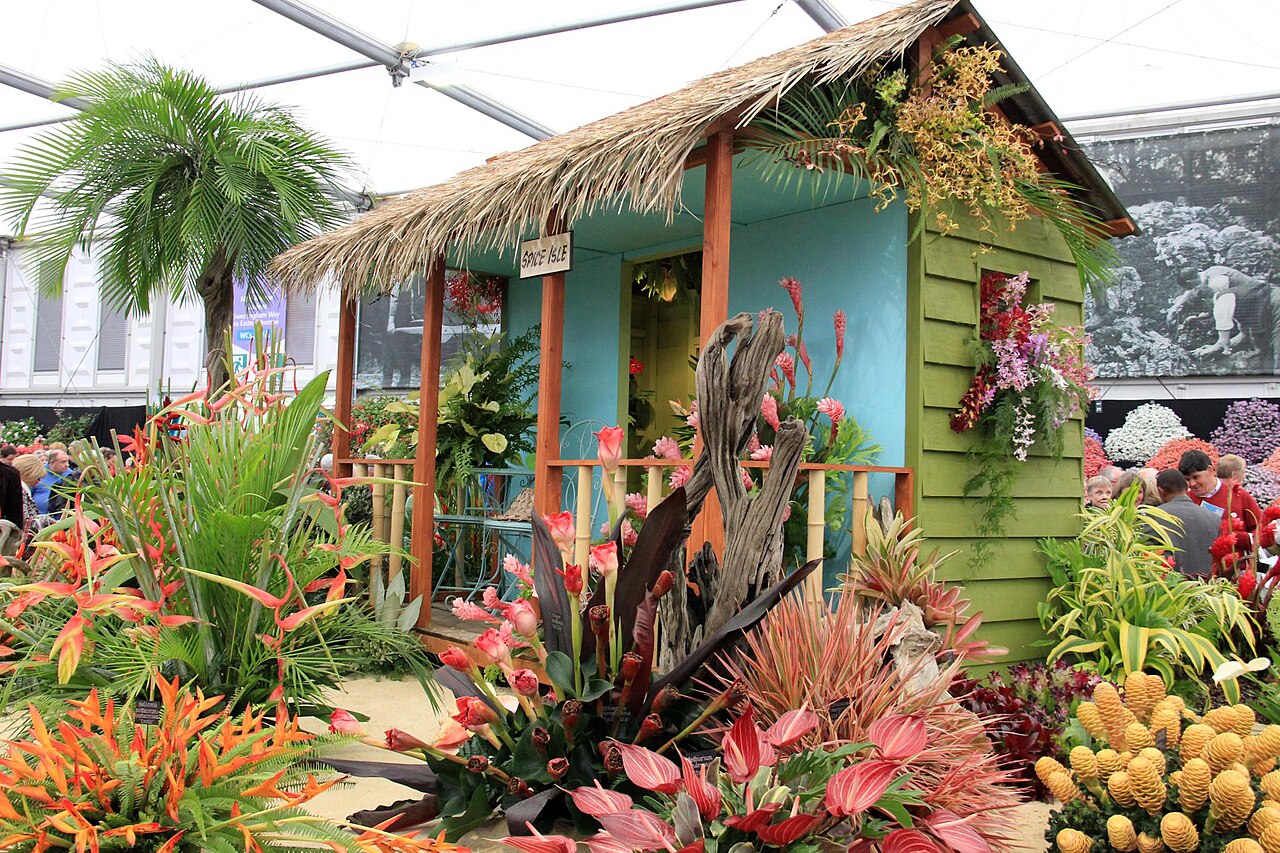
The class identifies the exhibit's purpose
A flower show can contain horticultural entries, designed arrangements and other educational forms named by the program. National Garden Clubs' flower-show education distinguishes horticulture and design as areas of study within its framework. At a public exhibit, begin with the class heading. A specimen-focused entry and a composed design answer different exhibition questions even when both contain plant material. The label tells the audience which field the entry belongs to. Reading that field before interpreting an award makes the show more intelligible, because the visible flowers are only part of the information that defines the exhibit and its comparison group.
Horticultural and design readings differ
A horticultural entry centers the plant material within the show's stated class, while a design entry centers a composed arrangement under its category. The actual show schedule supplies the definitions and requirements. A visitor can understand the broad difference without transferring details from another show's system. Look at what the label identifies as the entry: a named specimen, a collection or an arrangement, for example, when the schedule uses those terms. Then connect the object with its class heading. This keeps the exhibition's purpose visible and avoids reducing every table to the same general description of “flower arrangements.”
Class headings organize comparisons
A class places entries within a particular field. An award in one class does not automatically rank the entry against everything in the hall. Several class winners can coexist without contradiction. The show schedule explains how classes connect to sections or broader awards when those are part of the event. Preserve the hierarchy rather than using one broad winner label. A result note can name entry, class and reported award. That small structure supplies the context needed to understand why different entries receive recognition and why a specimen and a design should not be compared through a common criterion.
Labels connect names with objects
A horticultural label can identify the plant material through the show's required terminology. A design label may identify a title or class concept. Those fields serve different purposes. Copy the actual label rather than replacing it with a familiar common name or an impression of the design's mood. A photograph may show the visible form while the card supplies identification. Read both together. The label's function is documentary: it connects the entry with the schedule and result. A visitor can appreciate the color and form while retaining the exact information the exhibitor and show use to identify the entered object.
Compare a fictional exhibit pair
Imagine a hypothetical show with Entry FF in a specimen-focused class and Entry GG in a design class. FF's card identifies the plant material and class. GG's card identifies its design title and a different class. Both appear on neighboring tables, yet their labels establish separate comparison fields. A visitor's table can contain entry type, identification, class and award. That structure makes the difference visible. It also shows why a shared flower color or similar display height does not make the entries equivalent within the show's framework.
The schedule is more than a timetable
In flower-show context, the schedule can be the document that defines classes and other exhibit requirements, not merely a list of opening times. Read the title and contents to identify its role. A public event page and the show schedule can therefore supply different information. The event page identifies when and where the public presentation occurs; the schedule explains how entries are organized. Keeping those documents separate helps a visitor interpret the labels in the hall. The class code becomes readable through the schedule's structure, while the public listing supplies the edition and venue context in which the exhibition takes place.
Awards need their printed scope
A ribbon or card can report a class result, a special recognition or another named award. Read its wording instead of assigning meaning from color alone. The show schedule or award key provides the relevant context. A visitor may encounter several recognized entries because the awards concern different fields or purposes. A concise account should retain the actual award title and the class it accompanies. This gives the recognition a traceable meaning. The viewer can then appreciate the exhibition's variety without assuming that every award is one stage of a single ranking or that neighboring ribbons report directly comparable outcomes.
Explain what is being exhibited
A useful description names the entry type, class and reported recognition, then adds one concrete visual observation. It can say that a design entry uses an open composition while its label places it in a particular class. A horticultural entry can be described through its stated identification and display form. At a public flower show, these distinctions reveal the exhibition's organization. The audience encounters plants, design and educational context through several named fields. Reading the class first makes each entry understandable on its own terms and connects the visible display with the schedule and award record that define its place in the show.
Continue exploring
Explore related events
Current facts come from the directory. Follow the exact listing for admission, venue information and the official source.
Copa Toque Futsal Festival — 2026 · Dec 18 – Dec 20, 2026 · scheduled · Spectator ticket sales coming soon; tickets not yet confirmed on sale
Sources and further reading
- National Garden Clubs: Flower-show curriculum and class context ↗
- National Garden Clubs: Flower-show educational framework ↗
Source review: 2026-10-12. Examples identified as hypothetical are original illustrations.
An independently researched feature. Worked examples are illustrative; photographs identify their archive or collection context.
Find your next event →