
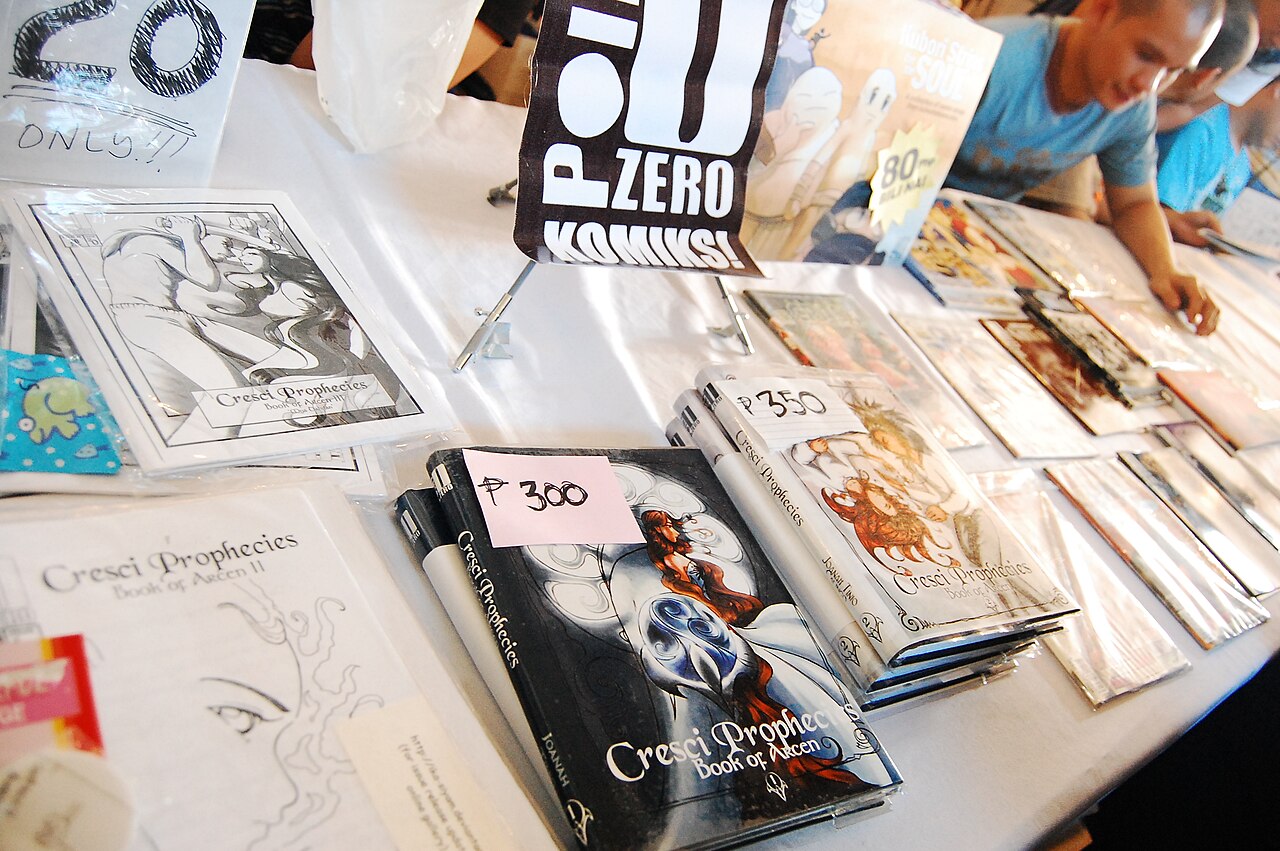
A fan publication records a moment in a community
A fanzine can preserve more than enthusiasm for a fictional world. Its pages may record how a group exchanged ideas, announced gatherings, debated a story or described its own creative work. At a convention history display, the publication’s dates, credits and recurring sections can help place it in a particular community. University of Iowa’s Zines and Fanzines Collection provides a primary archival example of such material being collected and described. This feature uses a fanzine record to explain how to read publication evidence carefully, without treating one fan’s account as the complete history of a convention or fandom.
Begin with what the object identifies
Imagine a sample publication called Signal Lantern, marked issue four and dated March 1982. The front matter names an editor, lists contributors and gives a short description of its subject. Those printed statements are evidence about how this copy identifies itself. They do not, by themselves, establish the publication’s entire run or the editor’s full biography. Record the title as printed, the issue designation, the stated date and the credited names. If a display label supplies a later catalog title, preserve the distinction between the object’s own wording and the archive’s description. Small differences can matter when tracing a publication through several records.
A date can describe different things
The date printed on an issue, the date of a meeting mentioned inside it and the date an archive received the copy are different pieces of information. In the Signal Lantern, a March issue might report a gathering held in February and announce another planned for April. None of those dates automatically proves that the planned gathering actually occurred. A handwritten date added to a cover might document ownership or another event, but its meaning requires context. When a historical exhibit combines these records, identify which date belongs to which object or statement. That prevents a convenient timeline from becoming more certain than its evidence.
Issue numbering suggests a sequence, not completeness
Issue four implies a numbering system, but a single copy does not establish that issues one through three survive in the same archive. It also does not prove that the numbering began at one or continued without interruption. A catalog can describe the holdings actually available, including gaps. The Library of Congress zine collections guide discusses locating material across its collections, illustrating that the research record can extend beyond one visible object. In an exhibit, distinguish the publication’s apparent sequence from the sequence represented in the case. A selected display is not necessarily an inventory of every issue that existed or every copy the institution holds.
Read a contributor list as evidence of participation
A credited contributor is associated with the work identified in that issue. That can reveal a collaboration or a repeated presence across several issues when the records support it. It does not justify assigning all anonymous material to the editor or assuming every named person attended a reported event. In the example, one person writes a short review and another supplies an illustration. Their contributions are different kinds of participation. Preserving the role descriptions helps avoid flattening a community into a simple list of members. Where a credit is ambiguous, report the ambiguity rather than guessing at a person’s identity from a familiar name.
Separate report, opinion and announcement
A fanzine can place an event account beside a letter, a humorous sketch and an announcement. Those forms make different claims. An editor’s opinion about a gathering is evidence of that opinion, not a neutral measurement of its attendance or importance. A report may contain observations that need corroboration; an announcement records an intention at the time of publication. In Signal Lantern, an imagined letter criticizing a panel reveals a response from its writer. It does not establish how everyone in the room reacted. At a history exhibit, recognizing the type of text is as important as reading its subject.
Material choices can reveal a publishing practice
Visible reproduction, hand lettering, pasted layouts or repeated section headings may suggest how an object was assembled, but a process claim should follow the creator’s or archive’s documentation where available. The Library of Congress introduction describes zines as self-created and self-published forms while emphasizing their variety. That context is broader than a diagnosis of any one copy. You can observe uneven lettering or a repeated layout without claiming to know the equipment used. In the example, the safest record distinguishes visible features from inferred production methods. The distinction protects the publication’s history from becoming a story around its appearance.
Build a small evidence trail
For a useful convention-history note, connect three items: the copy’s own title and date, the particular passage or credit that interests you, and the institution or source describing the object. Then state the limited conclusion those items support. Signal Lantern issue four would show that its credited contributors published those particular pieces in the issue bearing that date; it would not supply a complete history of the imagined community. This method respects fan publications as sources without asking them to prove everything. A convention-history case becomes more informative when you can trace one statement to one dated object. That modest evidence trail preserves the publication’s contribution without making it carry a complete history of the community around it.
Continue exploring
Explore related events
Current facts come from the directory. Follow the exact listing for admission, venue information and the official source.
FAN EXPO New Orleans 2027 · Jan 8 – Jan 10, 2027 · scheduled · Tickets on sale — check current availability
Sources and further reading
- University of Iowa: Zines and Fanzines Collection ↗
- Library of Congress: Zine collections ↗
- Library of Congress: Introduction to zines ↗
Source review: 2026-10-12. Examples identified as hypothetical are original illustrations.
An independently researched feature. Worked examples are illustrative; photographs identify their archive or collection context.
Find your next event →