
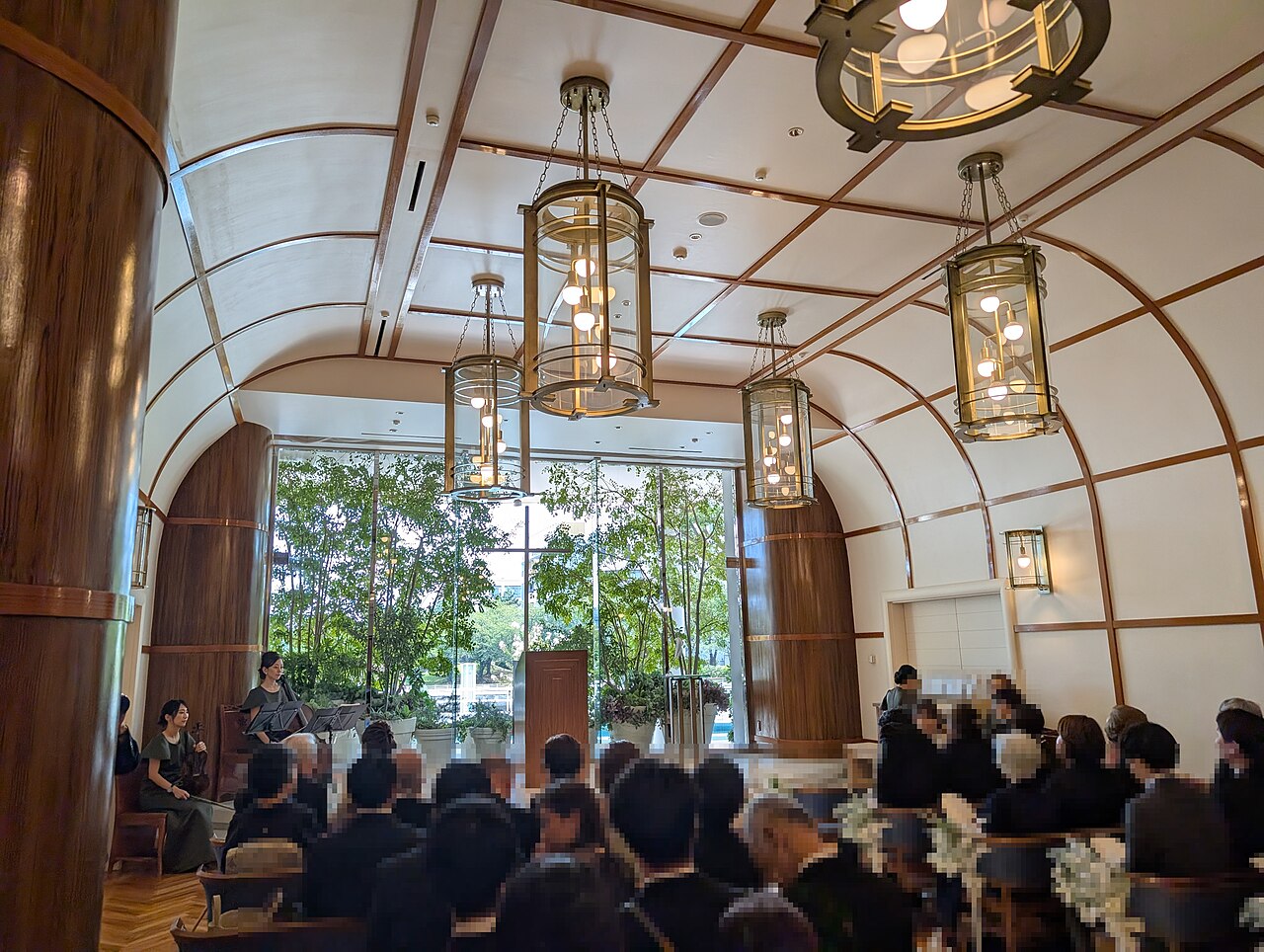
Read the illuminated space
A lighting display can make a room appear warmer, a backdrop more prominent or a speaker easier to see. Those effects describe different roles. Ambient illumination concerns the broader visible environment, while a focused beam can emphasize a particular area or subject. Electronic Theatre Controls' educational material distinguishes fixture types and describes the soft-edged coverage associated with wash lighting. At a wedding expo, begin with the area illuminated rather than the fixture's appearance alone. The meaningful question is what the light is doing in the sample scene. A decorative-looking device and a dramatic photograph do not, by themselves, explain its role in an event design.
Coverage is a spatial description
A broad area of illumination and a concentrated area create different relationships within the scene. Observe which surfaces and subjects are included. A wash across a backdrop changes the whole visible background, while a focused pool emphasizes one location. The distinction is not a judgment about which effect is better. It describes the design's organization. A close-up photograph can conceal the surrounding coverage, so a wider view may be needed to understand the effect. Keep the evidence tied to the frame: what looks evenly lit in a small crop may be one selected area within a larger room.
Direction changes what is emphasized
Light coming from different directions can change the visible relationships among surfaces, contours and shadows. At an expo display, note the effect on the subject rather than prescribing a placement. A floral backdrop might appear textured in one demonstration and flatter in another. The change could reflect several factors, so the presenter should identify the variable being illustrated. A before-and-after image is most informative when the comparison states what changed. Without that explanation, it supplies two appearances but not a complete account of their cause. Reading direction as one design variable keeps the interpretation specific and appropriately limited.
Color is one part of the scene
A colored background and the illumination of a person can serve different design functions. The booth's example may deliberately distinguish them. Notice whether the demonstration describes color on a surface, color throughout a space or a separate effect on a focal subject. A photograph records the resulting appearance through its own capture and display process. It is useful as an illustration, but it is not an exact guarantee of how every viewer or camera will perceive the scene elsewhere. A clear note names the surface and role being shown instead of assuming that one appealing hue defines the complete lighting design.
Compare a fictional demonstration
Imagine a hypothetical exhibit with a backdrop and a lectern. Scene A illuminates the backdrop broadly. Scene B adds a distinct illuminated area around the lectern. A visitor could record that Scene B introduces a focal area while retaining the broader background treatment. If the presenter changes color at the same time, the comparison contains two variables, not one. This matters because the audience might otherwise credit the entire difference to a single fixture. A useful demonstration explains which change affects coverage, which affects color and which affects the subject's visibility.
Fixture names need context
ETC's introduction describes different kinds of luminaires, including wash and profile-spotlight examples. These technical names help explain possible design roles, but a fixture label is not a complete event plan. The actual result depends on the proposed scene and the provider's specification. At an expo, read the product or effect name beside the role it illustrates. A display can show a capability without establishing how many fixtures a future venue needs or where they would be used. Keeping the example and proposal separate lets the demonstration teach a visual concept without turning a showroom sample into an assumed installation design.
Photographs edit the evidence
A promotional image may frame only the successful focal area, while a wide shot reveals its relationship to the room. Exposure and framing can affect how bright or dark the surrounding scene appears in the picture. Read captions that identify the setting and purpose of the photograph. A portfolio image from a ballroom should not be treated as a measured prediction for a convention-hall ceremony. It can illustrate a design idea, while the event-specific proposal must define the actual setting. This distinction helps compare portfolios through their visible concepts rather than through unsupported assumptions about identical conditions or outcomes.
Describe the effect in plain language
A useful lighting note might read: “Broad illumination establishes the backdrop, while a separate focal area emphasizes the lectern.” Add the displayed color treatment only if it is relevant to the comparison. This sentence explains a design relationship without requiring equipment selection or electrical instructions. At a wedding expo, that is the main benefit of the vocabulary: ambient context, broad coverage and focused emphasis become distinguishable ideas. The reader can understand what the display demonstrates and which parts still belong to the actual venue-specific proposal. A dramatic image then becomes an intelligible example of a scene's organization.
Continue exploring
Explore related events
Current facts come from the directory. Follow the exact listing for admission, venue information and the official source.
Worcester Wedding & Bridal Expo 2027 · Mar 7, 2027 · scheduled · Public admission announced — check current organizer information
Sources and further reading
Source review: 2026-10-12. Examples identified as hypothetical are original illustrations.
An independently researched feature. Worked examples are illustrative; photographs identify their archive or collection context.
Find your next event →