
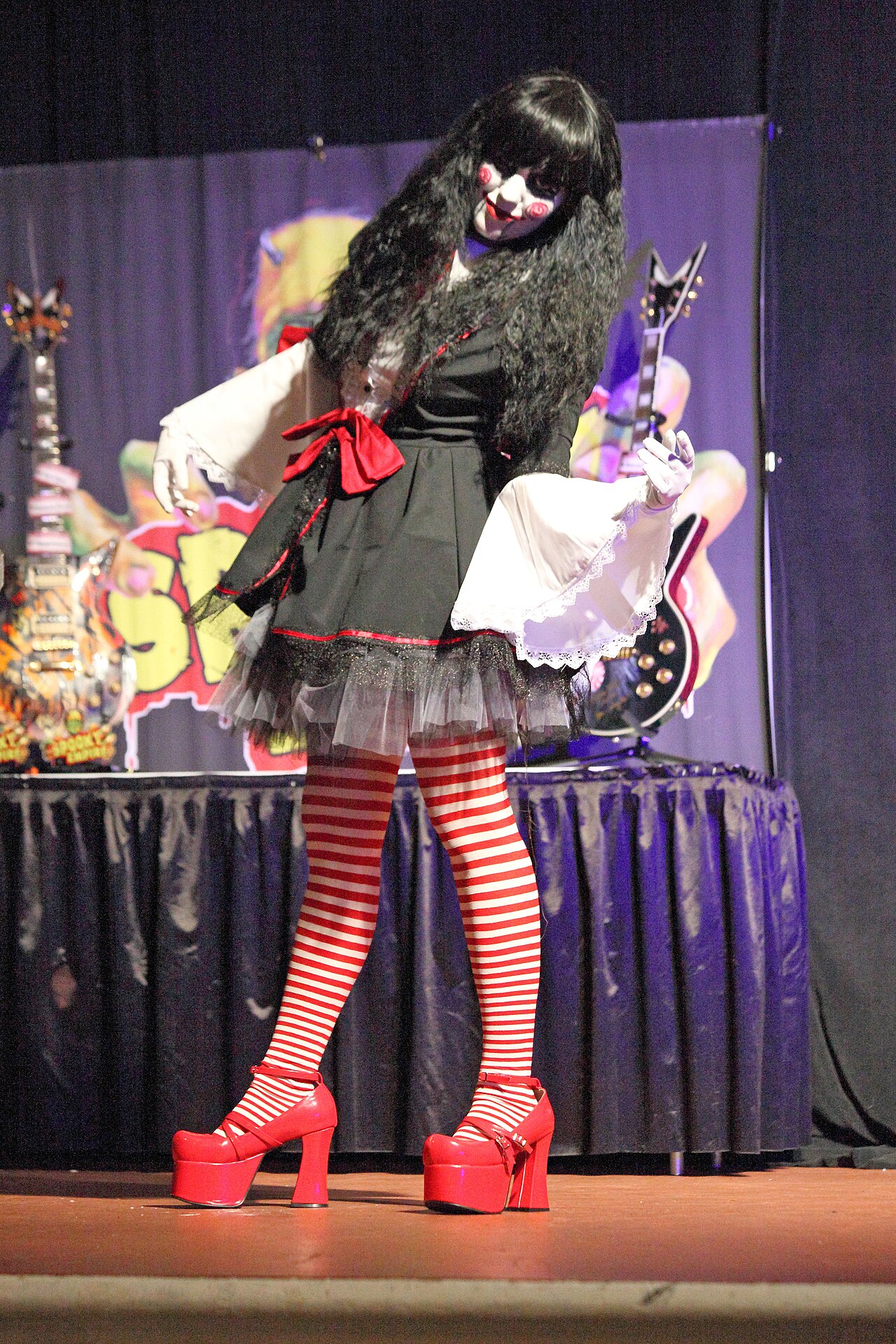
A creature communicates before it moves
At a horror or practical-effects exhibit, a creature can attract attention through its outline, surface, proportions and expression even while remaining completely still. Those visible choices suggest a character before any scene supplies dialogue or action. Looking at them closely is a way to discuss design beyond whether something seems scary. This feature concerns the interpretation of finished displays and concept imagery. Its two invented creatures are examples for analysis, not construction projects or descriptions of a named exhibitor. The goal is to notice how different features contribute to a coherent impression and to separate that impression from claims about the designer’s undocumented intentions.
Begin with the silhouette
Imagine a creature called the Bell Keeper, with a narrow torso, high shoulders and a broad head. Imagine another, the Moss Courier, with a rounded body, short limbs and a long trailing shape. Even before seeing color or texture, their outlines establish different relationships between large forms. One appears top-heavy; the other appears low and extended. Those are descriptions of geometry, not universal rules for menace or friendliness. A visitor’s association may depend on context and prior experience. At an exhibit, first name the major shapes you can see, then explain the impression they create for you rather than treating that impression as an objective diagnosis of the character.
Proportions direct attention
In the Bell Keeper, a head much wider than the shoulders could make the face the dominant region. In the Moss Courier, the trailing shape might draw attention away from the face and toward movement implied by the pose. Compare the relative sizes before dwelling on tiny details. An intricate texture can be memorable, but it may not determine what someone notices first from across a hall. Disney’s character-modeling overview describes attention to form, weight and presence when developing dimensional characters. That is a primary reference for the significance of large form, not a statement that its artists follow the proportions proposed here.
Texture suggests a material relationship
A surface can look smooth, fibrous, cracked or layered. Those appearances influence how a character seems related to its imagined environment. Suppose the Bell Keeper has a smooth face above a visibly irregular body surface. The contrast could focus attention on the face. Suppose the Moss Courier has repeated fine strands that echo the drawn vegetation around it. That might visually connect the creature to the setting. Describe the appearance as such unless a label identifies the real display material. A surface that looks like stone is not necessarily stone, and a creature’s implied skin is different from the material used to represent it.
Color works in relation to the display
A pale feature against a dark body can become a focal point; a repeated color can link separate parts of a design. Lighting and background also affect what is visible. In a concept sheet, the Moss Courier might blend with an illustrated forest while its eyes remain distinct. In a bright exhibition case, the same palette could appear much more separated from its surroundings. Therefore, distinguish the design image’s context from the display environment. Disney’s look-development description identifies color, texture and material appearance as connected production concerns. It provides context for looking at those relationships without proving how a particular practical display was made.
Pose implies a possible action
A still exhibit may suggest leaning, retreating, waiting or reaching. Start with observable orientation: where the head faces, whether the body tilts and how the limbs relate to it. In the Bell Keeper, shoulders angled toward the viewer could produce a different impression from the same body turned away. The change need not mean the creature has changed personality. It changes what the pose communicates in that moment. When an exhibit shows several poses or concept alternatives, compare them as presentations of possible action. Do not infer a complete performance or an actual sequence from one selected pose unless supporting material establishes it.
Design variations reveal a question
A row of alternatives can show that a creator explored different solutions, but it does not automatically explain why one was chosen. Suppose three Bell Keeper sketches vary only the head shape. The shared body provides a useful constant; the altered outline becomes the variable. Compare what each option emphasizes, then consult any accompanying explanation. Disney’s creative-development material describes iterative collaboration and feedback during development. That helps frame revision as part of a process, but it cannot supply the missing reasons behind another artist’s alternatives. A process display is evidence of visible changes; its story still depends on the actual notes and credits provided.
Describe a design relationship precisely
A useful observation might say that the broad head and narrow torso make the upper silhouette dominant, or that repeated surface strands connect the figure visually to its illustrated setting. Such sentences give another person something concrete to discuss. They are stronger than an unsupported claim that a creature was designed to symbolize a particular fear. Preserve the distinction between a designer’s documented explanation and your own reading. Horror conventions and comic events can present many kinds of character work; the magazine’s Comics & Pop Culture listings can help locate them. Its existing cosplay feature addresses the separate practical questions of attending in costume.
Continue exploring
Explore related events
Current facts come from the directory. Follow the exact listing for admission, venue information and the official source.
FAN EXPO New Orleans 2027 · Jan 8 – Jan 10, 2027 · scheduled · Tickets on sale — check current availability
Sources and further reading
- Walt Disney Animation: Character modeling ↗
- Walt Disney Animation: Look development ↗
- Walt Disney Animation: Creative development ↗
Source review: 2026-10-12. Examples identified as hypothetical are original illustrations.
An independently researched feature. Worked examples are illustrative; photographs identify their archive or collection context.
Find your next event →