
Start with the story, then identify the container
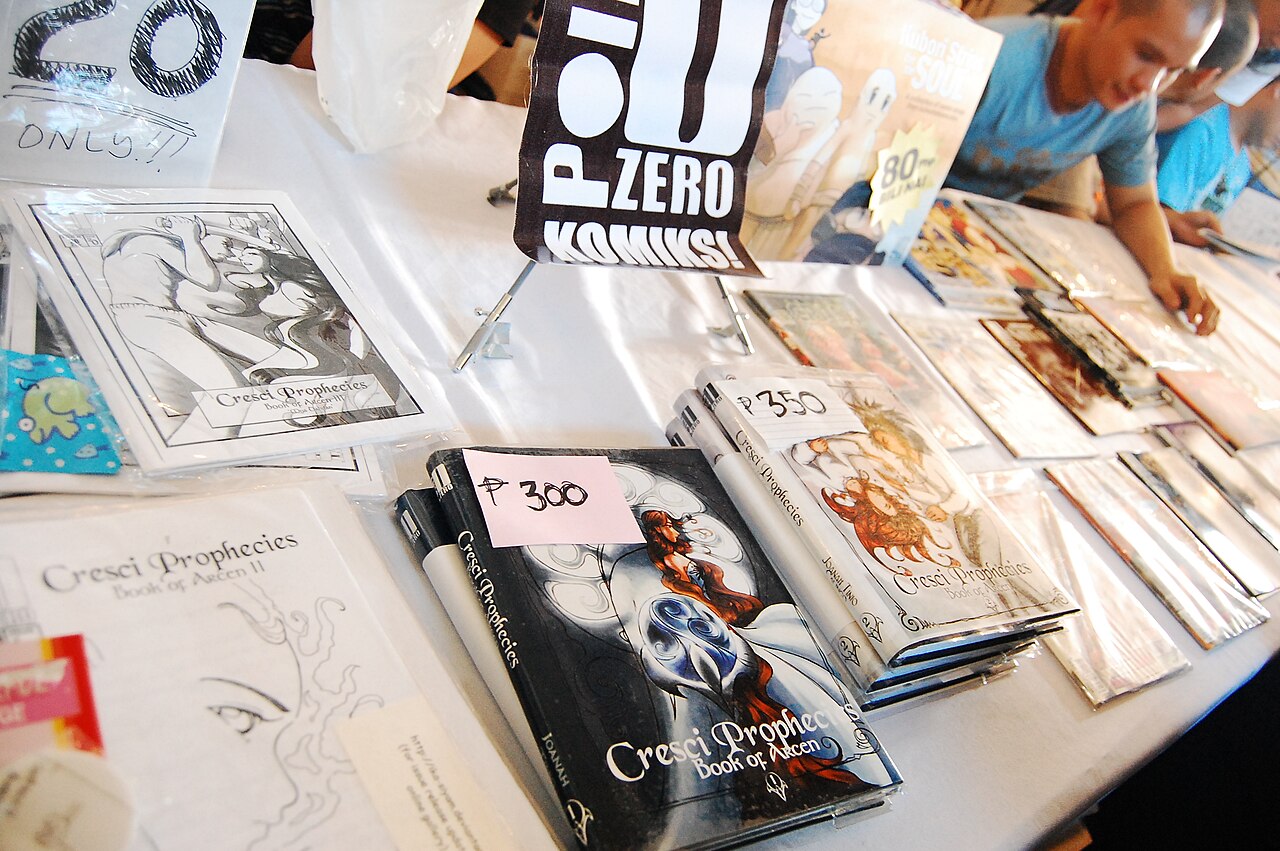
A comic convention table may place a thin issue beside a paperback and a large hardcover carrying almost the same title. Those objects can contain overlapping stories, different starting points or entirely different runs. Their size alone does not settle the relationship. Reading the contents information is more useful than assuming that the thickest book starts earliest or includes everything. Following the publication record places a particular edition within the story’s printed sequence. A few publishing distinctions make it easier to talk about a story with a creator, librarian or publisher representative and to recognize which part of a series a display is presenting.
An issue number belongs to a named series
An issue is one installment of a particular publication. Its number is meaningful alongside the series title and, when relevant, the volume or starting year. Two publications both numbered one need not share a starting point. A publisher can launch a new series around an established character, and a special issue can sit outside the main numbering. In a hypothetical display, Moon Harbor number one from a new series and Moon Harbor: The Lighthouse number one from a separate mini-series would be different records. Write the whole printed title before trying to place either story in a sequence.
A collected volume describes its contents
A collected edition gathers previously separate material into another publication. The contents list is the evidence for what has been gathered. DC’s publisher page for its Kamandi omnibus, for example, identifies issues one through forty of the original series. The useful lesson is the presence of a specific issue range, not a universal meaning for the word omnibus. Trade paperback describes a physical publishing format; a numbered collected volume describes its position within that collection. Hardcover describes binding. None of those labels, by itself, promises a complete character history or tells you whether a story has reached its ending.
Work through a six-issue example
Imagine a sample series called Lantern Station, published as six issues. Collection A contains issues one through three, and collection B contains issues four through six. A later hardcover contains all six plus an essay. Someone who has read collection A has already read the first three issues; beginning again with individual issue two would repeat material. The essay is additional content, but it is not a seventh story installment. This simple mapping also reveals a gap: owning collection A and individual issues five and six leaves issue four unaccounted for. The example describes contents, not a recommended purchase.
Separate publication order from story chronology
A prequel can be published after the story it precedes. A flashback issue can appear in the middle of a series. Consequently, three different questions produce three possible sequences: what appeared first, what happens first inside the world, and what order a particular collected edition uses. They are not interchangeable. For Lantern Station, suppose issue five spends most of its pages describing events before issue one. It still remains issue five in the publication record. Moving it to the beginning is a personal reading experiment, not a correction to the issue numbering or evidence of an error in the collection.
Notice restarts, subtitles and shared characters
A character name on a cover is a helpful recognition cue, but a weak catalog identifier. Consider a second series, Lantern Station: Winter Signals, whose numbering restarts at one. Its third issue is not the ninth issue of the earlier six-part run unless the publisher explicitly supplies that relationship. Crossovers make this distinction even more useful: a collected story might include installments from several titled series. Preserve those titles when taking notes. The Library of Congress collection policy treats published comics and original comic art as related but distinct material, another reminder that the object being described matters as much as the familiar character pictured on it.
Extra pages are part of the edition record
Introductions, sketches, cover galleries, translations and revised coloring can distinguish editions even when their core issue ranges match. Do not presume that every difference is a correction or a definitive version. An introduction may offer historical context; a sketch gallery may reveal working decisions; a new translation may have its own credited team. At an exhibit, look at the credit and contents pages alongside the cover description. A useful note might read: same six issues, different supplementary essay. That is a stronger observation than calling one object bigger or newer and leaving the actual difference unexplained.
Make a small, readable edition map
For the next comic or pop-culture exhibit you explore, try a three-line record: full title and series identity; explicitly listed issue contents; edition-specific additions. Add publication order only when a publisher or library record supports it. If the contents are unavailable, mark that relationship unresolved rather than filling the gap with a guess. This keeps a conversation about editions precise while leaving room for enjoyment of the art and story. At a publishing display, that edition map can identify a useful question immediately: which listed issues and supplementary pages belong to this particular book? It keeps the conversation attached to the publication in view rather than to the largest title on its cover.
Continue exploring
Explore related events
Current facts come from the directory. Follow the exact listing for admission, venue information and the official source.
FAN EXPO New Orleans 2027 · Jan 8 – Jan 10, 2027 · scheduled · Tickets on sale — check current availability
Sources and further reading
Source review: 2026-10-12. Examples identified as hypothetical are original illustrations.
An independently researched feature. Worked examples are illustrative; photographs identify their archive or collection context.
Find your next event →