
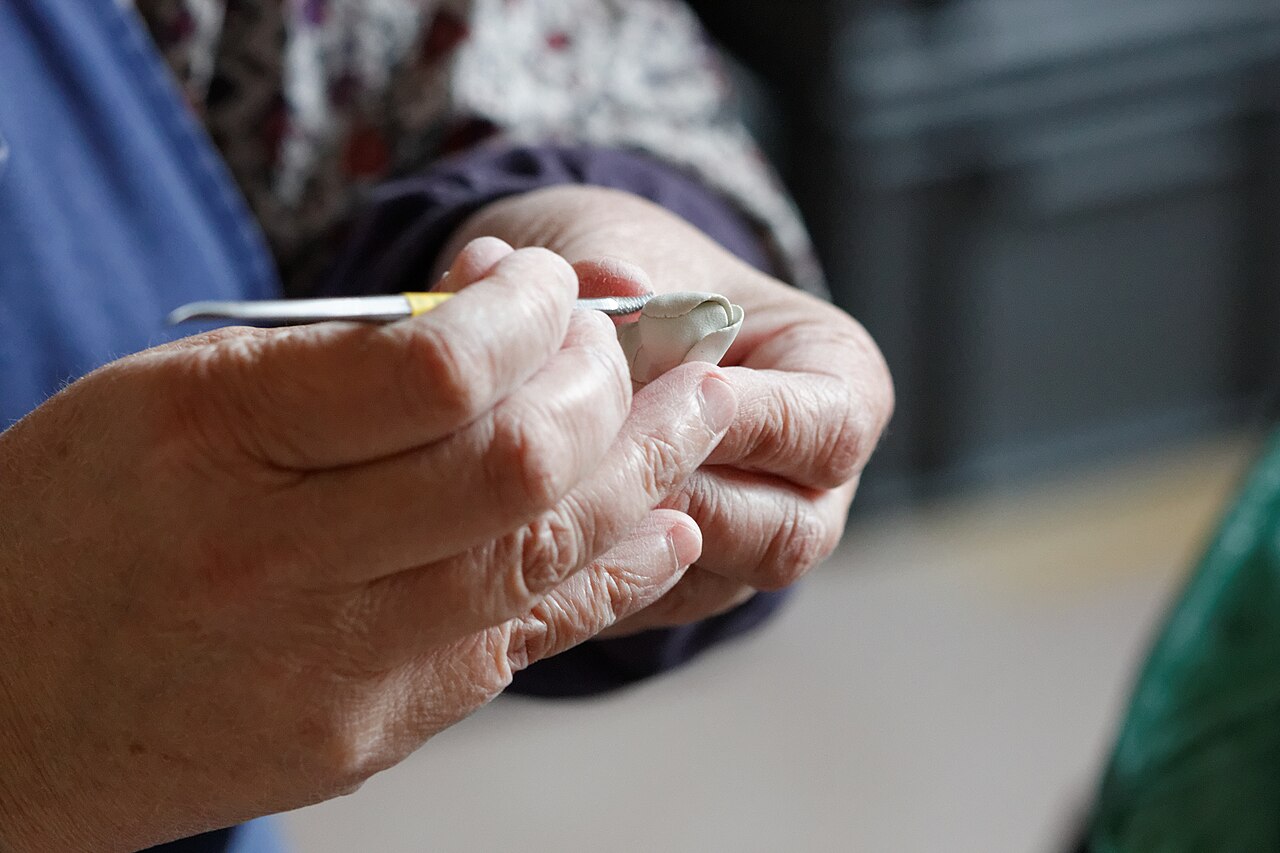
A ceramic surface can carry several kinds of work
A maker exhibit may describe a ceramic object through its clay body, slip, incised decoration and glaze. Those terms identify different parts of the surface relationship, rather than several interchangeable names for its color. The V&A’s ceramics glossary describes slip decoration and sgraffito, while the Metropolitan Museum’s object records and research material show ceramic bodies, slips and glazes appearing together in documented works. Reading those labels adds a process dimension to looking at the pattern. It is distinct from the magazine’s guide to choosing functional ceramics: the focus here is how a surface is described and how its layers participate in the design.
The body is the underlying ceramic material
A museum or maker label can identify the body through a term such as earthenware or another documented material category. That is one part of the object’s record. The visible surface may include additional materials or decoration, so the body name alone does not explain every color or mark. At an exhibit, locate the material statement and distinguish it from the technique statement. A caption describing red earthenware with a contrasting slip identifies a relationship between the underlying body and an added surface contribution. The two descriptions work together, making the object more specific than a broad label saying pottery.
Slip provides a clay-based surface contribution
The V&A describes slip as clay prepared in liquid form for surface applications and discusses several decorative relationships involving it. A contrasting slip can create another visible layer over the body. For exhibit reading, the useful question is which part of the surface the maker identifies through that term. The color you see might belong to the body, the slip or another documented contribution. A labeled detail or process sample can clarify the distinction. Read the caption alongside the visible area rather than assuming every pale region or dark line was formed through the same material relationship.
Sgraffito exposes a contrast through incision
In the ceramics context described by the V&A, sgraffito involves incising through a slip layer to reveal the underlying body. That relationship explains why a line can carry both a shape and a material contrast. The Met’s covered-jar record, for example, identifies a cream-colored slip and a sgraffito design. The process term helps connect the visible pattern with the documented surface arrangement. At a maker display, follow one incised line across the object and notice how it relates to the surrounding field. Its importance is not only that it is a line, but that the label describes how the contrasting regions are associated.
Glaze belongs to another layer of the record
A glaze description identifies a further surface material and its documented appearance. It can coexist with a slip and an incised pattern, as the Met’s sgraffito-ware records demonstrate. The label may describe transparent, colored or other specified glaze relationships. Keep those terms attached to the actual record. A glossy-looking photograph supplies an appearance, while the materials statement identifies what the institution or maker documents. Looking at both gives a clearer understanding of the object’s presentation. It also prevents one visible quality, such as shine, from replacing the more detailed account of the surface’s components.
Read three fictional ceramic labels
Imagine Label A naming a clay body with slip decoration, Label B naming a slip-covered body with sgraffito and Label C adding a documented glaze to that layered description. These are invented records for the exercise. A identifies a surface contribution, B identifies an incised relationship and C supplies another layer. The labels would lead to different looking questions: where is the slip, what contrast does the incision expose, and what appearance does the glaze contribute? Comparing the records by those questions is more informative than ranking the objects solely by how many technical terms appear in their captions.
A pattern and its production history need different evidence
An object can show a clear floral pattern while its exact sequence of surface treatments remains a research question. The Met’s study of sgraffito ware discusses scientific examination of ceramic-body, slip and glaze relationships, illustrating that some distinctions require more than a visual glance. A maker’s own process account may supply another kind of evidence for a contemporary object. Preserve those sources as attributed explanations. The viewer can still describe the visible motif and its placement without resolving every production detail. A good exhibit label connects the appearance with the documented process while leaving the basis of that documentation readable.
Follow one motif through the surface description
Choose a single line, leaf or geometric element and connect it with the material and technique labels that explain it. In the fictional exercise, that might mean locating the slip field, identifying the incised contrast and then considering the described glaze. The sequence turns a busy caption into a set of visible relationships. A ceramic object becomes richer to discuss when body, surface layer and decorative action remain distinct. At a maker event, a focused question about one motif can open a substantive process conversation, showing how several contributions come together in the finished surface rather than treating its pattern as color alone.
Continue exploring
Explore related events
Current facts come from the directory. Follow the exact listing for admission, venue information and the official source.
Minneapolis Gift & Art Expo 2026 · Nov 6 – Nov 8, 2026 · scheduled · Public admission announced — check organizer for current entry details
Sources and further reading
- V&A: Slip and sgraffito terminology ↗
- Metropolitan Museum: Covered jar with slip and sgraffito ↗
- Metropolitan Museum: Body, slip and glaze in a documented vessel ↗
- Metropolitan Museum: Scientific examination of sgraffito surface history ↗
Source review: 2026-10-12. Examples identified as hypothetical are original illustrations.
An independently researched feature. Worked examples are illustrative; photographs identify their archive or collection context.
Find your next event →