
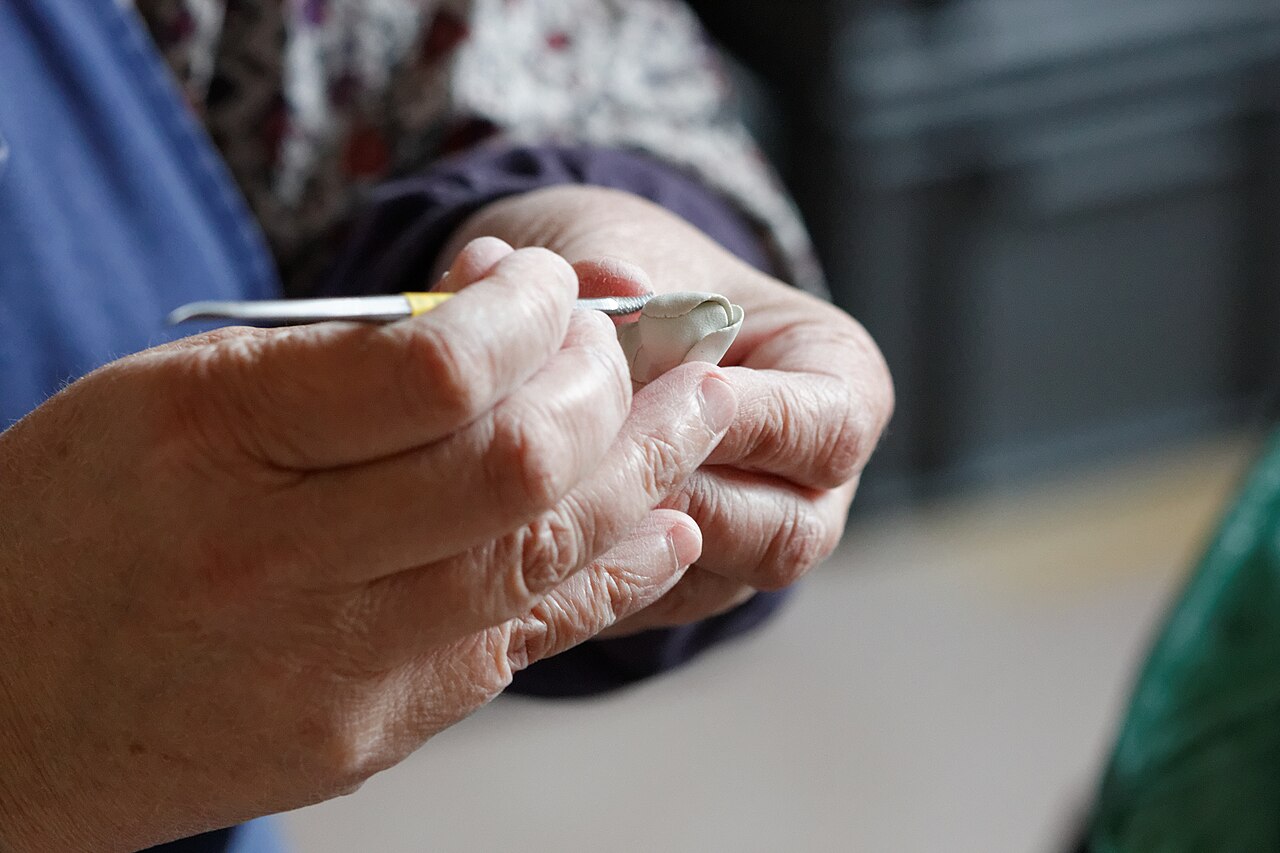
Decide what the object needs to do
A ceramic piece can be a sculptural object, a vase or something intended for a daily task. Begin with that distinction instead of assuming an appealing form can do every job. Tell the maker how you hope to use it and ask whether that matches the piece's intended purpose. A vessel displayed with flowers may be arranged for presentation, not a complete statement about how it should be used at home. The simplest useful question is often what the maker designed the object to do.
Ask before handling
Request permission to lift a piece, then follow the maker's instructions for supporting it. Notice its size, weight and how it feels for the task you have in mind. Examine a base or handle only in the way the exhibitor permits. Keep bags, coats and phones from sweeping across nearby objects when you turn. A small table can hold many fragile pieces, so an unhurried look is more considerate than trying to inspect several items at once while balancing your other belongings.
Get the functional claims from the maker
If you want to use a piece with food, heat, appliances or outdoors, ask explicitly whether that use is intended and what documentation or instructions accompany it. Do not infer suitability from a glaze's appearance or a general statement about the craft. Record the exact object or product group to which the answer applies. This article does not test ceramics or establish their safety. If the available information leaves an essential use uncertain, choose a different piece or postpone the purchase until you can verify it.
Understand handmade variation
Ask about the maker's process and which variations they consider part of the work. In a set, compare pieces side by side with permission and decide whether individual differences appeal to you. If you need an exact match to an earlier purchase, bring its identification and measurements rather than relying on memory of a color. A photograph may help a conversation but cannot guarantee a matching finish. Record the maker and any piece or collection name so a future request can be made accurately.
Make care and packing concrete
Request the maker's written care instructions and ask what to do if the object is damaged. Craft collection guidance emphasizes that different materials and constructions have different needs; the specific advice for your piece is more useful than a universal cleaning shortcut. Let the seller pack fragile work before you leave the table. Consider how it will be carried among your other purchases, and keep heavy items from pressing against it. Ask about shipping arrangements before committing to something too large for your travel plan.
Buy the object you can understand
Keep its receipt, maker details and instructions together. At home, choose a location consistent with the intended use and the care advice supplied. If it is a gift, pass that information to the recipient, especially where the piece is decorative rather than intended for everyday service. Our art and makers directory connects you to public events where you can meet creators. Confirm the current roster on the organizer's site if ceramics are your main reason for attending, and leave room to discover a maker you did not already know.
Continue exploring
Put the guide into practice
Current facts come from the directory. Follow the exact listing for admission, venue information and the official source.
Minneapolis Gift & Art Expo 2026 · Nov 6 – Nov 8, 2026 · scheduled · Public admission announced — check organizer for current entry details
Sources and visitor resources
- Minneapolis Gift & Art Expo: artists and makers ↗
- American Craft Council: craft and maker resources ↗
- Crafts Council: caring for a craft collection ↗
Source review: 2026-10-12. General planning guidance; confirm current details with the organizer.
General planning guidance, not firsthand event reporting. Always check the organizer’s current details.
Find your next event →