
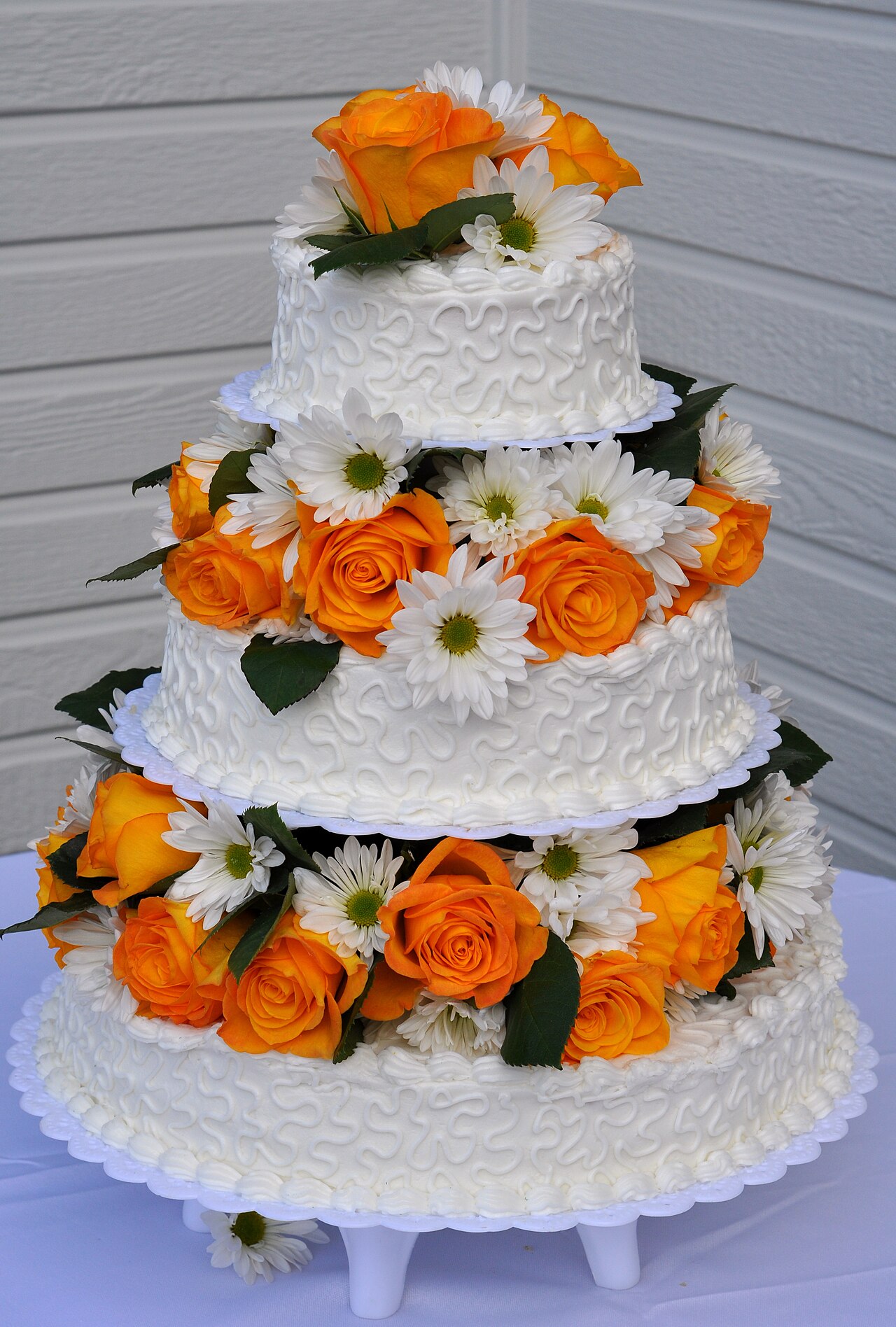
The cake has several descriptions
A cake display can identify its outward arrangement, interior flavor combination and surface finish in separate ways. Those descriptions should remain separate. Wilton's educational material distinguishes filling between cake layers from fondant used to cover a cake's exterior. At an expo, a tiered display might show the visual design without revealing its interior, while a tasting sample might illustrate a flavor without reproducing the full display. Begin by identifying what each sample represents. The outer appearance, interior description and serving presentation provide different information. None should silently become proof of the others merely because they are displayed at the same booth.
A tier and a layer are different scales
In ordinary cake descriptions, a tier refers to a distinct level of the overall presentation, while layers describe the cake's internal arrangement as specified by the maker. A picture of three tiers does not tell you how many internal layers each contains. Read the maker's description before attaching a layer count to the image. A cut sample or diagram can provide information that an exterior photograph cannot. The distinction is useful because “three-tier” and “three-layer” can sound similar while describing different structures. Keeping the terms apart makes the exhibit legible without inferring hidden details from its silhouette.
Filling belongs to the interior description
The filling describes an element between layers as identified by the maker. It is not necessarily the same material as the exterior finish. Wilton's filling explanation offers a concrete example of that interior role. At a wedding expo, connect the sample's flavor label with the sample itself. If several fillings are named, distinguish them rather than assuming that the display cake contains all of them. A tasting portion represents the combination it is labeled to illustrate. Its relationship to a proposed cake should come from the written description, not from its proximity to a photograph of another design.
Finish belongs to the visible surface
The finish describes how the exterior is presented. Fondant and frosting can play different roles in the maker's explanation, and a photograph may not establish the exact material without a label. Notice whether the booth identifies the surface treatment, decoration or both. A smooth exterior is a visual observation; a named covering is a stated specification. Keep these together without merging them. The surface can be described through color, texture and decorative arrangement even when the material is unresolved. That preserves useful visual information while avoiding an unsupported conclusion about how the sample has been made.
A display may demonstrate only design
An exhibition piece can illustrate shape and decoration rather than a complete edible interior. The booth's label should establish what the piece is intended to demonstrate. Do not assume that a display model, tasting sample and ordered cake are identical objects. A design display might show a four-level arrangement while a separate sample illustrates one flavor combination. Both are meaningful, but their evidence differs. The design model supplies appearance; the tasting label supplies the named sample's interior description. Reading those roles separately prevents the showcase from being treated as a complete specification of a future event cake.
Assemble a fictional specification
Imagine a hypothetical proposal that names three tiers, a stated cake-and-filling combination and a smooth exterior finish with floral decoration. Place each part in a separate field: overall arrangement, interior combination, finish and decorative treatment. Now compare a photo showing the outside with a labeled tasting sample. The photo can illustrate the finish and arrangement, while the sample can illustrate the named flavor combination. Neither alone verifies the entire proposal. This worked example shows why a clear specification needs several descriptions that work together, rather than a single photograph expected to carry every structural and sensory detail.
Read decorative details at their level
A flower, ribbon-like element or textured surface can be part of the design without establishing the material from which it is made. The maker's label supplies that fact. A viewer can describe the element's appearance and location while leaving material identification open. In a photograph, “small pale flowers arranged along one side” is a visible observation. Calling them a particular edible or non-edible material requires additional evidence. This is especially helpful when comparing archived design images with current expo samples. The archive can provide visual context, but it does not identify a current maker's methods or offerings.
Connect the pieces without conflating them
After reading the display, summarize which evidence supports each part of the description. The image supports the visible arrangement, the label names the finish, and the tasting card identifies the sample's combination. A proposed cake should connect those pieces through its actual specification. The result is a clearer understanding of the showcase rather than a serving quantity, recipe or future outcome. At a wedding expo, separating structure, filling and finish makes the display easier to discuss. It lets a beautiful exterior remain an exterior while the interior and event-specific design receive their own precise descriptions.
Continue exploring
Explore related events
Current facts come from the directory. Follow the exact listing for admission, venue information and the official source.
Worcester Wedding & Bridal Expo 2027 · Mar 7, 2027 · scheduled · Public admission announced — check current organizer information
Sources and further reading
Source review: 2026-10-12. Examples identified as hypothetical are original illustrations.
An independently researched feature. Worked examples are illustrative; photographs identify their archive or collection context.
Find your next event →