
Form can be an exhibition subject
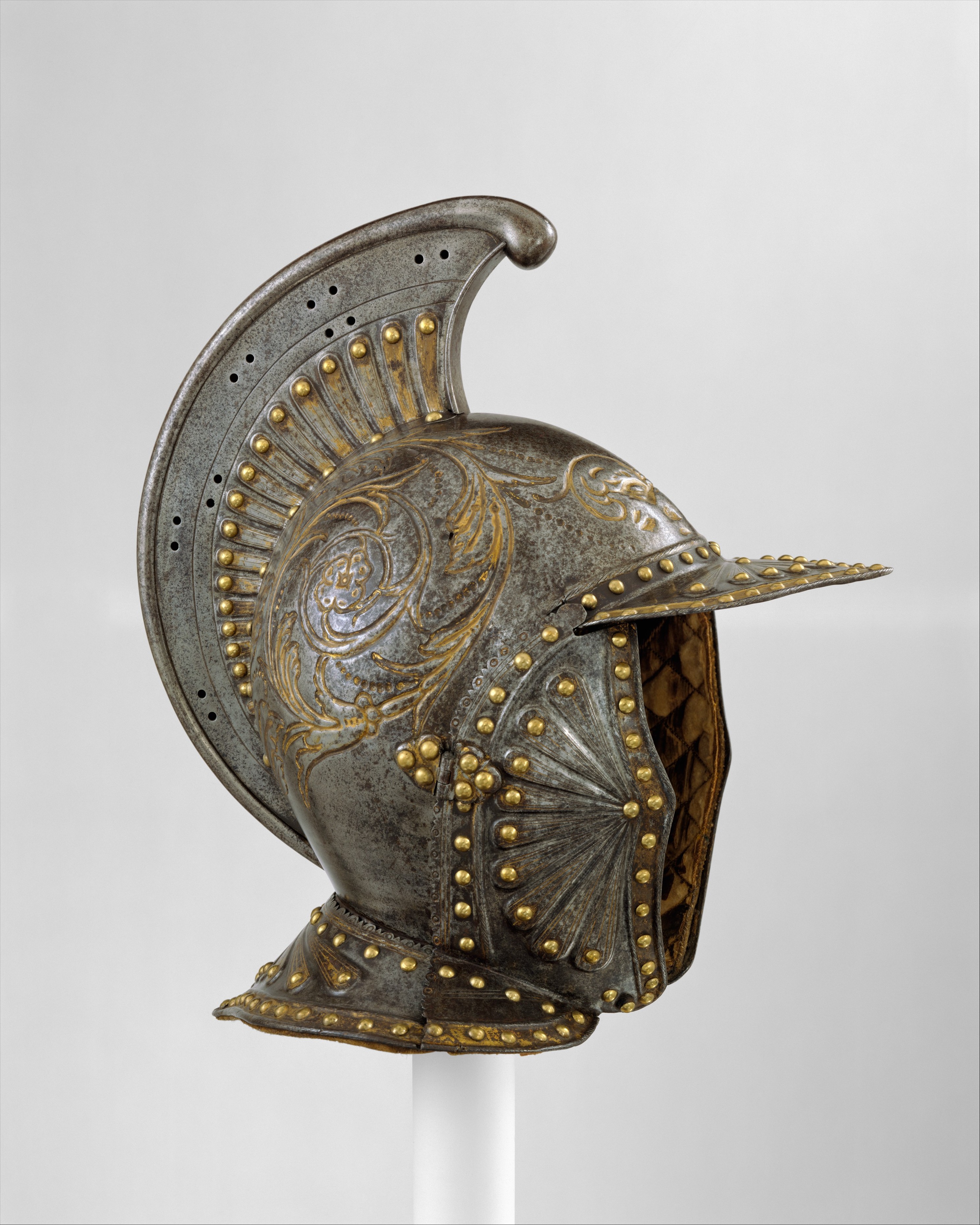
Arms and armor can be displayed for their sculptural form, ornament and cultural setting as well as their historical classification. The Met's record for a parade helmet describes a relationship with classical visual tradition, while other parade-armor records emphasize courtly context and decoration. These examples make a useful starting point for looking at form. At a collector exhibition, consider outline, volume, surface and focal emphasis. The object can reward the same close visual attention given to another decorative artwork. Its documented purpose supplies context, while its shape and ornament provide evidence that a visitor can examine without discussing operation.
Silhouette identifies the outer contour
The silhouette is the object's visible boundary from a particular viewpoint. A projecting crest, a rounded volume or an extended edge can establish the dominant outline. Describe that outline before moving to small decorative details. The viewpoint matters: a side image may emphasize one projection while a front image reveals symmetry. A single photograph provides one contour, not every possible view. In an exhibition note, naming the view makes the description more precise. “The side view emphasizes an upward projection” connects the observation with its evidence and helps another reader locate the feature in the displayed image.
Volume gives the shape depth
Volume concerns the three-dimensional relationship among surfaces and spaces. A frontal photograph can flatten those relationships, while another angle may reveal how one form overlaps another. Notice which images the exhibition provides and how they complement each other. A raised ornament can read differently from a line on a surface, even if both resemble the same motif in a small reproduction. The label may explain the form's materials or making context. Read that documentation beside the visual evidence. The result is a layered account: what the object looks like from the shown view and what the museum states about its construction or ornament.
Ornament can reinforce or interrupt form
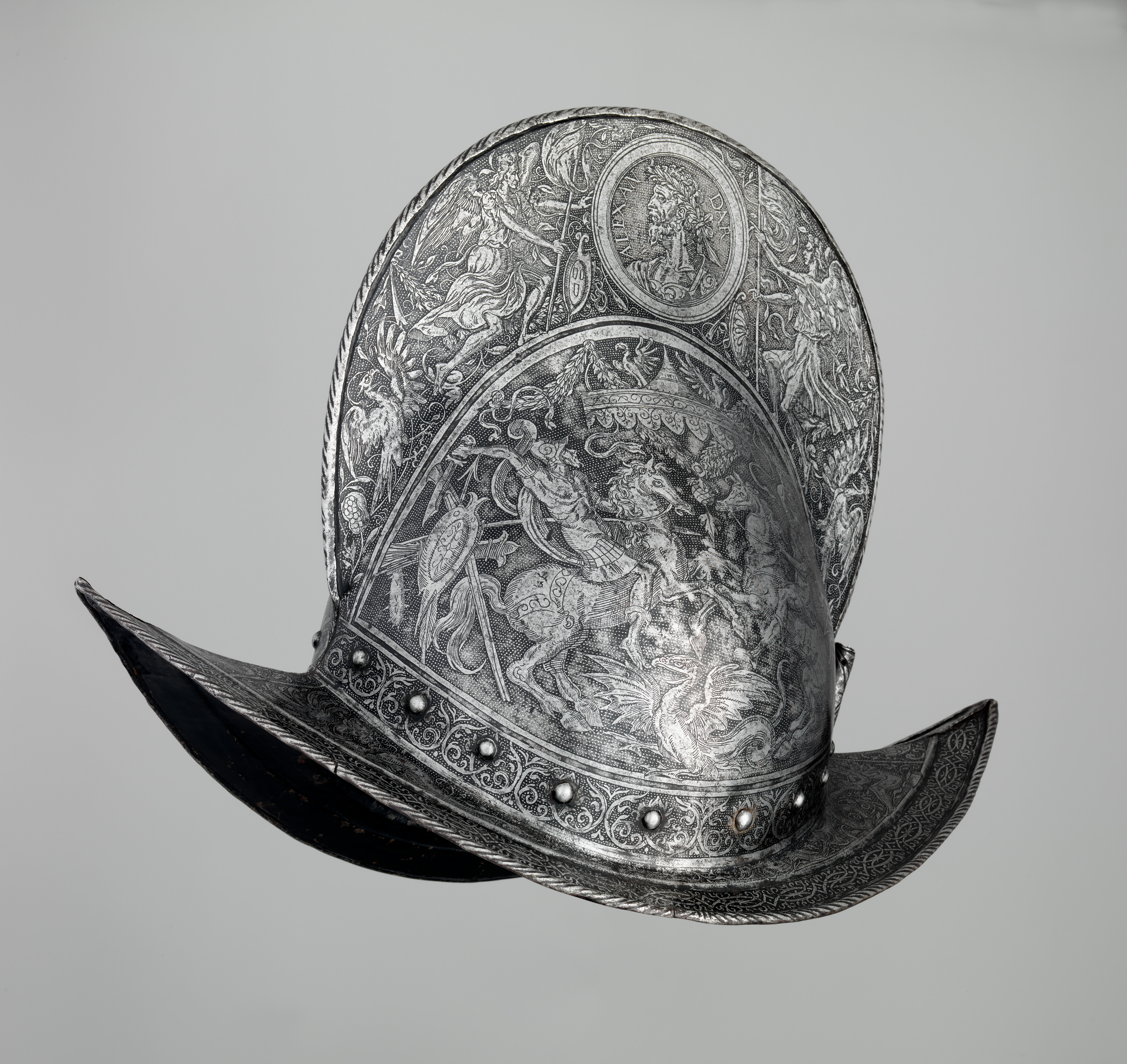
Decoration may follow the object's contour, emphasize a central area or create another pattern across the surface. Those relationships shape the visual reading. A repeated border might reinforce the outline, while a central figure draws attention inward. Neither effect requires a performance claim. At an exhibition, locate the ornament and explain its relationship to the larger shape. The museum record may supply a historical interpretation of the motif. Keep that interpretation connected to its source. The visible arrangement and the documented meaning work together, but a viewer's recognition of a familiar shape does not automatically establish the object's original symbolism.
Compare an invented sculptural pair
Imagine two hypothetical exhibit objects with similarly rounded main volumes. Object R uses a tall projecting form and a narrow decorative border. Object S keeps a compact outline and concentrates ornament at the center. A comparison can describe how R emphasizes vertical direction while S concentrates attention within its compact volume. The shared rounded base does not make their visual organization identical. This exercise illustrates why silhouette, volume and ornament deserve separate attention. Each field explains part of the form, and their combination creates the overall sculptural character the visitor perceives.
Parade context changes the interpretation
The Met's parade-armor records place certain objects within ceremonial or courtly settings. That documented context helps explain why visual display and symbolic presence can be central to the museum's interpretation. It should remain attached to the specific record rather than being generalized to every historical object nearby. Read the label's object type and purpose together. A ceremonial context supplies a cultural framework for studying ornament, scale and presentation. The visitor can then connect the visual analysis with the exhibition's account of how the object was understood, without inventing a universal explanation for all arms and armor.
Display arrangement creates another composition
A museum case, pedestal or image sequence frames the object for the audience. The arrangement can emphasize one side, isolate a detail or place several objects in a visual comparison. Notice the curatorial choice. A grouped display may invite attention to a shared motif, while an isolated object may emphasize overall form. This is another layer of composition, distinct from the object's own decoration. A useful account can name both: the object's contour and the exhibition's chosen viewpoint. Reading the display arrangement makes the audience aware of how the object is being presented and which visual relationships the curator has made easiest to see.
Connect visual form with documented context
A clear description can join a specific observation with the museum's interpretation: “The side view emphasizes the projecting outline; the record identifies the piece within a parade-armor context.” This gives the reader something visible and something documented. At a historical collector display, the approach makes arms and armor intelligible as decorative sculpture. Contour, volume and ornament become useful subjects rather than incidental embellishments. The exhibit can then communicate artistic decisions and cultural meaning through its actual evidence, allowing the visitor to appreciate form without converting the object into an unsupported claim about use, condition or capability.
Continue exploring
Explore related events
Current facts come from the directory. Follow the exact listing for admission, venue information and the official source.
Tidewater Gun Show — 2026 (2026-12-05) · Dec 5 – Dec 6, 2026 · scheduled · Public visitor admission announced; check organizer for current availability
Sources and further reading
Source review: 2026-10-12. Examples identified as hypothetical are original illustrations.
An independently researched feature. Worked examples are illustrative; photographs identify their archive or collection context.
Find your next event →