
A remarkable object can still have an incomplete story
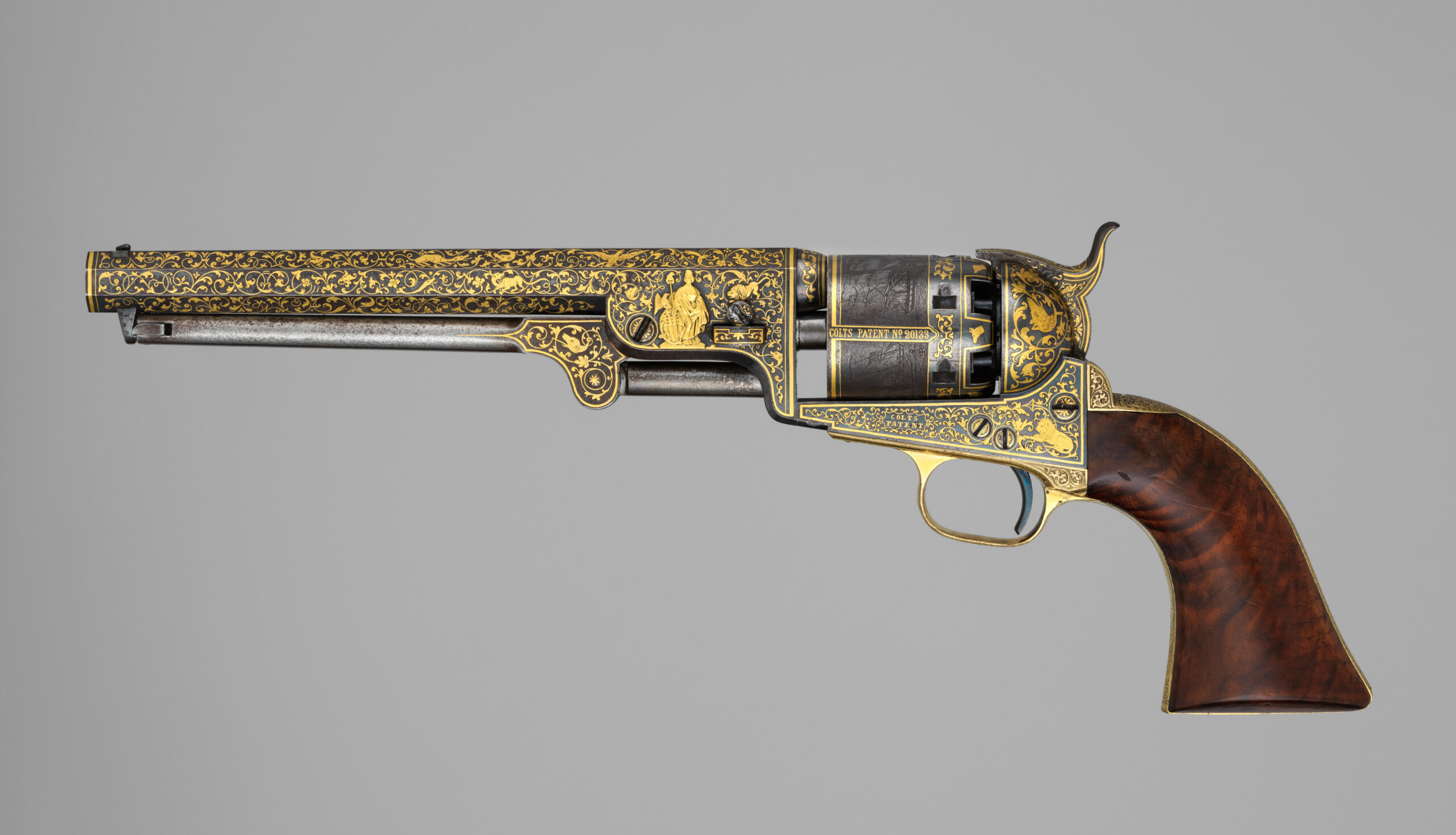
The Metropolitan Museum of Art’s gold-inlaid Colt Model 1851 Navy revolver, serial number 20133, dates to about 1853. Its decoration makes it a compelling object to examine, but the museum’s record also identifies a gap: its original exhibition or presentation history is unknown. That combination is a valuable lesson for visitors to historical collector displays. Visual distinction and a celebrated maker do not fill missing documentation. A label can confidently identify an object while remaining cautious about who received it or where it appeared. The uncertainty is part of the history worth understanding, rather than an inconvenience to smooth away.
A relationship is not an ownership chain
The museum discusses a traditional association between its Navy revolver and a similarly decorated example in the Hermitage, supported by close serial numbers and related ornament. That comparison is interesting evidence about a group of objects. It is not a complete record of the Met example’s original destination. When reading a collector’s display, separate the phrase that describes a documented fact from the phrase that proposes a relationship. A convincing comparison may guide further research without proving every step of an individual object’s journey. Keeping those categories apart makes the display’s strongest evidence easier to appreciate on its own terms.
The maker and decorator are different questions
A factory name identifies one aspect of an object’s production. It does not automatically identify the person responsible for its ornament. The Met’s record for another gold-inlaid Colt, the Model 1849 Pocket revolver numbered 63306, describes continuing scholarly debate about the authorship of its decoration. That example shows why a catalog can name the manufacturer while discussing several possible decorators. At a historical display, look for the role attached to each name. Manufacturer, designer, engraver and later owner are not interchangeable credits, and a single prominent name should not absorb the work or history associated with the others.
Read the qualifying words
Words such as attributed, about and possibly communicate the strength or precision of a claim. They are useful information, not decorative hesitation. A date given as about 1853 carries a different level of precision from a documented dated inscription. A proposed attribution is different from an identified signature. Visitors do not need to settle the scholarly question to read those distinctions carefully. When making a note, preserve the qualifier alongside the name or date. Dropping it can turn a cautious museum explanation into a much stronger assertion by the time the story is repeated to someone else after the show.
Compare records without merging the objects
A useful display may place an object beside a photograph, a catalog entry or a related example. Each item needs its own identity. Note which serial number or museum accession number belongs to which record before treating the documents as a continuous story. Two similar objects may illuminate one another while retaining different histories. This feature is about reading exhibition evidence, not authenticating an object for purchase or estimating value. For visitors, the most productive question is often modest: what does this particular document establish about this particular item, and which part of the account remains an interpretation?
An honest gap can make a stronger exhibit
A display that marks an unresolved question gives its audience something concrete to investigate. It can explain why scholars compare decoration, inscriptions and surviving records without pretending the comparison has eliminated every uncertainty. The museum photograph here illustrates the documented Met collection object; it does not show a current gun-show exhibit or imply that the object will appear at an upcoming event. This history feature uses public museum records checked November 2, 2026. At a collector display, take away the object’s identity, the evidence behind the label and the question still open. Those three notes preserve more history than a famous name alone.
How this article was prepared
This article used automated drafting and checks against the linked sources. Its photograph is identified and credited separately. Please use our correction link to report an error.
Continue exploring
Explore related events
Current facts come from the directory. Follow the exact listing for admission, venue information and the official source.
Crossroads of the West Gun Show — Las Vegas — 2026 (2026-11-21) · Nov 21 – Nov 22, 2026 · scheduled · Admission announced; organizer says tickets will be available soon
Crossroads of the West Gun Show — Tucson — 2026 (2026-11-21) · Nov 21 – Nov 22, 2026 · scheduled · Admission announced; organizer says tickets will be available soon
Pasadena Gun Show — 2026 (2026-11-21) · Nov 21 – Nov 22, 2026 · scheduled · Public visitor admission announced; check organizer for current availability
Lebanon Missouri Gun Show — 2026 (2026-11-28) · Nov 28 – Nov 29, 2026 · scheduled · Public visitor admission announced; check organizer for current availability
Sources and further reading
- The Met: Model 1851 Navy revolver 20133 and limits of its documented history ↗
- The Met: Model 1849 Pocket revolver 63306 and debated decorator attribution ↗
Source review: 2026-11-02. Examples identified as hypothetical are original illustrations.
An independently researched feature. Worked examples are illustrative; photographs identify their archive or collection context.
Find your next event →










