
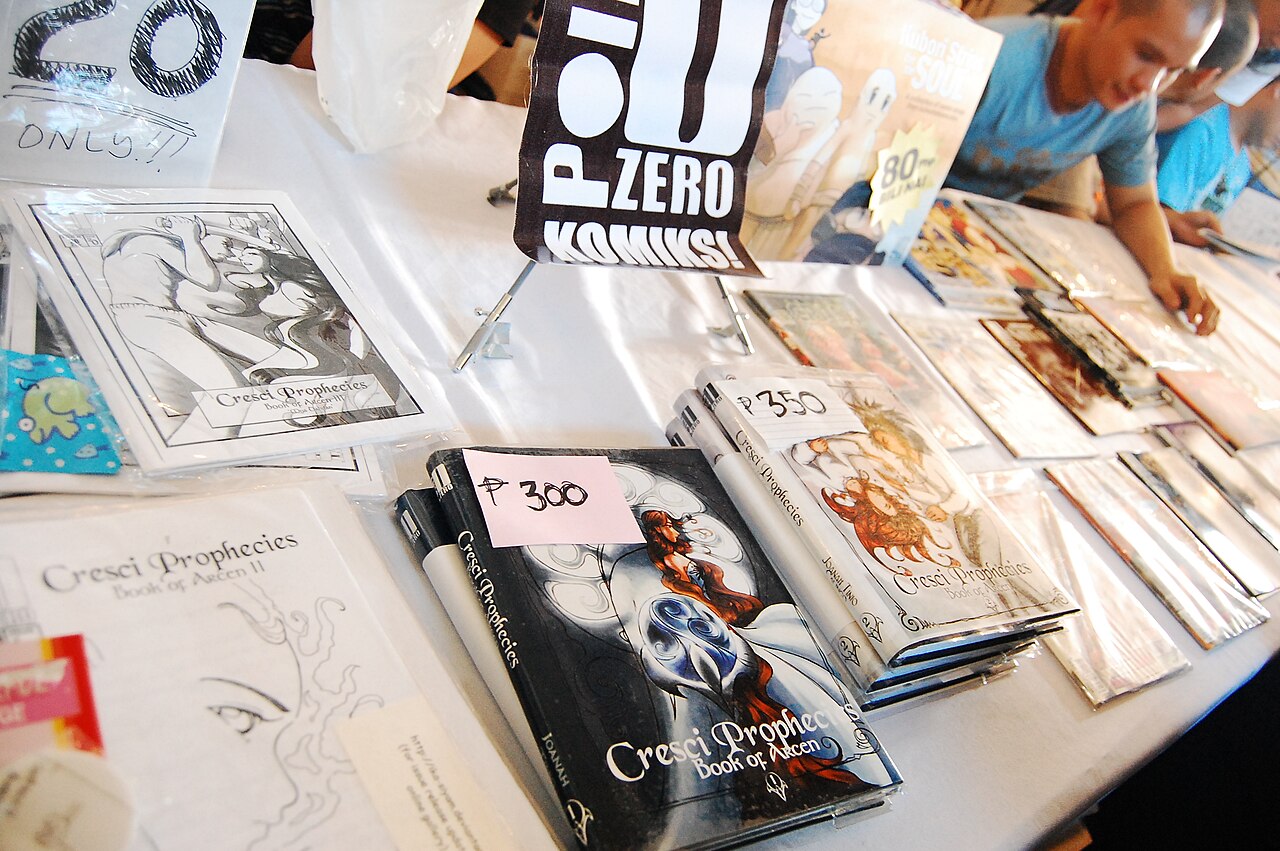
A collection can make an argument through arrangement
An anthology brings separate works into a shared publication. The stories may have different creators, styles, lengths and viewpoints, yet their placement can create connections that no single contribution carries alone. At a comic exhibit, a multi-creator book is an opportunity to look at selection and sequence as creative decisions. The publisher Fantagraphics maintains an anthology category and describes its Kramers Ergot series in relation to its editor’s interests. These examples identify selection and arrangement as parts of the publication’s editorial frame. The looking method here uses an invented anthology to explore how a collection can make distinct stories speak to one another.
Read the stated organizing idea
Begin with the title, introduction or editor’s note if it is available. A collection might announce a theme, period, community, creator group or publishing history. That statement tells you what the editor presents as the organizing idea; it does not prove that every story handles the theme identically. Imagine a sample anthology called Riverside, containing three stories about the same neighborhood. Its introduction says the contributors were asked to consider change. That gives a useful reading question: what kind of change does each story notice? It does not require the stories to share a plot, narrator or emotional conclusion.
Let separate stories remain separate
The first Riverside story follows a shop closing. The second shows a child discovering a footbridge. The third depicts a resident watching the water after a storm. These are independent narratives connected by the anthology’s premise. Do not import information from one into another unless the book actually establishes a shared continuity. A building drawn in a similar position could be a deliberate recurring setting, an incidental resemblance or a reader’s interpretation. Keep those possibilities distinct. Recognizing a connection can enrich a reading without converting the entire anthology into one continuous story or assuming its creators collaborated on every visual detail.
Compare the treatment of the same idea
In the collection, the closing shop frames change as loss, the footbridge frames it as discovery, and the river scene frames it as an ongoing condition. That comparison names an interpretive difference while allowing all three stories to retain their complexity. A useful exhibit note would identify the scene supporting each reading. Avoid reducing every contribution to a single emotion and then treating the resulting labels as the work itself. The exercise is strongest when it remains anchored in visible actions, recurring images or words. You are describing a relationship you can explain, rather than announcing that one style is inherently more serious than another.
Sequence creates a second experience
Now imagine two arrangements of Riverside. In the first, the closing shop comes before the footbridge and river. In the second, the discovery story opens the book and the shop closes it. The individual stories remain unchanged, but their order alters what the reader carries into the ending. An anthology can place a quiet piece after a dense one, introduce contrast early or allow a recurring image to return later. The sequence supplies another relationship to examine alongside the individual contributions. If an editor’s note explains the sequence, compare that explanation with your reading rather than substituting your interpretation for the editor’s account.
Notice bridges between contributions
Blank pages, section titles, contributor biographies and introductory drawings can mediate the transition from one work to the next. In the anthology, a small bridge illustration between stories might reinforce the shared location. Without it, the shift between styles could be more abrupt. Neither presentation needs to be corrected merely because it changes the rhythm. At a display, distinguish the anthology’s own connecting material from signage added by the organizer. A wall label explaining the exhibition is not automatically part of the book. That distinction helps prevent an exhibit’s interpretation from being mistaken for the original publication’s editorial structure.
Credits reveal a collection’s many voices
Identify the contributors and editor as the edition presents them. Reprinted material may have an original publication context, while newly created material may be described differently. Preserve those distinctions when they are documented. The Library of Congress’s comics policy recognizes published works and related materials as subjects for collection and study; an anthology is one particular publication record within that broader field. A contributor’s biography can add context, but it should not become a shortcut that decides what the story means before you read it. The page itself remains the evidence for claims about composition, sequence and narrative effect.
Build a relationship map rather than a scorecard
For a manageable exercise, select three contributions and give each one a short observation, then describe one connection between them. In Riverside, the map might link three images of crossing: a shutter being lowered, a bridge being opened and water moving beneath it. The connection is your stated interpretation, grounded in the scenes, rather than a claim about an actual anthology. At a convention, this approach can support a more precise conversation about editing and publishing. Use the magazine’s comic-event directory for relevant gatherings and its existing creator-browsing guide for the distinct questions involved in meeting exhibitors.
Continue exploring
Explore related events
Current facts come from the directory. Follow the exact listing for admission, venue information and the official source.
FAN EXPO New Orleans 2027 · Jan 8 – Jan 10, 2027 · scheduled · Tickets on sale — check current availability
Sources and further reading
- Fantagraphics: Kramers Ergot editorial framing ↗
- Fantagraphics: Anthology publications ↗
- Library of Congress: Comics collection policy ↗
Source review: 2026-10-12. Examples identified as hypothetical are original illustrations.
An independently researched feature. Worked examples are illustrative; photographs identify their archive or collection context.
Find your next event →