
Three rings, three questions
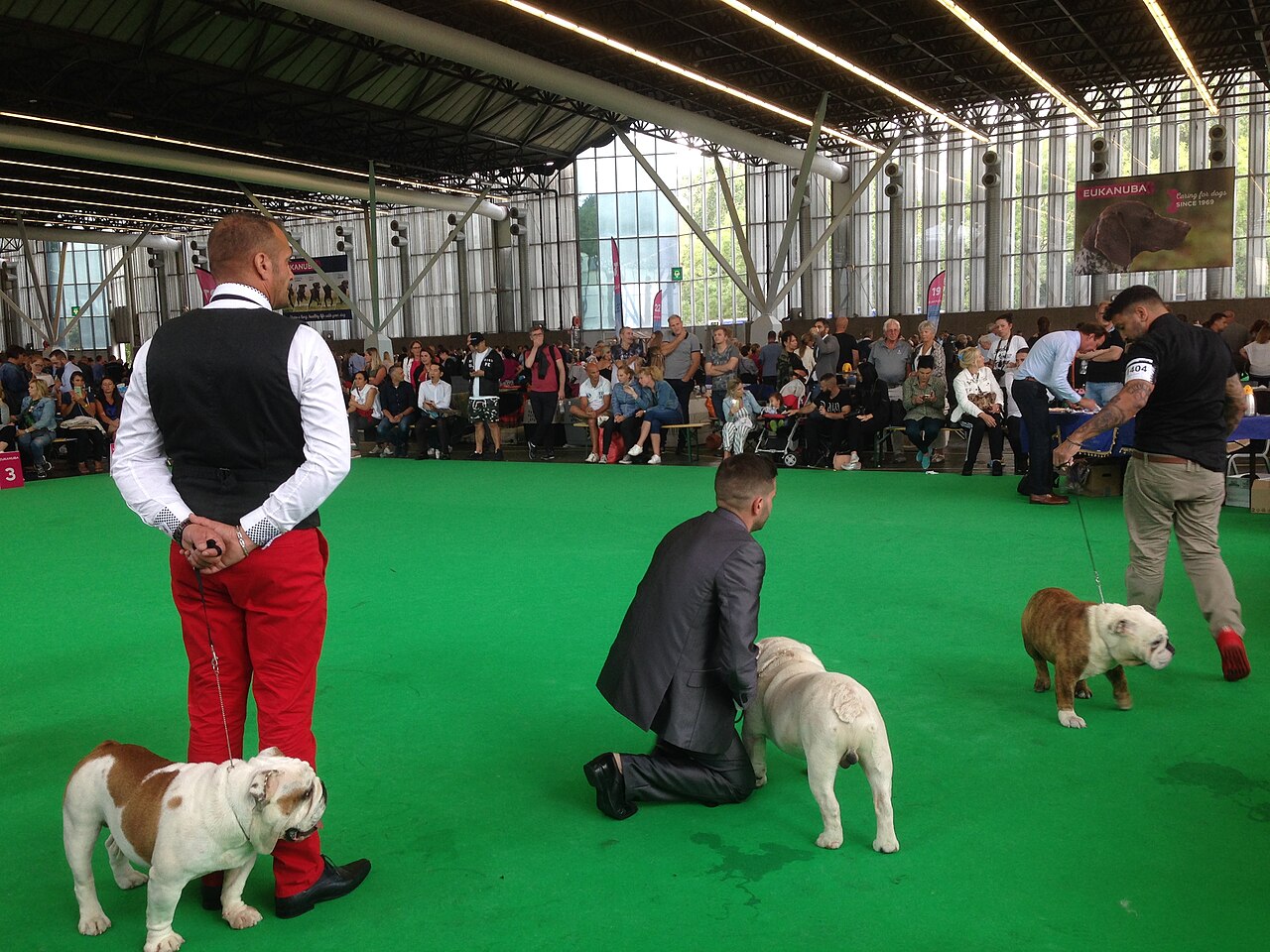
A convention hall can host canine activities that look similar from a distance: a dog, a handler and a marked area. Agility, obedience and rally organize those elements differently. The AKC describes agility through an obstacle course, obedience through specified exercises, and rally through a numbered sequence of instructional signs. Recognizing the organizing question makes each performance easier to follow. Are you watching a course being completed, exercises being demonstrated, or a team moving through sign-defined stations? That first distinction is more useful than assuming every ring is a race or that every pause indicates a mistake.
Agility has a course to read
An agility course gives spectators a visible sequence of obstacles and movement. Before following one team, observe the larger layout and the official result display. A fast-looking run is only an impression until the event's scoring system reports its outcome. Course completion, recorded time and any assessed faults are separate pieces of information. A commentator may emphasize a dramatic moment because it is easy to see, while the final result reflects the full run. Keep those levels apart: what you saw, what the announcer explained and what the official result recorded. None is improved by guessing at an unseen assessment.
Obedience changes the scale
Obedience directs attention toward the execution of particular exercises rather than continuous travel through a large course. The AKC's overview includes such elements as heeling, retrieving and staying, depending on the competition level. For a spectator, the important shift is from watching speed to watching the defined task and its completion. The program's class heading tells you which exercise set is relevant. Two dogs in different classes may not face the same sequence. A moment that looks uneventful from the bleachers can be central to an exercise, so movement alone is a poor measure of how much is happening.
Rally makes the route explicit
Rally signs describe stations along a numbered course. The visible signs create a reading layer that does not exist in the same form in the other two sports. A spectator can follow the team's progress by station number while recognizing that each sign has a specific meaning within the rules. The dog and handler work through the route together; simply reaching the last sign does not tell you the final score. Read the class label and official results before comparing teams. The sign sequence explains the program's structure, while the score records the evaluation of that particular performance.
Compare fictional result cards
Imagine three hypothetical cards. The agility card records a course time and a result status. The obedience card names a class and reports an exercise-based score. The rally card names a class and reports a score from a sign-defined course. A spectator who circles the shortest number on all three cards has compared unlike measures. A better comparison is internal: read each card against its own sport, class and scoring definitions. If an agility time is measured in seconds and the rally result is a points total, the units alone show why the numbers cannot form one combined ranking.
Class labels are part of the evidence
The same sport can contain different levels, divisions or course requirements. A public demonstration may illustrate one exercise without being a scored competition at all. The program should therefore accompany the visual impression. Consider an expo listing “Rally demonstration” beside “Obedience trial.” The first may be a narrated explanation; the second names a competitive event. Treating both as official results would invent a status that the listing does not provide. Similarly, a familiar-looking obstacle or exercise does not establish the class. The organizer's designation supplies that information, and a result should retain it.
Notice how presentation shapes attention
Agility often gives an audience an obvious beginning-to-end path to follow. Obedience may invite closer attention to small changes within an exercise. Rally can make the written station sequence part of the viewing experience. These are interpretive differences, not claims that one sport is more demanding or entertaining. A family comparing three demonstrations might describe agility through course flow, obedience through exercise precision, and rally through the connection between sign and action. That vocabulary allows each person to explain what interested them without turning a preference into a judgment about the dogs or handlers.
Describe the sport you observed
A useful post-show description identifies the discipline, the class or demonstration label, and one concrete structural observation. “The rally team moved through numbered stations” is clearer than “the dog did tricks.” “The obedience program included distinct exercises” is more informative than “it looked slow.” These sentences preserve the differences that the public event was designed to show. They also leave evaluation with the published results instead of the spectator's assumptions. Understanding the format turns several neighboring rings into three recognizable experiences, each with its own kind of evidence and its own way of organizing a performance.
Continue exploring
Explore related events
Current facts come from the directory. Follow the exact listing for admission, venue information and the official source.
World of Pets Expo 2027 · Jan 29 – Jan 31, 2027 · scheduled · Check organizer for current admission availability
Sources and further reading
Source review: 2026-10-12. Examples identified as hypothetical are original illustrations.
An independently researched feature. Worked examples are illustrative; photographs identify their archive or collection context.
Find your next event →