
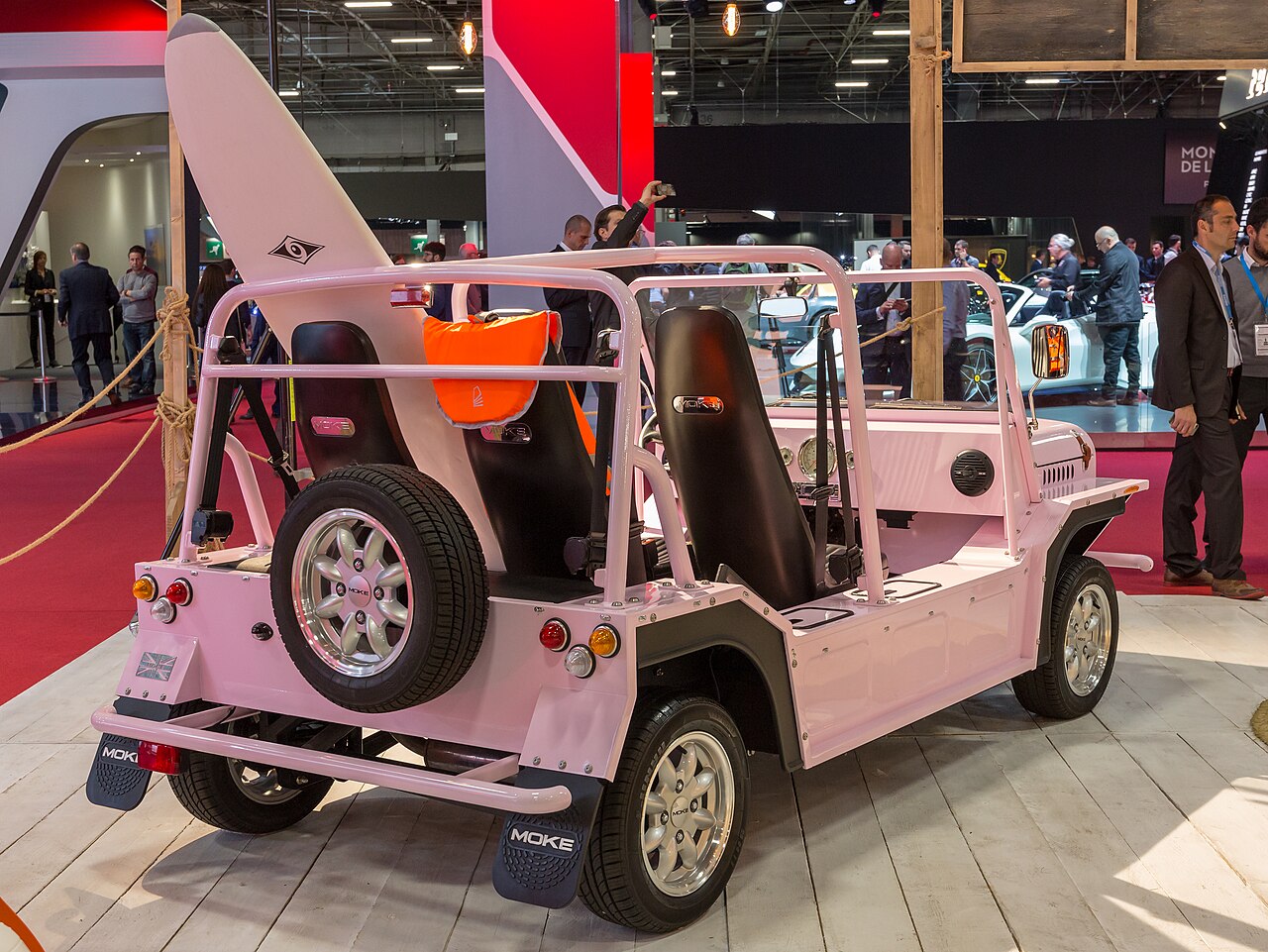
An adapted-vehicle exhibit can explain a possibility
An adapted-vehicle display can show equipment, access arrangements and a manufacturer’s description of a modification. It can make a previously unfamiliar option visible, but it does not establish which equipment is appropriate for a particular person. NHTSA’s adapted-vehicle resources describe a process involving individual evaluation, suitable equipment, qualified modification and training. That primary guidance explains the distinction between an exhibit and a personal assessment. This feature focuses on reading a display’s information and identifying the roles behind it. Its examples are fictional and do not prescribe a modification, diagnose a driver’s needs or review the performance of a named adapted vehicle.
Identify the vehicle and the modification separately
A base vehicle and an adaptation can have different manufacturers, documents and responsibilities. In a sample exhibit, a Harbor Van is presented with a modification described by an accessibility-equipment provider. Record both identities rather than attributing the entire arrangement to the vehicle badge. The base-vehicle brochure may not describe the modified configuration, while the modifier’s material may focus on a particular part of it. A display becomes clearer when it identifies which document explains each feature. That separation also helps a visitor ask who supplied a component or which source describes the configuration actually shown.
Distinguish access from driving control
A display can concern entering the vehicle, traveling as a passenger, driving or a combination of functions. Those are related but different purposes. In the Harbor Van exhibit, a diagram of a passenger access arrangement would not establish a driving-control adaptation. Conversely, a display of a control interface would not describe every passenger seating or entry relationship. Start with the function the presenter names. NHTSA’s material includes context for both drivers and passengers, reinforcing the need to identify the specific purpose. A familiar vehicle shape alone cannot settle who the demonstrated arrangement serves or how its components relate to that role.
Equipment availability differs from individual suitability
A manufacturer can document what a component is designed to do and which configurations it supports. That information is different from evaluating a particular person’s needs and circumstances. NHTSA directs readers toward qualified driver-rehabilitation evaluation in its individual-assessment guidance. At an exhibit, that distinction supplies a useful question: which details describe the product, and which require an individual assessment outside the display? The answer need not interrupt learning about the equipment. It places the demonstration in its proper role, making the available information more understandable without converting a public sample into a personal recommendation.
A static display reveals certain relationships
A stationary exhibit can show space, labeled components and the visible arrangement of a modified vehicle. It cannot, by itself, establish an individual’s ability to use the system or the result of training. In the Harbor Van, a seated mannequin might illustrate a documented position without representing an actual person’s fit or performance. Preserve that difference in a display description. The sample can still teach how components are arranged and which function the provider describes. Its value lies in making those relationships visible, rather than pretending that a brief look answers every question involved in personal use.
A demonstrated movement needs a stated scope
If a presenter demonstrates a component, record what is shown and the configuration named. A movement can illustrate a feature’s described action without becoming a complete test across all circumstances. In an example, a prepared demonstration might show a mechanism moving through a selected sequence. The visitor can describe that sequence as demonstrated, while the manufacturer’s documentation supplies the product’s stated conditions. Avoid generalizing from a sample to every vehicle or user. A focused question asks which configuration the demonstration represents and where the provider documents it. That keeps an account attached to the specific display rather than an imagined universal solution.
Different professionals contribute different information
NHTSA’s guidance distinguishes evaluation, modification, training and maintenance within the broader adapted-vehicle process. A product representative can explain a feature without necessarily performing all those roles. At a convention, ask which professional function the person or organization is describing. In the exhibit, the equipment provider might supply a product document and identify where an individual evaluation belongs. That is a clear division of information. It is not a reason to assume the representative can assess a visitor on the spot or that every organization appearing at an event provides the same services simply because their displays concern adapted vehicles.
Keep a useful source trail
An exhibit record can identify the base vehicle, modifier, displayed equipment, stated purpose and documents offered for further reading. Add the source of any explanation about evaluation or training rather than substituting a personal conclusion. That record helps the visitor preserve what the exhibit actually contributes: a documented possibility and a clearer vocabulary for discussing it with the appropriate professionals. NHTSA’s official resources provide the broader process reference. At an auto or mobility exhibit, understanding those roles makes the presentation informative while leaving individual decisions with the assessment and documentation they require.
Continue exploring
Explore related events
Current facts come from the directory. Follow the exact listing for admission, venue information and the official source.
Chicago Auto Show 2027 · Feb 13 – Feb 21, 2027 · scheduled · Check organizer for current admission availability
Sources and further reading
Source review: 2026-10-12. Examples identified as hypothetical are original illustrations.
An independently researched feature. Worked examples are illustrative; photographs identify their archive or collection context.
Find your next event →