
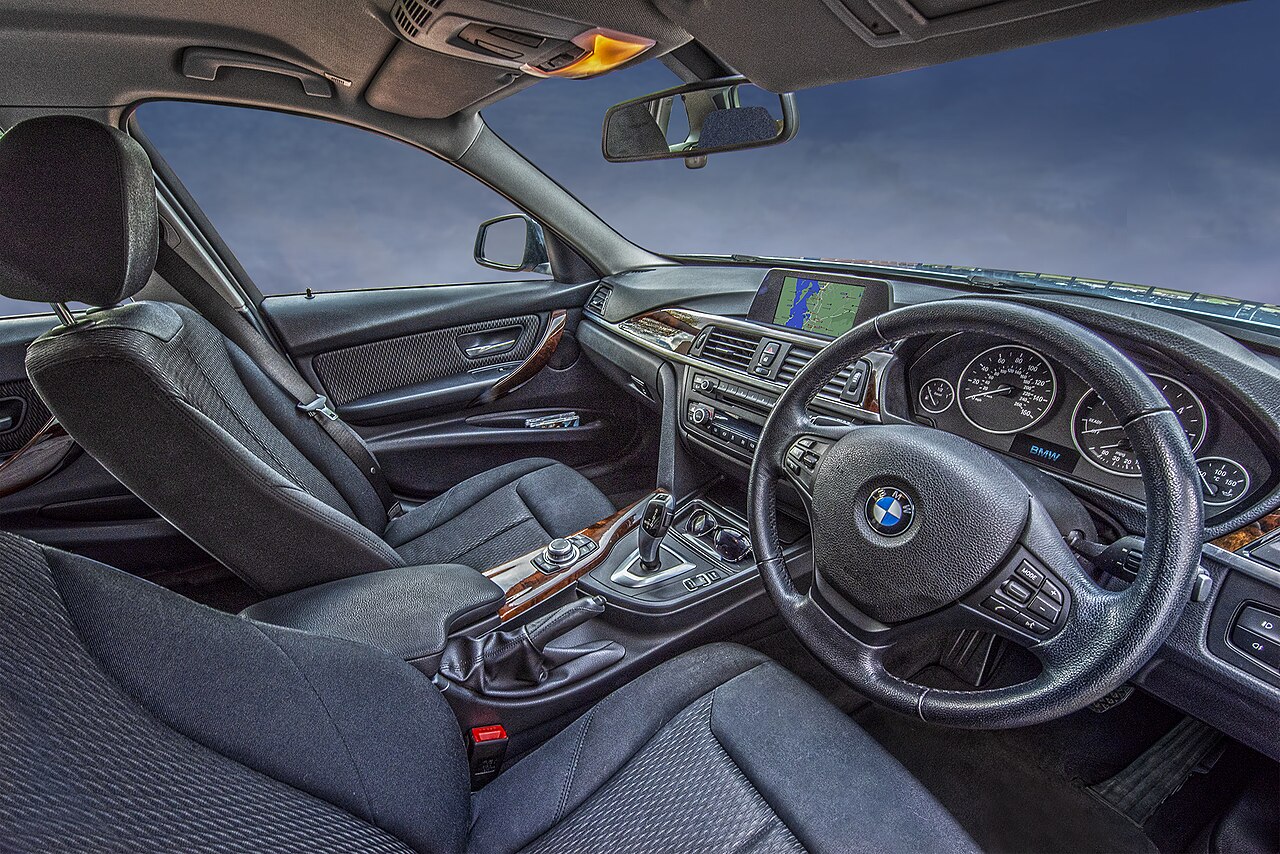
A shared screen can hold personal information
An infotainment exhibit can invite a visitor to explore a navigation screen, media interface or profile system. Those features may involve information about a person as well as information about the vehicle. The Federal Trade Commission’s connected-car guidance describes how a system can retain data from a connected phone, and Chevrolet’s profile documentation identifies personal and guest-profile functions for the described system. Those primary references explain why the distinction matters. This feature concerns understanding a public demonstration’s setup. A prepared sample makes the relationship among profile, connected device and displayed information easier to discuss.
Identify whose demonstration you are seeing
A display might use a staff account, a prepared sample profile, an unconnected interface or another arrangement. Do not assume that a name visible on the screen belongs to a real visitor. In an entirely fictional exhibit, a profile called Show Sample contains a destination and demonstration playlist. That label tells the visitor how the presenter identifies the setup, but it does not establish every source of data behind it. A focused question is whether the display uses prepared demonstration information. The answer can clarify the interface’s context before someone mistakes a sample screen for a record of actual personal use.
A profile and a paired device are different relationships
A user profile can hold preferences or identify an account, while pairing or connecting a device concerns another part of the system. Their interaction depends on the specific product. Chevrolet’s published profile guidance describes how its identified infotainment systems handle personal and guest profiles, but those details should not be generalized to every manufacturer or model. In the display, the presenter might demonstrate a guest-style screen without connecting a phone. That is one arrangement. A visitor should not infer that the label guest guarantees the absence of all stored information or that creating no profile means a connected device cannot supply data.
Distinguish viewing from importing
Looking at a menu and supplying personal information are different kinds of interaction. A navigation demonstration can show how a search field works using a place; another interaction could involve entering an actual address. In the exhibit, the presenter selects a prepared destination named Museum Square. That action demonstrates the interface without requiring a visitor’s home location. The purpose of the example is to identify the information flow, not prescribe a menu sequence. A system can look familiar while handling data differently, so the exhibit’s explanation and the relevant manufacturer documentation remain more useful than assuming every screen behaves like a visitor’s own car.
Connection can involve more than one type of data
The FTC’s connected-car material identifies categories such as contacts, messages and locations as information that can be retained in some systems. The exact transfer and retention depend on the system and interaction. At an exhibit, distinguish a claim about playing sample audio from a claim about accessing a phone’s contacts. Those are different functions. In the setup, a staff-provided music source could support a media demonstration while the navigation screen uses prepared places. Record those arrangements separately when the presenter explains them. A single statement that the screen is connected does not identify what data is supplied or how every function uses it.
A guest label is a documented feature, not a universal guarantee
A system may identify a guest mode or profile, but the product’s documentation establishes what that term means. In the display, a guest button might simply select a default set of preferences. In another design, it might offer a different account relationship. Those are original examples of possible meanings, not assertions about a named manufacturer. Do not treat a familiar word as a complete privacy specification. Ask what the demonstration’s guest setup actually changes and which document describes it. That question is more precise than assuming the label alone proves that no information is saved anywhere in the system.
Deletion and retention claims require their own evidence
A presenter might describe resetting a demonstration between visitors or using preloaded sample data. That is an attributed account of the exhibit’s process, not independent verification of every retention mechanism. The FTC directs users of connected rental vehicles toward the relevant settings, manual and company guidance; its context differs from an expo exhibit. For this feature, preserve that distinction rather than turning rental guidance into a universal show-floor procedure. A manufacturer manual or an exhibitor’s documented process can explain the specific setup. Without such evidence, the appropriate note is what the presenter states and what the visible demonstration actually shows.
Ask about the information used in the sample
A useful exhibit question is whether the demonstrated feature can be shown with prepared data and what the displayed profile represents. It connects the visitor’s learning goal with a concrete setup rather than a broad judgment about the vehicle’s entire data system. Record the product identity and the source of any retention claim so later research can locate the correct documentation. A well-described sample can reveal how the interface organizes navigation, media and preferences without turning a public display into an account setup exercise. Understanding whose information is represented makes that demonstration clearer and keeps the description attached to evidence.
Continue exploring
Explore related events
Current facts come from the directory. Follow the exact listing for admission, venue information and the official source.
Chicago Auto Show 2027 · Feb 13 – Feb 21, 2027 · scheduled · Check organizer for current admission availability
Sources and further reading
Source review: 2026-10-12. Examples identified as hypothetical are original illustrations.
An independently researched feature. Worked examples are illustrative; photographs identify their archive or collection context.
Find your next event →